Handel’s Messiah (December 12-14, 2025)
Program
December 12-14, 2025
- Nicholas McGegan, conductor
- Sherezade Panthaki, soprano
- Sara Couden, contralto
- John Matthew Myers, tenor
- Brandon Cedel, bass-baritone
- St. Louis Symphony Chorus
- Erin Freeman, director
George Frideric Handel (1685-1759)
- Messiah – A Sacred Oratorio
- Libretto compiled from Holy Scripture by Charles Jennens (1700-1773)
- Part I
- Prophecy of Christ’s appearance on earth.
- The Nativity
Intermission
- Part II
- The death, resurrection and ascension of Christ.
- The spreading of the Gospel.
- Part III
- Victory over Death.
- Sherezade Panthaki, soprano
- Sara Couden, contralto
- John Matthew Myers, tenor
- Philippe Sly, bass-baritone
- St. Louis Symphony Chorus
Handel’s Messiah: The Text
PART I
- Symphony (Overture)
- Accompagnato* and Air (Tenor):
- Comfort ye – Ev’ry valley shall be exalted
- Chorus: And the glory of the Lord
- Accompagnato (Bass) and Air (Alto):
- Thus saith the Lord – But who may abide the day of His coming
- Chorus: And He shall purify
- Recitative and Air with Chorus (Alto):
- Behold, a virgin shall conceive – O thou that tellest good tidings
- Accompagnato and Air (Bass):
- For behold, darkness shall cover the earth –
- The people that walked in darkness
- Chorus: For unto us a child is born
- Pifa (Pastoral Symphony)
- Recitatives (Soprano):
- There were shepherds abiding in the field –
- And lo, the angel of the Lord came upon them –
- And the angel said unto them –
- And suddenly there was with the angel –
- Chorus: Glory to God in the highest
- Air (Soprano): Rejoice greatly, O daughter of Zion
- Recitative (Alto) and Duet (Soprano and Alto):
- Then shall the eyes of the blind be open’d –
- He shall feed His flock like a shepherd
- Chorus: His yoke is easy, His burthen is light
- INTERMISSION
PART II
- Chorus: Behold the Lamb of God
- Air (Alto): He was despised
- Choruses:
- Surely, He hath borne our griefs and carried our sorrows –
- And with his stripes we are healed –
- All we, like sheep, have gone astray
- Accompagnato (Tenor) and Chorus:
- All they that see Him, laugh Him to scorn
- He trusted in God
- Accompagnato and Arioso (Tenor):
- Thy rebuke hath broken His heart –
- Behold, and see if there be any sorrow
- Accompagnato and Air (Tenor):
- He was cut off out of the land of the living –
- But Thou didst not leave His soul in hell
- Chorus: Lift up your heads
- Air (Soprano): How beautiful are the feet
- Air (Bass) and Chorus:
- Why do the nations so furiously rage together –
- Let us break their bonds asunder
- Recitative and Air (Tenor):
- He that dwelleth in heaven –
- Thou shalt break them with a rod of iron
- Chorus: Hallelujah
PART III
- Air (Soprano): I know that my Redeemer liveth
- Chorus: Since by man came death
- Accompagnato and Air (Bass):
- Behold, I tell you a mystery –
- The trumpet shall sound and the dead shall be rais’d
- Chorus: Worthy is the Lamb that was slain
*Messiah features two kinds of recitative or “sung speech”: an Accompagnato includes written-out accompanying parts for the strings and is more rhythmical than the freer Recitative, which is accompanied by basso continuo instruments (organ or harpsichord).
McGegan’s Messiah: Handel’s masterpiece returns to Powell Hall
Handel’s Messiah might seem like the perennial potboiler—utterly familiar—but talk to conductor Nicholas McGegan and it becomes clear there’s nothing about this work that can be taken for granted. “Every performance I give is different,” he says, “because the soloists are different and my interpretation is heavily based on them.”
McGegan has described opera as “one of the most delightful challenges there is,” and his dramatic instincts come to the fore in a work like Messiah. He places the text front and center, he explains, giving the work a strong dramatic flow rather than treating it as simply a sequence of separate movements. “Handel was a dramatist of genius and I like to bring this out.”
Messiah is a sacred oratorio—music with a religious theme—but McGegan finds it very moving on a human level. “The journey through the depths of pathos in the second part through to the glories of the final Amen really does stir the soul.”
McGegan’s reputation stems in large part from his many years as Music Director of the Philharmonia Baroque Orchestra, leading performances on period instruments that were not only historically informed and stylish but deeply engaging, and fun. And he brings his joyful approach to “modern” symphony orchestras such as the SLSO. He regards orchestras as “social beings” and, as with different teams of soloists, he shapes his interpretations to fit the particular players. In his view, a conductor doesn’t have the “right collar” to preach, and while historical performance practice can be fascinating—an easy obsession to fall into—his focus is always on giving a good performance rather than “correctness.”
That said, you may notice in this performance that McGegan’s tempos are faster than you might remember from past decades, and the orchestra and choir are a little smaller than the “mega-Messiahs” once prevalent in the 20th century. These are choices that, he hopes, will make the performance “seem less stodgy.”
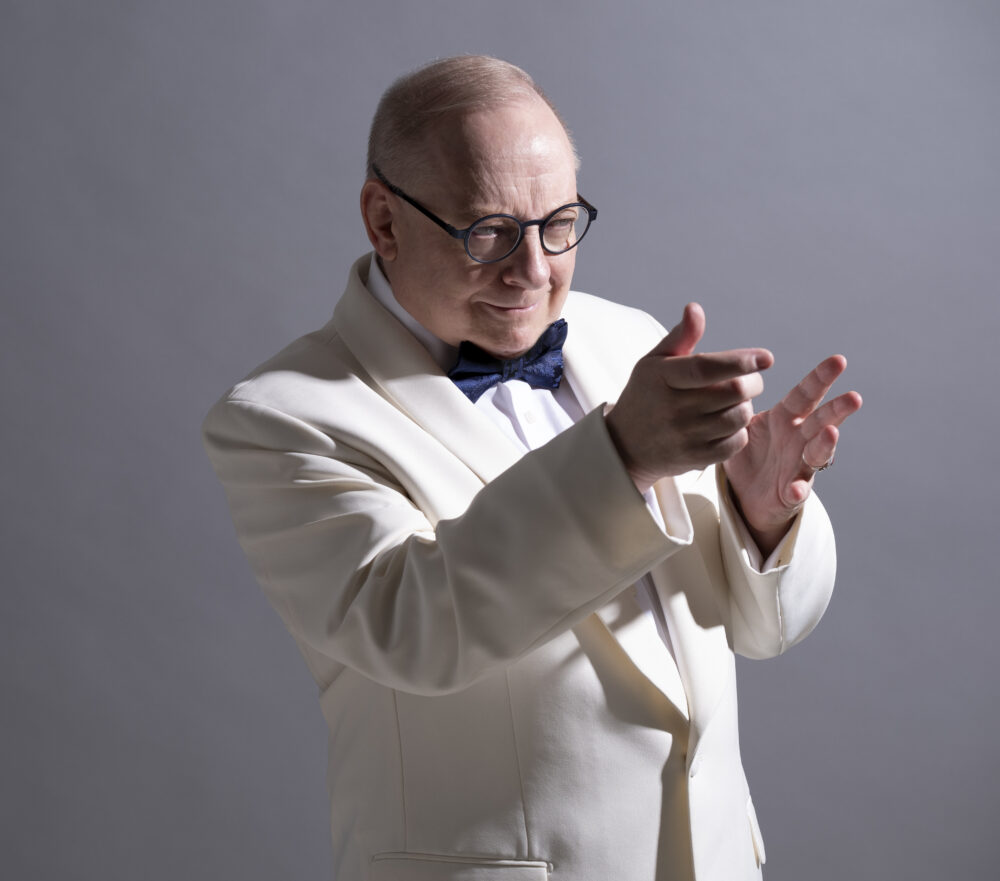
Messiah might be easy to listen to but, he says, it’s not easy to sing or to play. “The chorus parts require great flexibility of voice, the soloists have to have good coloratura, and the violin parts are virtuoso too.”
Adding to the challenge is Handel’s decision to keep rewriting parts of Messiah throughout his life. “He changed the voices in the solos according to who was the star in each run of performances,” McGegan explains. “Choosing which version to use is always a challenge. Personally, I feel that if one can put the text across clearly to the audience one has already achieved a great deal.”
McGegan’s relationship with Messiah runs in tandem with his longstanding connection to the SLSO. It was in St. Louis, in 1986, that he first conducted the oratorio, and he carries fond memories of those performances from nearly 40 years ago. “The divine Lorraine Hunt was the soprano and she sang gloriously; Tom Peck was in charge of the chorus, who were wonderful.” One amusing moment in a later performance, he recalls, “was when an audience member blew their nose really loudly in the grand silence just before the end. All of us got the giggles and we only just managed to finish the piece!”
The last time McGegan conducted the SLSO was in 2023, so this week will be his first time working in the newly renovated Powell Hall, and the new acoustic may further influence tempo and other interpretative choices. Perennial or not, this Messiah is guaranteed to feel fresh, dramatic, and joyous.
Words by Yvonne Frindle, based on an interview by Iain Shaw.
Messiah – A Sacred Oratorio
George Frideric Handel
Born 1685, Halle, Germany
Died 1759, London, England
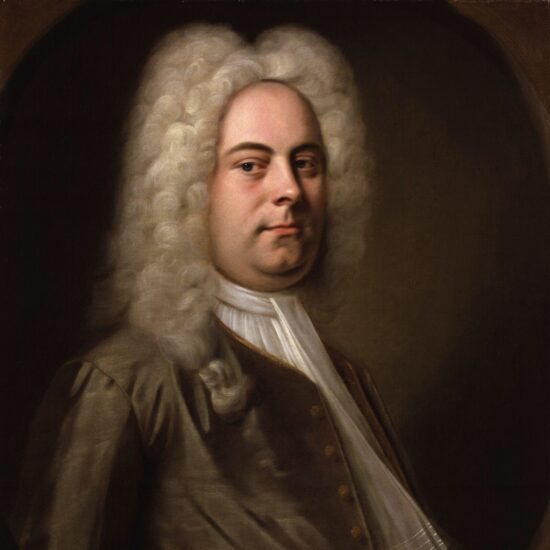
Handel’s monument in Westminster Abbey shows the composer—eyes uplifted, pen in hand—writing the opening bars of “I know that my Redeemer liveth.” The choice of a line from Messiah says much about the fame of that oratorio even in 1762.
Messiah has never left the repertoire. It became an annual event during Handel’s lifetime and was the centerpiece of the huge Handel Commemorations that began in London in 1784. America took a little longer to catch on, but once Boston’s Handel & Haydn Society had presented its first complete Messiah on Christmas Day 1818, a tradition of annual performances took hold here as well. It’s now the best- known of all oratorios and has come to be regarded as definitive, yet it is atypical of the genre.
Effectively Handel’s invention, the English concert oratorio satisfied the public’s need for amusement during Lent, when theaters were prohibited from staging operas and plays. As summed up in Handel’s preface to Samson, an oratorio was: “a musical Drama, whose subject must be Scriptural, and in which the Solemnity of Church-Musick is agreeably united with the most pleasing Airs of the Stage.” Oratorios such as Samson are gripping Old Testament narratives, with soloists playing Biblical characters while the chorus represents the crowd or provides commentary—opera in disguise.
But apart from a brief account of the birth of Christ, Messiah has no narrative action. Prevented in 18th-century England from showing Jesus as a character on stage, Handel depicts him indirectly, through Old Testament prophecies and New Testament accounts of their significance. His librettist, Charles Jennens, deserves credit for the unity and power of the text, which offers commentary on a fundamental tenet of Christian faith: “I know that my Redeemer liveth.”
The text’s logical progression and balanced structure of choruses, recitatives, and arias, together with its scope for brilliant and moving musical effects, enabled Handel to compose the oratorio in a continuous burst of inspiration over 24 days. (The story is told that a servant found Handel in tears after finishing the “Hallelujah” Chorus, declaring, “I did think I did see all Heaven before me, and the great God himself!”)
Handel completed the orchestra parts on September 14, 1741. The following March he announced a performance of his “New Sacred Oratorio” in Dublin for the benefit of three charities. A public rehearsal was held on April 9, 1742, and on April 13 Messiah received its premiere at the Fishamble Street Musick Hall. Ladies were invited to leave their hooped skirts at home, and gentlemen their swords, in order to make room for more company and thereby “increase the charity.”
The association with charitable fundraising offered legitimacy to a somewhat controversial choice of subject, and in 1750, Handel instigated annual benefit performances for London’s Foundling Hospital. But soon enough presenters were performing Messiah for the music’s sake. Meanwhile, Handel’s preference for casting singer- actresses such as the contralto and tragedienne Susannah Cibber reveals that his conception for its performance was just as dramatic as for his other oratorios. Despite its inspirational Christian theme and Biblical texts, Messiah had been intended for secular performance. The 1742 premiere had taken place in a music hall; the London premiere the following year was presented in an opera house: Covent Garden.
Charles Jennens wasn’t even close when he wrote in 1745 that Handel had “made a Fine Entertainment” of this oratorio. Yes, Messiah is an entertainment, a concert drama, a musical masterpiece. But it is also an expression of faith that reaches beyond the confines of the church to the temple of music. “I know that my Redeemer liveth, and that he shall stand at the latter day upon the earth.” And somehow we know Handel’s Messiah will be standing there too.
Yvonne Frindle © 2019/2025
| First performances | April 13, 1742, in the Fishamble Street Musick Hall, Dublin, Ireland, led by violinist Matthew Dubourg and the composer at the harpsichord |
| First SLSO performance | May 25, 1882, Joseph Otten conducting the St. Louis Choral Society with soloists Mrs. M.E. Laitey, Pauline Schuler, Phil Branson, and George Wiseman |
| Most recent SLSO performance | December 4, 2022, conducted by Laurence Cummings with soloists Amanda Forsythe, Key’mon Murrah, John Matthew Myers, and Jonathon Adams, and the St. Louis Symphony Chorus |
| Instrumentation | soprano, alto, tenor, and bass soloists; mixed chorus; 2 oboes, bassoon, 2 trumpets, timpani, harpsichord, chamber organ, strings |
| Approximate duration | 2 hours and 30 minutes, including a 25-minute intermission |
Artists
Nicholas McGegan
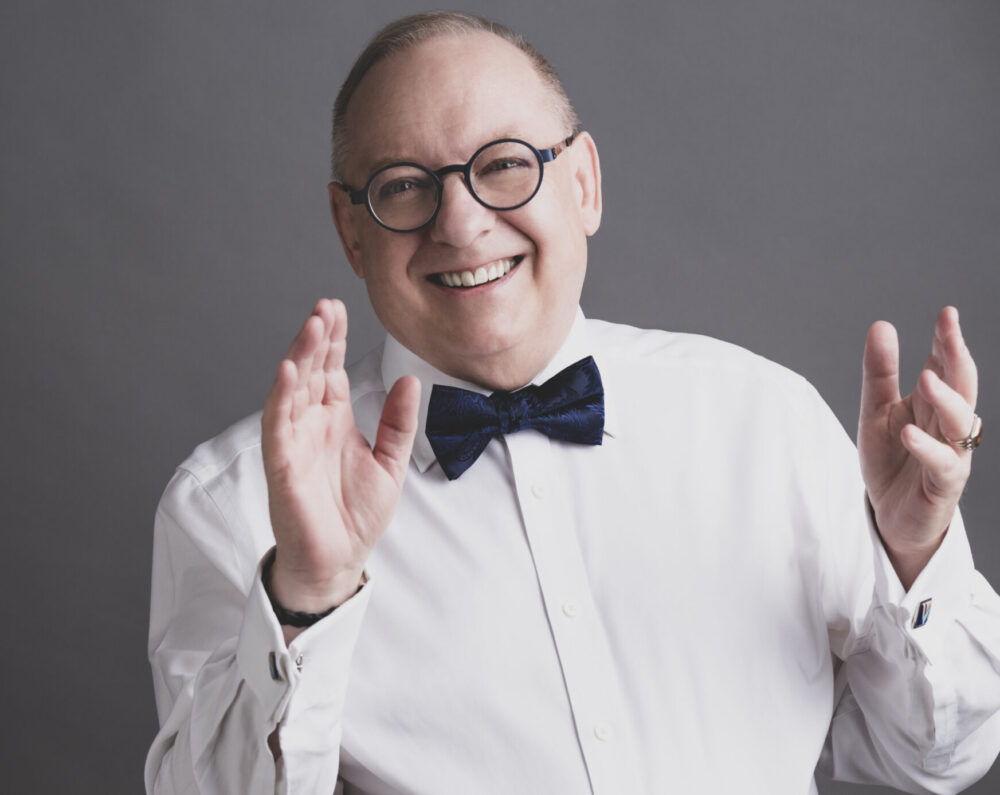
An expert in 18th-century style, Nicholas McGegan is in his sixth decade on the podium. Following a 34-year tenure as Music Director of the Philharmonia Baroque Orchestra & Chorale, he is now Music Director Emeritus. He is also Principal Guest Conductor of Hungary’s Capella Savaria. A longstanding collaborator with the SLSO, his most recent appearance was in 2023, conducting Beethoven’s incidental music for Egmont and Mendelssohn’s cantata The First Walpurgis Night.
His approach to music-making—intelligent, infused with joy, and never dogmatic—has led to engagements with many of the world’s major orchestras, including those of Cleveland, Chicago, Los Angeles, New York, Philadelphia, San Francisco, Hong Kong, Sydney, London’s Royal Opera House, and the Royal Concertgebouw, as well as regular collaborations with choreographer Mark Morris and appearances at the BBC Proms and the Edinburgh International Festival.
His extensive discography includes more than 100 releases spanning five decades, including more than 40 with Philharmonia Baroque Orchestra & Chorale, and more than 20 with Capella Savaria. His recordings have garnered two Gramophone Awards and two Grammy nominations.
In 2010, Nicholas McGegan was made an Officer of the Most Excellent Order of the British Empire (OBE) for “services to music overseas.” He is committed to the next generation of musicians, frequently conducting and coaching students in regular engagements at Yale, Juilliard, Harvard, the Colburn School, and Aspen Music Festival.
Sherezade Panthaki
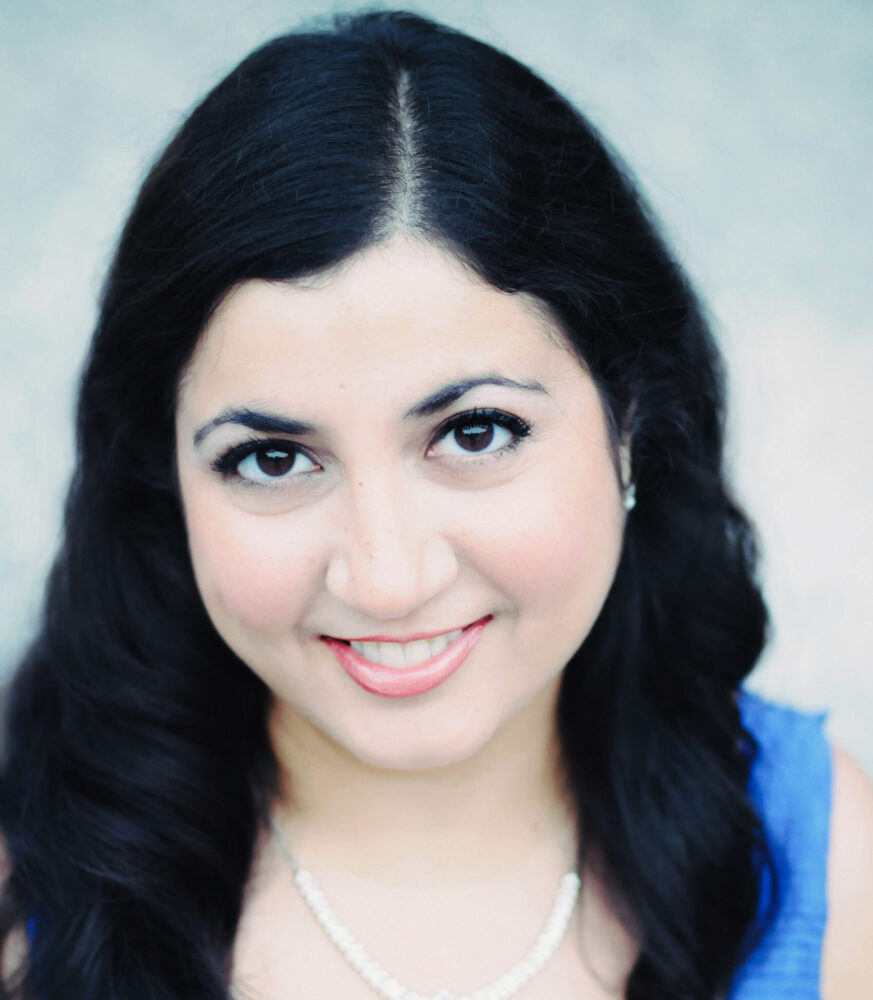
Soprano Sherezade Panthaki is renowned for her historically informed interpretations of Bach, Handel, and other baroque composers, with her dramatic performance in Germany as Dalila in Handel’s Samson eliciting special acclaim. In addition to Nicholas McGegan, she has forged musical collaborations with leading conductors such as Masaaki Suzuki, Martin Haselböck, Stephen Stubbs, Nicholas Kraemer, and James O’Donnell. She made her SLSO debut in 2017 singing virtuoso opera arias by Vivaldi.
Recent engagements include early music and oratorio performances with the New York Philharmonic, Philharmonia Baroque Orchestra, Philadelphia Orchestra, Bach Collegium Japan, Wiener Akademie, NDR Hannover Radiophilharmonie, Los Angeles Philharmonic, Boston Early Music Festival, Tafelmusik Baroque Orchestra, Toronto Symphony Orchestra, and Houston Symphony.
No stranger to classical and modern concert repertoire, she is also in high demand for her interpretations of Mozart, Haydn, Mendelssohn, Brahms, and Poulenc, and has performed in world premieres by Reena Esmail, Martin Bresnick, and Trevor Weston.
Her discography includes Handel oratorios with Nicholas McGegan and the Philharmonia Baroque, Bach’s Mass in B Minor and solo cantatas with the Cantata Collective, and operas with the Boston Early Music Festival, including the recent triumphant production of Reinhard Keiser’s Octavia.
Born and raised in India, Sherezade Panthaki holds graduate degrees from the Yale School of Music and the University of Illinois. She is a founding member and artistic advisor of the Kaleidoscope Vocal Ensemble, presenting vocal excellence alongside arts education and social justice. She is a sought-after clinician and masterclass leader, has taught voice at Yale University, and currently heads the Vocal program at Mount Holyoke College.
Sara Couden
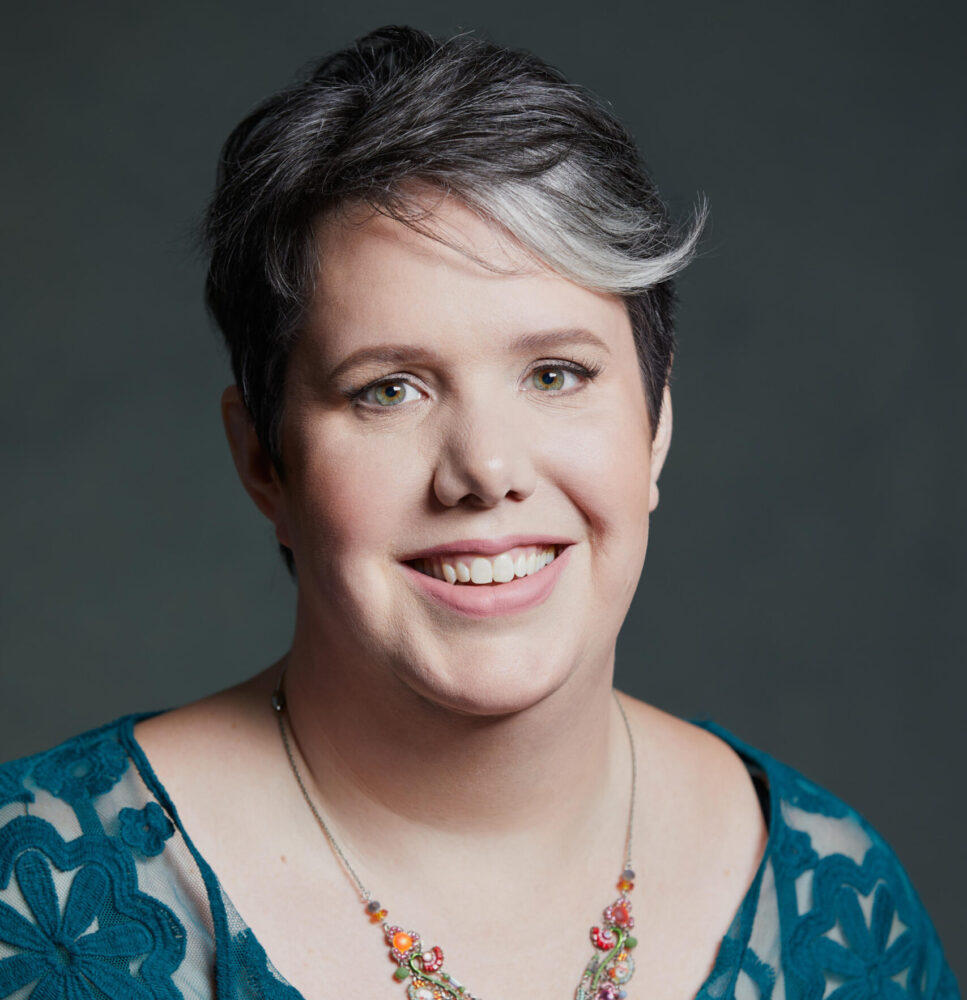
Contralto Sara Couden is a premier interpreter of operatic, orchestral, chamber, and song repertoire. In addition to her SLSO debut in these concerts, her 2025/26 season includes Messiah with the Tucson Symphony Orchestra, debuts with Detroit Opera as Rita in Poul Ruders’ Handmaid’s Tale and the Houston Symphony in selections from La Vida Breve, a role and house debut as Ježibaba (Rusalka) with Pacific Northwest Opera, and The Witch/The Mother (Hänsel und Gretel) for Lakes Area Music Festival.
Recent triumphs include her San Francisco Opera debut singing Rita, a return to the Metropolitan Opera to cover Mrs. Sedley (Peter Grimes), a recital at the Manchester Music Festival, and a role debut as Baba the Turk (The Rake’s Progress) for Lakes Area Music Festival, as well as company debuts with the Philadelphia Orchestra as Mother/Chinese Cup/Dragon Fly (L’Enfant et les sortilèges), Cincinnati Symphony Orchestra in Julia Perry’s Stabat Mater, Seattle Symphony in Messiah, and the California Symphony in songs by Mahler. She also released her debut solo album, Artur Schnabel: Complete Vocal Works.
Highlights from previous seasons include her debut with the Metropolitan Opera as Tetka (Jenůfa) and Albine (Thaïs), as well as return engagements at Carnegie Hall (Karl Jenkins’ Stabat Mater) and with the Met to cover First Maid (Elektra) and Marta and Pantalis (Mefistofele). She also made role debuts as Ottavia (L’incoronazione di Poppea) and the Nurse in Ariane et Barbe-Bleue with West Edge Opera, Juno (Semele) and the Marquise de Berkenfeld (La Fille du régiment) with St. Petersburg Opera, Israelitish Man (Judas Maccabaeus) with Philharmonia Baroque, Ormindo (Ermelinda) with Ars Minerva, Dejanira (Hercules) at the Staunton Music Festival, and Testo in Stradella’s Susanna with Heartbeat Opera and Opera Lafayette.
John Matthew Myers
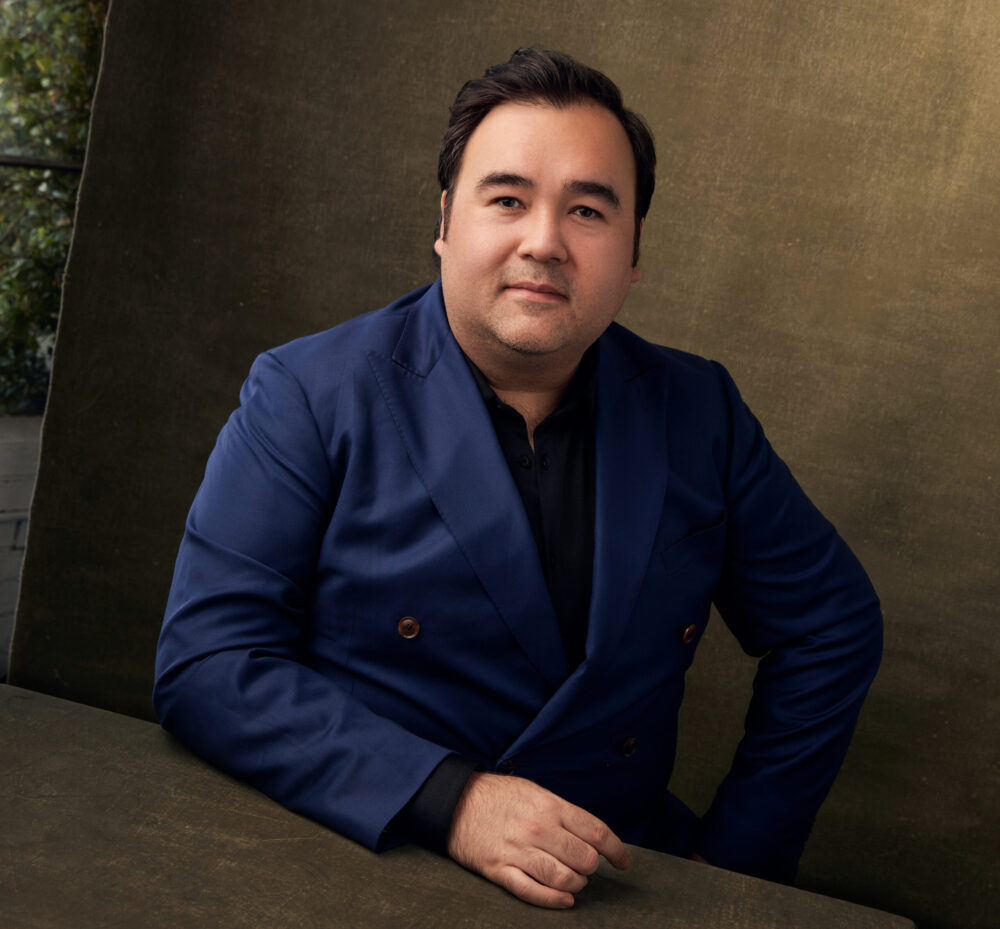
John Matthew Myers returns to the SLSO having sung the tenor solos in Messiah in 2022. More recently he has garnered acclaim through collaborations with the New York Philharmonic, American Symphony Orchestra, Verbier Festival, Metropolitan Opera, Opéra National de Paris, Teatro alla Scala, and Teatro La Fenice. His acclaimed debut album Desiderium (2022) featured music by American and American émigré composers with pianist Myra Huang.
This season, he returns to the Paris Opera to reprise his celebrated portrayal of Mao Zedong in Nixon in China. He will also sing Florestan in Fidelio (Deutsche Oper am Rhein) and the Prince in The Love for Three Oranges (Semperoper Dresden). His concert engagements include the Pittsburgh Symphony Orchestra (with Manfred Honeck), Houston Symphony (Patrick Quigley), and the Boston Youth Symphony Orchestra as Énée in Les Troyens.
Last season, he made two Carnegie Hall appearances: with Evgeny Kissin, Sasha Cooke, and Susanna Phillips in Shostakovich’s From Jewish Folk Poetry, and with the American Symphony Orchestra in the title role of Strauss’ Guntram. He sang Handel’s Messiah with both the Pittsburgh Symphony Orchestra and the Saint Paul Chamber Orchestra, and Mahler’s Eighth Symphony for the Nashville Symphony Orchestra and Grant Park Music Festival. He also appeared with the Oregon Symphony in Mendelssohn’s Lobgesang and the Los Angeles Philharmonic as Waldemar in Schoenberg’s Gurrelieder conducted by Zubin Mehta, as well as concert performances of Les Troyens, singing Iopas (Seattle Opera with Ludovic Morlot) and Tosca, singing Cavaradossi (Richmond Symphony with Valentina Peleggi). Opera highlights included Midas in Strauss’ Die Liebe der Danae (Opera Carlo Felice Genova), the Tenor/Bacchus in Ariadne auf Naxos (Opernhaus Zürich), and Martinů’s Epic of Gilgamesh and the title role in Smetana’s Dalibor (both for Bard Festival).
Philippe Sly
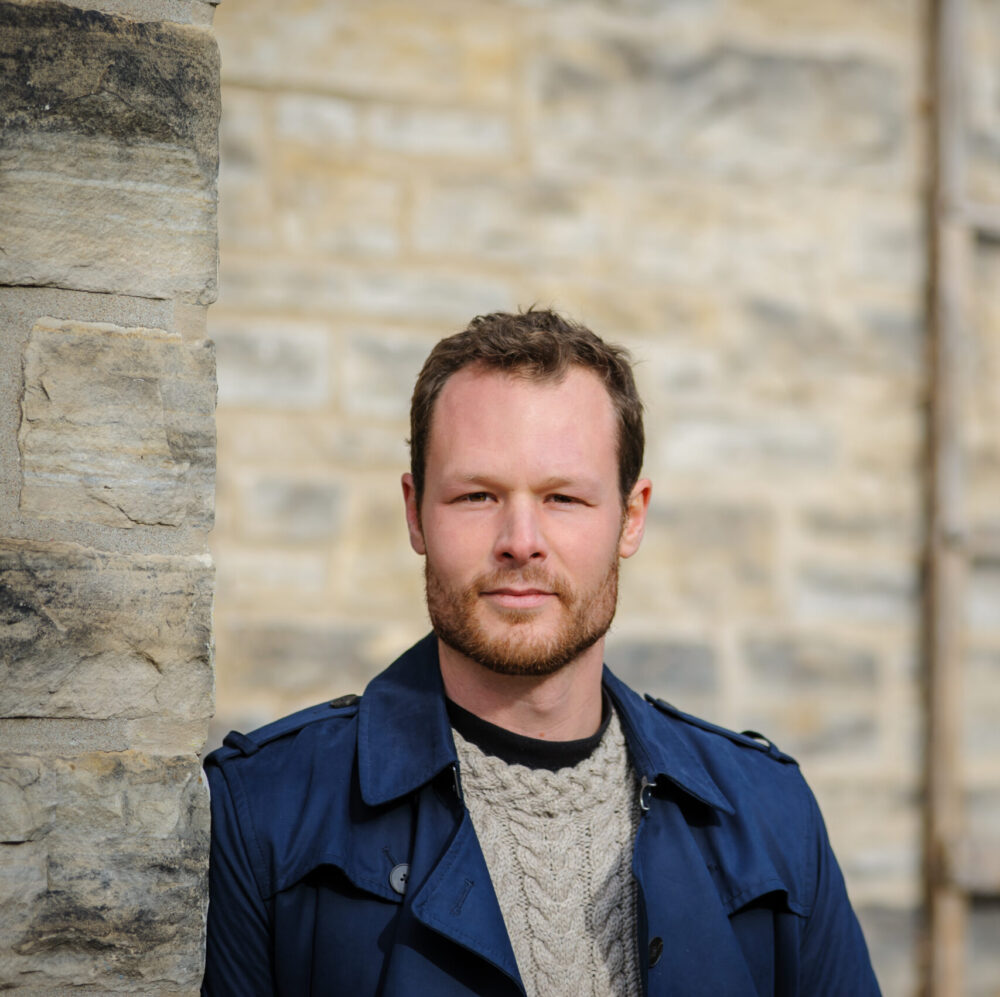
French-Canadian bass-baritone Philippe Sly is widely recognized for his work in opera, concert, and recital. He is a winner of the Metropolitan Opera National Council Auditions and the Concours Musical International de Montréal, and a recipient of the Gala des prix Opus award for Concert of the Year in Romantic, Post-Romantic, and Impressionist Music.
2025/26 season highlights include debuts at the Salzburg Festival in the title role of Messiaen’s Saint François d’Assise and with Opera Atelier as Arkel in Debussy’s Pelléas et Mélisande, as well as return engagements with the Vienna State Opera as Hamm in Kurtág’s Fin de Partie and as Leporello in Don Giovanni. In addition to the SLSO, concert appearances include Messiah with the Cleveland Orchestra and Haydn’s Nelson Mass with Boston Baroque.
He made his SLSO debut singing Messiah in 2015. He has also appeared with the Philadelphia Orchestra, New York Philharmonic, Los Angeles Philharmonic, Minnesota Orchestra, Dallas and Toronto symphony orchestras, Montreal Symphony Orchestra (OSM), Orchestre Métropolitain, Orchestre symphonique de Québec, Winnipeg and Vancouver symphony orchestras, National Arts Centre Orchestra, Victoria Symphony, Gulbenkian Orchestra, Orchestre Philharmonique de Strasbourg, Malaysian Philharmonic orchestra, Tafelmusik Baroque Orchestra, Les Violons du Roy, and the Handel & Haydn Society.
His repertoire includes Bach’s Passions and Christmas Oratorio, Handel’s Messiah and Solomon, Fauré’s Requiem; Beethoven’s Ninth, Nielsen’s Symphony No. 3, and Mozart’s Requiem and Mass in C Minor. He also sang the premiere of Stafylakis’ Into Oblivion (Winnipeg Symphony Orchestra). He has worked with conductors including Yannick Nézet- Séguin, Bernard Labadie, Philippe Jordan, Simone Young, William Christie, Alain Altinoglu, Jaap van Zweden, and Gustavo Dudamel. He appears on Grammy Award-winning recordings with John Nelson and the Orchestre Philharmonique de Strasbourg (Les Troyens) and with the OSM under Nagano (L’Aiglon by Honegger and Ibert).
Erin Freeman
Director of the St. Louis Symphony Chorus; AT&T Foundation Chair
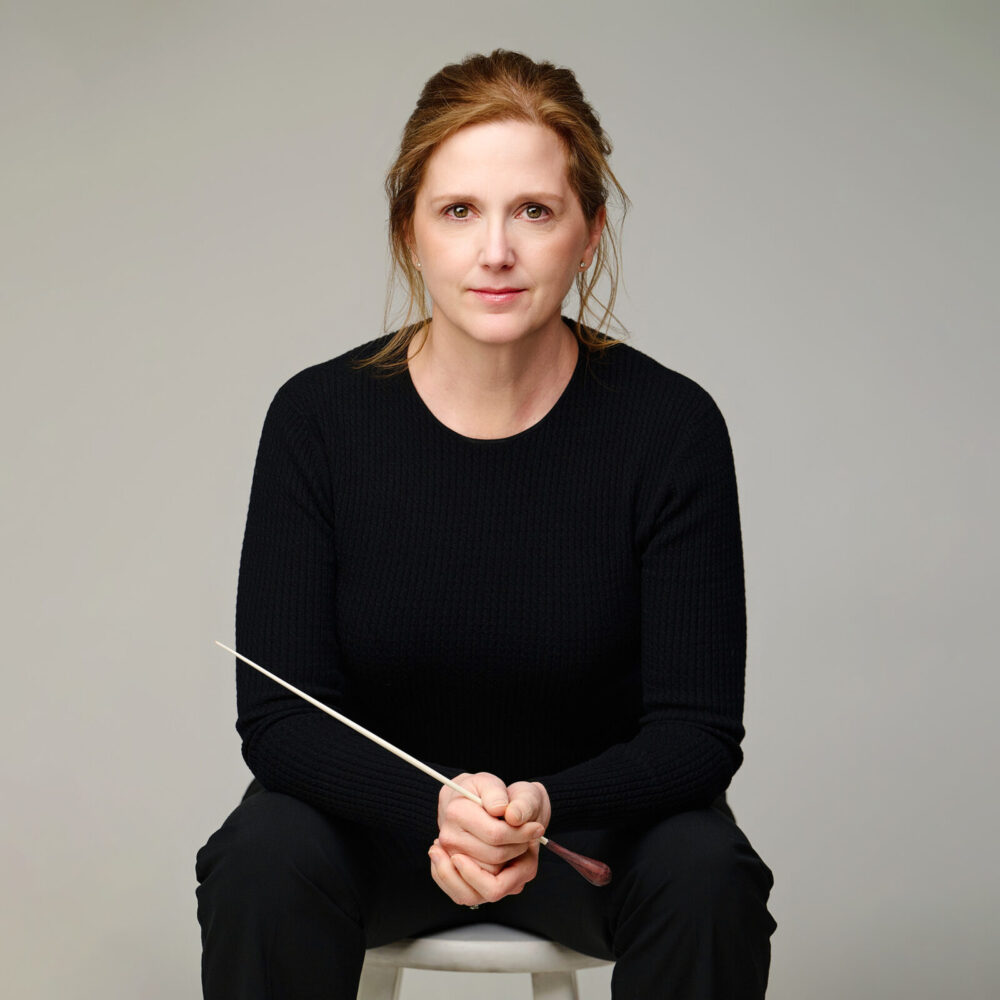
A versatile and engaging artist, conductor Erin Freeman was named Director of the St. Louis Symphony Chorus in July 2024. She also serves in positions throughout the District of Columbia and the Commonwealth of Virginia, and maintains an international presence through guest conducting. She is Artistic Director of the City Choir of Washington and Wintergreen Music, and Principal Conductor of the Richmond Ballet (State Ballet of Virginia), and recent positions include Director of the award-winning Richmond Symphony Chorus and Director of Choral Activities at Virginia Commonwealth University and George Washington University.
In addition to directing the St. Louis Symphony Chorus, recent performance highlights have included concerts at Brazil’s Sala São Paulo with the City Choir of Washington and Brazilian Mozarteum Academic Orchestra, productions for Washington Ballet and Richmond Ballet (Carmina Burana for her debut at Wolf Trap National Park for the Performing Arts), and her New York City Ballet debut (George Balanchine’s The Nutcracker).
Guest conducting engagements include concerts with the Toledo, Detroit, Portland (Maine), and Virginia symphony orchestras; Charlottesville Symphony; Buffalo and Savannah philharmonic orchestras; and Berkshire Choral International (at the Vienna Musikverein). She has also conducted at Carnegie Hall, Boston Symphony Hall, Cadogan Hall, Lincoln Center, La Madeleine in Paris, and the Kennedy Center, and has led and/or prepared the Richmond Symphony Chorus for multiple recordings, including the 2019 Grammy-nominated release of Children of Adam by Mason Bates.
In the 2025/26 season she will conduct productions of Nutcracker and Giselle (Richmond Ballet) and Coppélia (Toledo Ballet), a concert performance of The Music Man (City Choir of Washington and the Washington National Opera Orchestra), and a performance of Bach’s Mass in B minor in Washington’s historic National Presbyterian Church.
St. Louis Symphony Chorus
- Erin Freeman
- Director
- Leon Burke III
- Assistant Director
- Gail Hintz
- Accompanist & Manager
- Timothy Anderson
- George Aplin
- Pamela Bingham
- Keith Boyer*
- Robyn Brandon
- Daniel P. Brodsky
- Elise Brubaker
- Spencer Lee Burbach*
- Leon Burke III*
- Victoria Carmichael*
- Mark P. Cereghino
- Kai Song Chan
- Derek Dahlke*
- Kelly Daniel-Decker
- Laurel Ellison Dantas*
- Grace Denton
- Alan Freed
- Mark Freiman*
- Lea Luecking Frost
- Warren Fryeton*
- Mason German*
- Megan E. Glass*
- Justino Gordón-LeChevalié*
- H. Everett Gossard
- James Haessig*
- Jessica Hansen
- Ellen Henschen
- Matthew Jellinek
- Samantha Johnson
- Preston Jordan
- James Kalkbrenner*
- Jason D. Keune
- Patricia Anne Kofron
- Nancy Kowalczyk
- Sarah Lancaster
- William Larson
- Julie Longyear
- Gina Malone*
- Kellen Markovich
- Patrick C. Mattia*
- Elizabeth Musch*
- Hannah Nelson
- Shelby Niemann
- Nadiana Ortiz
- Yeeun Paik
- Matt Pentecost*†
- Claire Raver
- Robert Reed*
- Valerie Reichert
- Kate Reimann*
- Nathan Tulloch Ruggles*
- Paul N. Runnion
- Taran N. Sachak
- Mark V. Scharff
- Leann Schuering*†
- Sophie Shugart-Fischer*
- Nick Spector
- David Spencer
- Matthew Stansfield
- David Stephens
- Allison Stokes*
- Laura Swearingen
- Natanja Tomich*
- Philip Touchette*
- Robert Valentine*
- Emily Welch
- Andrew Wilson*†
- Tristan Wood
- Samuel Wright*
- Danielle Yilmaz*
- Raphaella Zavaglia*†
- *Section Principals
- †Rehearsal Covers