Bernstein and Robertson (March 6-7, 2026)
Program
March 6-7, 2026
- David Robertson, conductor
- Orli Shaham, piano
Steven Mackey (b. 1956)
- Turn the Key
David Robertson (b. 1958)
- Light forming – a piano concerto
- …la musique incertaine de leur voix… –
- Anfore del cuore –
- Rounding to Joy
Orli Shaham, piano
Intermission
Sarah Kirkland Snider (b. 1973)
- Something for the Dark
- The Promise
- Of Rise and Renewal
Leonard Bernstein (1918–1990)
- The Age of Anxiety – Symphony No. 2 for piano and orchestra
- PART I:
- The Prologue –
- The Seven Ages (Variations 1–7) –
- The Seven Stages (Variations 8–14)
- PART II:
- The Dirge –
- The Masque –
- The Epilogue
Orli Shaham, piano
David Robertson (b. 1958)
- …A Joyful Noise…
- US Premiere
American Reflections
The beginning of this concert might surprise you, especially if you’ve listened in advance to Steven Mackey’s album Time Release. There’s a spatial–theatrical element in Turn the Key that reminds us why we come to concert halls. The choice is even more apt—as you will see— given that David Robertson’s welcome return to St. Louis also sees him returning to a refurbished Powell Hall.
From St. Louis to Sydney and beyond, David Robertson has a reputation as an imaginative and insightful programmer, which is another reason to be here in Powell Hall. This concert is neither a random playlist nor a predictable compilation—each (American) work occupies a considered place in the program.
A distinguishing feature of Robertson’s tenure at the SLSO was the number of premieres. And so he’s chosen music new to St. Louis: Sarah Kirkland Snider’s luminous Something for the Dark, and in a kind of polar opposite, Light forming, his own piano concerto, written for the tremendously versatile Orli Shaham to play. As David likes to describe it, his relationship with Orli is “a match literally made in St. Louis.” But they’re not the only couple featured in this program. You may have noted that Mackey and Snider both hail from Princeton, New Jersey. What their professional bios omit is that they too are partners in life.
Light forming was conceived as a relatively short work so that it might be paired with a second concerto or, as in this program, with a symphony that looks like a concerto. Leonard Bernstein’s Age of Anxiety was inspired by a curious W. H. Auden poem that populated its lofty classical Latin model with “ordinary” New Yorkers: a shipping clerk, a naval officer, a Canadian pilot, and a department store buyer. This is the composer of West Side Story in philosophical mode, painting a self-portrait with his “piano-protagonist.” (If you want a visual image to keep in mind, Bernstein suggested Edward Hopper’s Nighthawks, that famous depiction of a late-night diner.)
Robertson concludes the program with an encore in all but name. Written as a gift for the Australian Youth Orchestra, A Joyful Noise now receives its North American premiere and brings the concert full circle with rhythms as compellingly quirky as Mackey’s.
Turn the Key
Steven Mackey
Born 1956, Frankfurt, Germany
Lives in Princeton, New Jersey
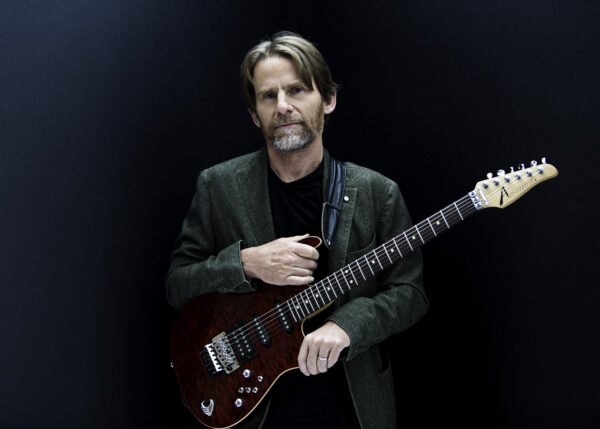
Steven Mackey’s first musical passion was playing electric guitar in rock bands, then his “entire life was changed by a single note.” Growing up in Northern California obsessed with blues-rock guitar, Mackey was in search of the “right wrong notes,” as he likes to say (a Thelonius Monk reference). The single note in question occurs in the second movement of Beethoven’s last string quartet, which the 19-year-old Mackey heard while driving: an unexpected unison E-flat that wielded the power to explode assumptions he had about classical music. He would later describe it as the most psychedelic rock music he’d ever heard. It also represents the moment he decided to become a composer.
Today, Steven Mackey is an award-winning composer of music for chamber ensemble, orchestra, dance, and opera—commissioned not only by some of the greatest orchestras around the world but by artists such as jazz guitarist Bill Frisell. In recent years, Mackey has returned to the electric guitar, writing and performing concertos as well as solo and chamber works.
Championed by David Robertson, Mackey’s music has had a strong presence in St. Louis. In 2008, the SLSO gave the premiere of Beautiful Passing with violinist Leila Josefowicz, as well as performing Time Release with percussionist Colin Currie. 2011 saw the premiere of Stumble to Grace, a piano concerto composed for Orli Shaham. More recently, the orchestra has performed his magnum opus, Mnemosyne’s Pool.
Turn the Key was composed for the inaugural concert of the Knight Concert Hall in Miami, home of the New World Symphony, and the work is not only a festive orchestral showpiece but offers a visible, and literal, exploration of acoustic space—as Mackey describes it, putting the hall through its paces.
Mackey explains that the piece “grew from a simple rhythm that I found myself employing to knock on doors and absentmindedly tap on all available surfaces—long, long, short, short, in a 7/8 meter. This rhythm suggested melodic cells and complementary counter-rhythms that in turn suggested other melodic cells. These lean and unadorned elements develop and combine to form fanciful sonic images.” The result is vibrant and varied. Mackey notes that “Turn the Key has a variety of densities: small moments for solo harp and solo violin, big arrivals for the whole orchestra, clangorous percussion, silky passages for string orchestra, plucky staccato passages, brassy wind band music, intricate rhythmic interplay, dense counterpoint, and various combinations of the above.”
But the work is more than a display of instrumental color and capabilities. As Mackey observed at the time, increasingly he wanted his music “to contain catharsis and transformation, and for this occasion … to fully embrace a sense of triumph and accomplishment. The stinginess of the musical material at the beginning, by the end unlocks a generous, joyous spirit and culminates in an unabashed celebration.”
As for the title, Mackey notes that “key” is translated into Spanish as clave, a word also used to indicate the basic rhythm of dances of Afro- Cuban origin, i.e. the “key” rhythm. “This seems appropriate,” Mackey proposes, “since Turn the Key does spring from a fundamental rhythm and develops by turning this rhythm around to mean different things.” The rhythm underlying the piece is not an actual clave from an existing Afro-Cuban dance, however, and he admits that its seven-beat pattern produces “a marked limp.” Still, he concludes, “if you divide music into its most primal motivations—singing, dancing, and praying—Turn the Key is a dance.”
| First performance | October 6, 2006, Michael Tilson Thomas conducting the New World Symphony in Miami, Florida |
| First and most recent SLSO performances | October 8 and 10, 2010, conducted by Gilbert Varga |
| Instrumentation | 3 flutes (doubling alto flute and piccolo), 3 oboes (one doubling English horn), 3 clarinets (doubling E-flat clarinet and bass clarinet), 3 bassoons, contrabassoon, 4 horns, 3 trumpets, 3 trombones, tuba, timpani, percussion, harp, celeste, piano, strings |
| Approximate duration | 11 minutes |
Light forming
David Robertson
Born 1958, Santa Monica, California
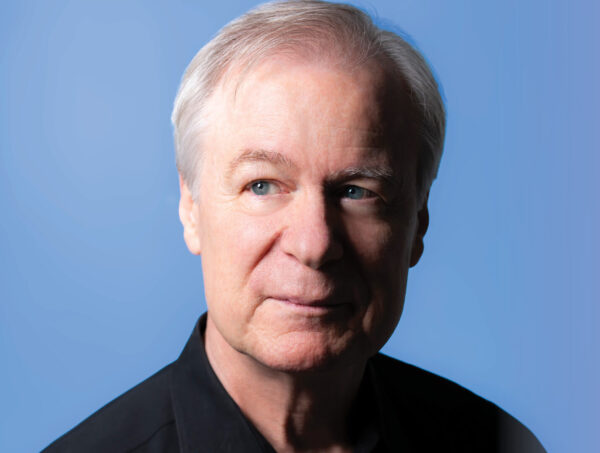
David Robertson is best known as a conductor and acclaimed music director; it’s easy to forget that he studied horn and composition at London’s Royal Academy of Music. Composing would soon take a back seat in the face of a “day job” performing other people’s music. That day job, however, and specifically his role as music director here in St. Louis, brought about a felicitous situation that would eventually lead to the composition of Light forming. In January 1999, he met pianist Orli Shaham at a soloist–conductor meeting ahead of their first rehearsal with the SLSO of Chopin’s E-minor concerto.
David Robertson continues the story:
Orli’s singing tone, richly shaded approach to harmony, and exquisite ability to shape phrases spoke to me immediately. From then on I have been hooked on her artistry. In the intervening years we have performed north of 25 concertos together, ranging from Mozart to Mackey. We have also raised a family together, complete with human and canine members.
When Orli floated the idea of a piano concerto to me in March of 2020, it was a delight to imagine the sounds she would make. Writing for a particular performer has always been a boon to composers, and in this case my ear could reference the exact sound Orli can make in Beethoven, Bartók, Messiaen, or Ravel. It was clear to me that my concerto would fall in line with the music already present in her vast repertoire. Not being a pianist myself, it was liberating to think purely in musical terms.
Keyboards are the only instruments that can be entirely self-sufficient. At the same time, their wonderful ability to play multiple lines, explore vertical harmony, and span an enormous pitch range sits in contrast to the ability of most orchestral instruments to sustain, to become louder or softer on the same tone, or even move smoothly in smaller increments than the keyboard division of twelve notes per octave. Exploring the overlapping and differing points of view between the orchestra and the pianist was my main starting point.
I chose the highly original fast–slow–fast format of three contrasting movements, played without a break. The orchestra is “classical” in size: woodwinds by twos, a pair of horns and trumpets, timpani, and strings. My one contemporary indulgence was the addition of an agile percussionist.
…la musique incertaine de leur voix… (the uncertain music of their voices). The sounds people make when talking have always been fascinating to me. The musical sensation of listening to a language one doesn’t speak, hearing subtly volatile speech sounds, gradually gives way to a focus on meaning as we become conversant in the language. It remains for poets and composers—Janáček and Reich come to mind— to make us once again aware of the music wedded to spoken words. I have always loved a line in Proust’s Sodom and Gomorrah [volume four of À la recherche du temps perdu] where he speaks of “the uncertain music of their voices.” Similarly, the poems of Stéphane Mallarmé often flicker between the sound and sense of a phrase, an inherently musical approach. My first movement takes its inspiration from the poem in his prose piece La Déclaration Foraine and presents the piano as able to pull meanings from the spoken inflections of the sonnet.
Anfore del cuore (Amphoræ of the heart). Much of this work was sketched in snatched moments between conducting engagements (a.k.a. my day job). I would use the time off between rehearsals or performances to note down ideas that had occurred to me. While in Rome, I visited Trajan’s Market and the Museum of the Imperial Fora where, among the many fascinating artifacts from the past, I came upon a room filled with amphoras. While I had seen these clay vessels before and knew that they were used to transport varied liquids around the Mediterranean, the particular layout of the room deep within the ancient walls of the Forum and filled to the ceiling with row upon row of large amphoras was strangely moving. The amphora’s two handles necessitate both hands’ participation for transporting. This image led me to the two-fisted piano chords which form the basis of the second movement.
Rounding to Joy. During the pandemic, it sometimes felt difficult to shake a gnawing sense of foreboding. Yet one of the great sources of solace for us all resides in the wonder and delight that music can bring. It is still surprising, when you learn of what was going on in composers’ lives, to realize that some of their most joyous music was written in times of personal sadness. The sudden death of my mother many years ago created a sadness unlike any I had ever known, yet I remember vividly my surprise at how conducting a program of Rossini somehow magically stitched back together the fragments of a broken heart. This is perhaps the most miraculous gift that music can give us. My final movement is an exuberant, grateful dance around the light and love that Orli is constantly bringing to me ever since that first lucky meeting just over 27 years ago.
David Robertson © 2022/2026
| First performance | October 15, 2022, by the Orlando Philharmonic Orchestra, conducted by Eric Jacobsen with Orli Shaham as soloist |
| First SLSO performance | These concerts |
| Instrumentation | solo piano; 2 flutes, 2 oboes (one doubling English horn), 2 clarinets, 2 bassoons, 2 horns, 2 trumpets, timpani, percussion, strings |
| Approximate duration | 23 minutes |
Something for the Dark
Sarah Kirkland Snider
Born 1973, Princeton, New Jersey
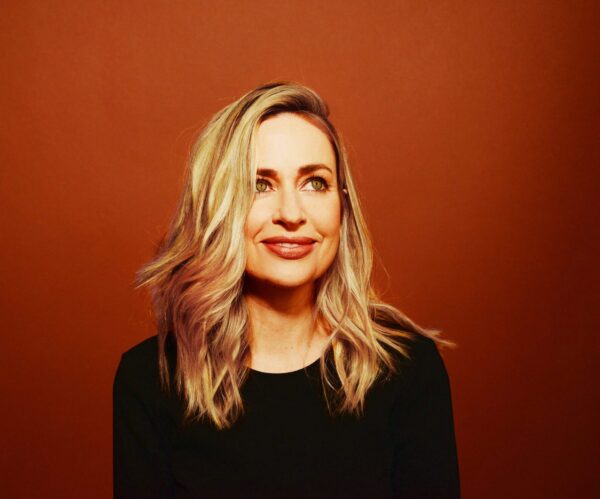
Something for the Dark arose from Sarah Kirkland Snider’s association with the Detroit Symphony Orchestra in 2014, as the city was recovering from financial turmoil. Snider had received the DSO’s Elaine Lebenbom Award for Female Composers, and “thinking about Detroit led me to think about resilience, and what it means to endure.” She had in mind the optimism of a very young person, with the music taking the form of a bold, heroic motif which then journeyed through challenge and adversity to arrive at an even stronger, bolder version of itself. “Growth! Triumph! A happy ending!” she writes. “But that wasn’t what happened.”
What does happen? After a brief hint of passing doubt, Something for the Dark does indeed open with a bold, heroic statement of hope and fortitude—listen for the horns and trombones. But early in its search for glory, explains Snider, “this motif finds itself humbled beyond recognition: a delicate, childlike tune in the flute, harp, and celeste arises in its stead. This new version of hope is then put through a series of challenges that roil and churn it like the sea tossing a small boat— testing it, weathering it, even taunting it with memories of its early hubristic naivete. Eventually, the music finds its way to solid ground, and though its countenance has now darkened, its heroism a distant memory, it finds a kind of clear-eyed serenity—and, maybe, even, the kind of hope that endures.”
Snider’s title comes from “For Fran” by former US Poet Laureate Philip Levine, best known for his poems about Detroit’s working class. The last two lines of the poem struck her as an apt motto for Levine’s many clear- eyed reflections on endurance. In preparing the flower beds for winter, Levine’s wife becomes a symbol of the promise of renewal: “She packs the flower beds with leaves/ Rags, dampened papers, ties with twine/ The lemon tree, but winter carves/ Its features on the uprooted stem… I turn to her whose future bears/ The promise of the appalling air/ My living wife, Frances Levine, Mother of Theodore, John, and Mark/ Out of whatever we have been/ We will make something for the dark.”
Snider was recently named one of the Top 35 Female Composers in Classical Music by The Washington Post. Her output is prolific and her works have been commissioned and performed by major orchestras and institutions through the US as well as internationally. Highlights of recent seasons included the premiere of her opera Hildegard (Los Angeles Opera); a multimedia collaboration with visual artist Deborah Johnson, Eye of Mnemosyne; and Forward into Light (New York Philharmonic). In 2023, she made her Cleveland Orchestra debut when David Robertson conducted Something for the Dark.
| First performance | April 14, 2016, Giancarlo Guerrero conducting the Detroit Symphony Orchestra |
| First SLSO performance | These concerts |
| Instrumentation | 2 flutes, piccolo, 2 oboes, English horn, 3 clarinets, 2 bassoons, contrabassoon, 4 horns, 4 trumpets, 3 trombones, tuba, timpani, percussion, harp, piano (doubling celeste), strings |
| Approximate duration | 12 minutes |
The Age of Anxiety
Leonard Bernstein
Born 1918, Lawrence, Massachusetts
Died 1990, New York City
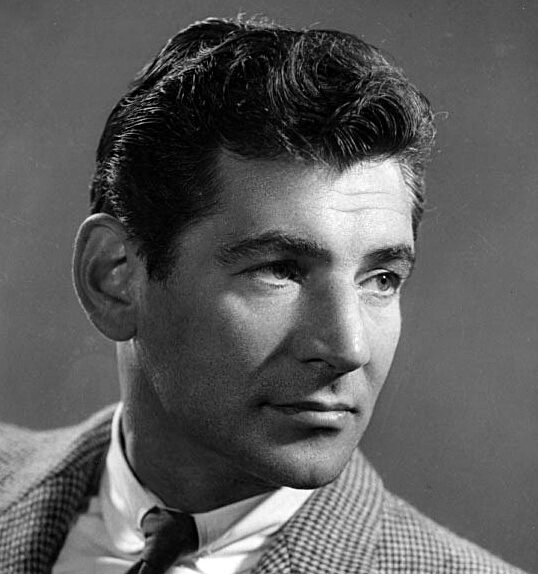
Leonard Bernstein was many things: talented, learned, dynamic, and more. Above all he was a man of his time, an artist keenly attuned to the issues and complexities of the era in which he lived.
That era was a difficult one. Coming of age in the 1940s, Bernstein belonged to a generation that inherited a world from which easy faith in progress, human nature, even divine providence had been obliterated by two world wars, the Great Depression, and the specter of nuclear annihilation. God was dead, many thinkers believed, but mankind had proved less than the admirable Promethean creature humanists once imagined. Science had brought comfort and victory over diseases, but also instruments of mass destruction. Hedonism, the pursuit of momentary pleasure, imparted no lasting comfort. And so, a crisis of faith hung over the mid-20th century. It was, for many, a time of uncertainty, an age of anxiety.
That last phrase was how one of the great poets of the era described the time. The Age of Anxiety is a long poem by W. H. Auden, who emigrated from England to New York in the 1930s. Published in 1947, The Age of Anxiety imagines four young people—three men and a woman—who meet by chance in a New York bar one evening. All suffer the modern malaise of feeling unconnected and purposeless. Somehow, they fall into a shared reverie in which they wander through a barren wasteland representing the modern world. Eventually at least some of them find hope by accepting religious faith, concluding that it is better to believe in something, even if that belief is a leap of blind faith, than to endure lack of existential meaning.
Bernstein read Auden’s poem shortly after its publication and, deeply affected, began almost immediately composing a work based on it. From the start, he conceived it as a symphony inspired by The Age of Anxiety, not as a vocal setting of its verses. He claimed he did not even set out to write a programmatic representation of the poem, that is, a piece in which the musical details correspond to the literary narrative. And yet, Bernstein discovered, to his astonishment, “detail after detail of programmatic relation to the poem—details that had ‘written themselves’ wholly unplanned and unconscious.”
Visually as well as musically, the most striking aspect of The Age of Anxiety is the presence of a soloist. Bernstein’s conception of a symphony with piano solo emerged from his own extremely personal identification with the poem. The piano solo (played in the first performance by Bernstein himself) provides “an almost autobiographical protagonist, set against an orchestral mirror in which he sees himself.” Bernstein also emphasizes that this is “no ‘concerto’ in the virtuosic sense,” even though he regarded Auden’s poem as a “shattering” example of pure literary virtuosity.
Stylistically, the The Age of Anxiety is highly eclectic, with modern dissonances and complex rhythms mingling with elements of jazz, traditional harmony, and a warm, romantic lyricism. The structure mirrors the poem—organized in two main parts, each of which is divided into three smaller sections that are played continuously.
PART I
The Prologue. This short section evokes the setting of Auden’s narrative: a bar in Manhattan, where the four protagonists find themselves one evening. Two clarinets echoing each other’s phrases establish a lonely atmosphere. A descending scale then serves, Bernstein noted, “as a bridge into the realm of the unconscious, where most of the poem takes place.”
The Seven Ages. The characters fall into a discussion about life and its meaning, which Bernstein represents through a series of seven “variations” (distinguished only by shifts of tempo, not by titles) in which each takes up and expands a musical idea introduced in the previous passage.
The Seven Stages. The unusual variation format of the previous section continues as the characters undertake a dream-like journey in search of security and happiness yet always missing the objective. “This set of variations,” Bernstein observed, “begins to show activity and drive, and leads to a hectic, though indecisive, close.”
PART II
The Dirge. According to Bernstein, the four protagonists are now in a cab “en route to the girl’s apartment for a nightcap” and lamenting the apparent loss of a patriarchal deity or “colossal Dad.” The main theme has a decidedly modern tone—it is based on a 12-tone row—but a contrasting middle section turns to what Bernstein described as “Brahmsian romanticism.”
The Masque. The four characters try to shed their anxiety in a late-night party, “each one afraid of spoiling the others’ fun by admitting that he should be home in bed.” Bernstein portrays the scene in a jazz-inflected scherzo for piano and percussion (joined by harp and celeste). The festivity ends in fatigue and disappointment, and the orchestra stops abruptly, with a pianino emerging from the texture and leading directly into the final section.
The Epilogue. As the strains of the party music fade away, a trumpet announces a theme emblematic of “something pure.” The strings respond with a melancholy recollection of the Prologue music. The trumpet theme, taken up by the winds, confronts the music of loneliness and alienation in a passage of rising tension. At last, a radiant pianissimo in the strings indicates a new perception of the existential dilemma. The entire orchestra now joins in articulating a new-found faith.
Throughout the Epilogue, Bernstein points out, the piano-protagonist has taken no part—rather, observing it as one might watch a movie—but at the end “seizes upon it with one eager chord of confirmation” despite not having “participated in the anxiety-experience leading to this fulfilment.” The way is open; but still stretches long before.
Adapted from notes by Paul Schiavo © 2013 and Leonard Bernstein © 1965
| First performance | April 8, 1949, Serge Koussevitzky conducting the Boston Symphony Orchestra, with the composer as the piano soloist |
| First SLSO performance | October 15, 1970, conducted by Walter Susskind with Philippe Entremont as piano soloist |
| Most recent SLSO performance | February 16, 2013, conducted by David Robertson with Orli Shaham as piano soloist |
| Instrumentation | solo piano; 2 flutes, piccolo, 2 oboes, English horn, 2 clarinets, bass clarinet, 2 bassoons, contrabassoon, 4 horns, 3 trumpets, 3 trombones, tuba, timpani, percussion, 2 harps, celeste (doubling pianino), strings |
| Approximate duration | 35 minutes |
… A Joyful Noise …
David Robertson
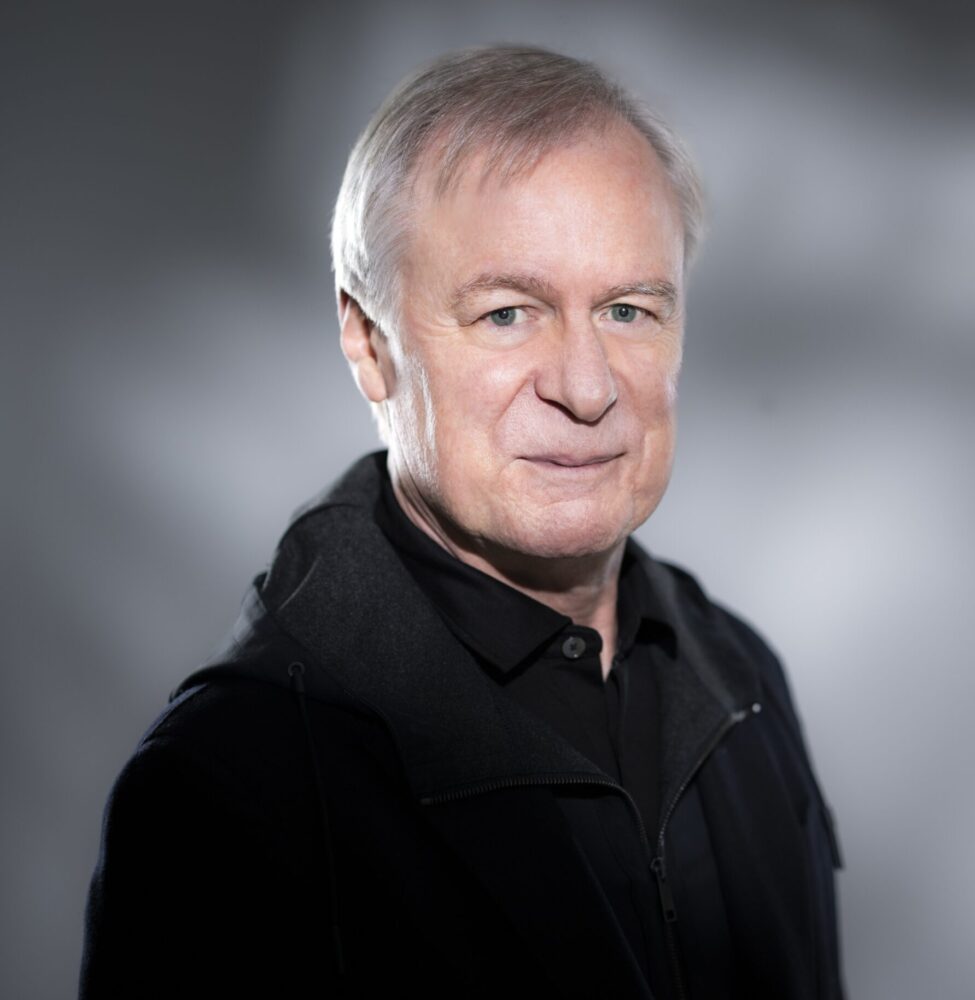
The final work on this program takes its title from Psalm 100 (“Make a joyful noise unto the Lord”) and was composed for the Australian Youth Orchestra on the occasion of their 2025 European tour, fulfilling David Robertson’s desire to “give their amazing energy an outlet.”
…A Joyful Noise… is part of Robertson’s return to composition after many decades, but it’s also a nod to his creative past, drawing its material from an organ work he composed in the 1980s. Those ideas are compelling, beginning with an irresistible repeated motif that takes a conventional meter (nine pulses to the measure, 3 + 3 + 3) and breaks it into groups of 4 + 3 + 2—you’ll be hard pressed not to bop along. Underneath flitting woodwinds and strings, the brass play an uplifting, hymn-like theme. Midway, the radiant effect of full orchestra dissolves into a mosaic of subtle colors as different instruments pass the musical ball. Then the opening idea returns—listen for some frenetic trumpets—and the music arrives on a joyous final chord with a decisive rim shot from the side drum.
No section of a touring orchestra presents a greater logistical challenge than the percussion, or as musicians sometimes call it, the kitchen department. As a result, this otherwise exuberant work had to be restricted a little in the percussion writing. What we’re hearing this week in St. Louis, therefore, could be considered the premiere of the full version with “a few more kitchen accessories.”
Yvonne Frindle © 2026
| First performance | July 18, 2025, David Robertson conducting the Australian Youth Orchestra at the Mecklenburg-Vorpommern Festival, Germany, and subsequently on tour in venues including the Vienna Musikverein, Amsterdam Concertgebouw, and Sydney Opera House |
| First SLSO performance | These concerts, which are the first performances of the full orchestration |
| Instrumentation | solo piano; 2 flutes, 2 oboes (one doubling English horn), 2 clarinets, 2 bassoons, 2 horns, 2 trumpets, timpani, percussion, strings |
| Approximate duration | 5 minutes |
Artists
David Robertson
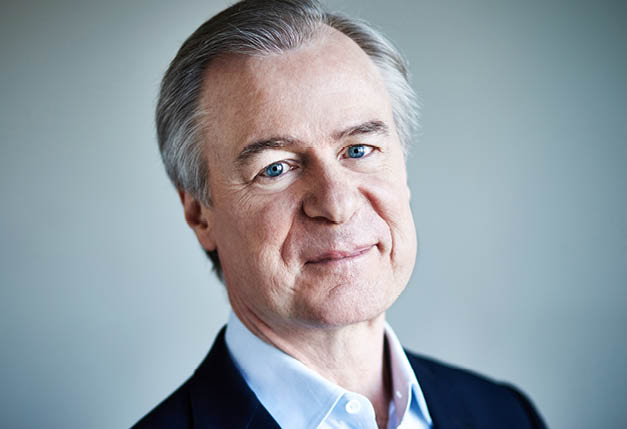
David Robertson occupies the most prominent podiums in orchestral and new music, and opera. He is a champion of contemporary composers and an ingenious programmer. In addition to a transformative 13-year tenure as Music Director of the SLSO, he has served in numerous leadership positions, including Chief Conductor and Artistic Director of the Sydney Symphony Orchestra, with Orchestre National de Lyon, BBC Symphony Orchestra, and, as protégé of Pierre Boulez, Ensemble InterContemporain. He appears with the world’s great orchestras such as those of New York, Philadelphia, Los Angeles, and Cleveland; Royal Concertgebouw Orchestra, Vienna Philharmonic, Berlin Philharmonic, and Leipzig Gewandhaus Orchestra.
Since his 1996 Metropolitan Opera debut, he has conducted a breathtaking range of Met projects, including the 2019 production premiere of Porgy and Bess, winning the Grammy for Best Opera Recording. In 2022, he made his Rome Opera debut.
This season, he also returns to the Sydney Symphony Orchestra, New York Philharmonic, National Symphony Orchestra, HR- Sinfonieorchester, Budapest Festival Orchestra, Czech Philharmonic, and the orchestras of Dallas, Leipzig, and Vancouver, and will conduct in Hong Kong, Korea, and Taiwan.
David Robertson is the Juilliard School’s Director of Conducting Studies, Distinguished Visiting Faculty, and serves on the Tianjin Juilliard Advisory Council. He concludes his three-year term this season as the inaugural Utah Symphony and Opera’s Creative Partner. He is a Chevalier de l’Ordre des Arts et des Lettres of France.
Orli Shaham
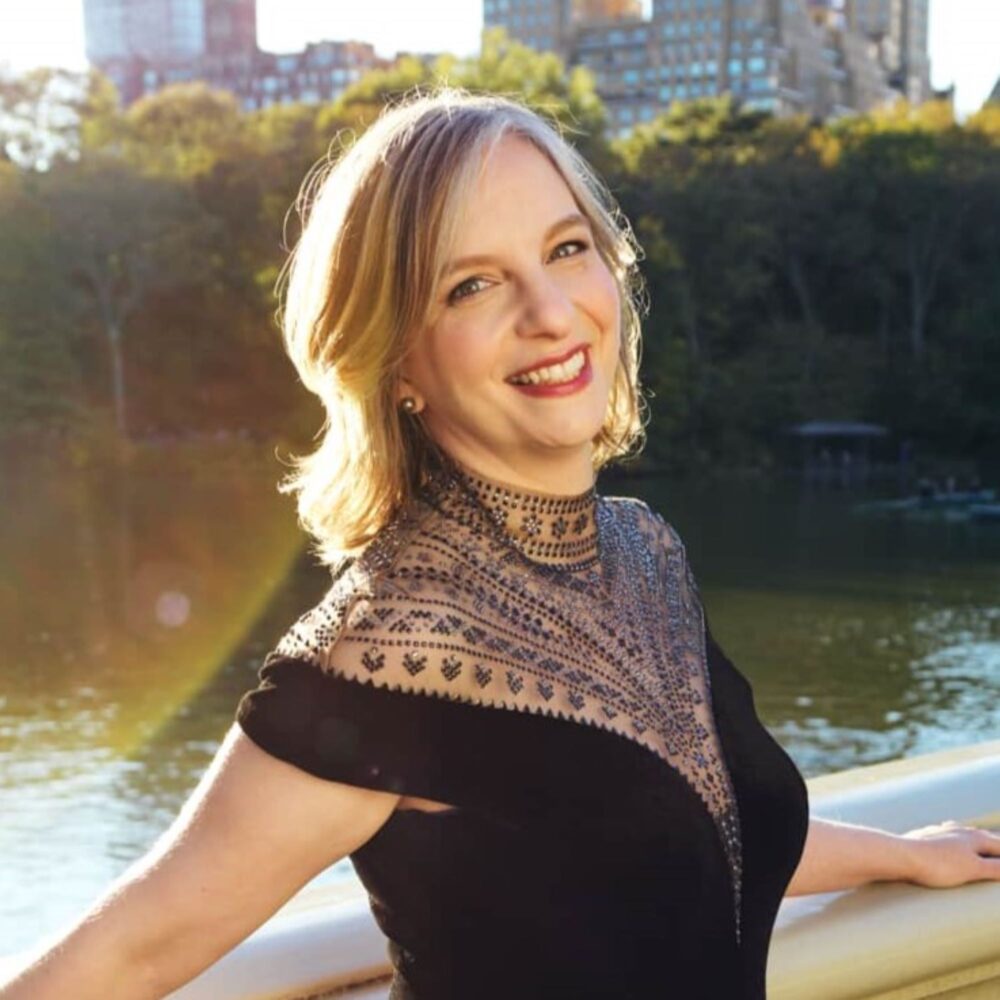
A consummate musician recognized for her grace, subtlety, and brilliance, pianist Orli Shaham is hailed by critics on four continents. She has performed with major orchestras worldwide, and has appeared in recital from Carnegie Hall to the Sydney Opera House. She has been Artistic Director of Pacific Symphony’s chamber series Café Ludwig since 2007, and from 2022 to 2024 was Artist in Residence at Vancouver Symphony Orchestra (USA).
In addition to this week’s concerts in St. Louis, season highlights include performances of Light Forming with the Nashville Symphony, Beethoven’s “Emperor” Concerto at the Classical Tahoe Festival, and the premiere performances of Reena Esmail’s concerto for violin and piano, commissioned with her brother, violinist Gil Shaham.
In February, she released American Tapestry, an album of chamber music with members of the Pacific Symphony, including works by Margaret Brouwer, Avner Dorman, Reena Esmail, and Viet Cuong. Her 2024 recording of the complete Mozart sonatas received accolades worldwide, and her discography also includes an acclaimed solo album, Brahms Inspired; John Adams’ Grand Pianola Music with pianist Marc-André Hamelin, the San Francisco Symphony, and the composer conducting; and American Grace, featuring Steven Mackey’s Stumble to Grace, written for her, with the Los Angeles Philharmonic.
Orli Shaham is on the piano and chamber music faculty at the Juilliard School and is Chair of the Board of Trustees of Kaufman Music Center. She is a major presence on public radio as Co-Host and Creative for NPR’s From the Top and was host of Dial-a-Musician, a radio feature series she created. She is regularly featured on the popular music education platform Tonebase, including masterclasses on Mozart’s piano sonatas and a lecture-performance about Clara Schumann.
Orli Shaham is a Steinway Artist.