Scheherazade (March 14-15, 2026)
Program
March 14-15, 2026
- Anna Sułkowska-Migoń, conductor
- Leila Josefowicz, violin
Grażyna Bacewicz (1909–69)
- Overture
Alban Berg (1885–1935)
- Violin Concerto
- Andante – Allegretto
- Allegro – Adagio
Leila Josefowicz, violin
Intermission
Nikolai Rimsky-Korsakov (1844–1908)
- Scheherazade–Symphonic Suite, Op. 35
- Largo e maestoso – Allegro non troppo
- (The Sea and Sinbad’s Ship)
- Lento – Allegro molto
- (The Story of the Kalandar Prince)
- Andantino quasi allegretto
- (The Young Prince and Princess)
- Allegro molto
- (Festival in Baghdad – The Sea – Shipwreck – Conclusion)
- Largo e maestoso – Allegro non troppo
Scheherazade, Her Story
It’s not apparent from the program listing, but this concert features two violin “concertos.” In Rimsky-Korsakov’s symphonic suite the concertmaster adopts the persona of Scheherazade: his solos representing the storyteller as she spins her tales. And the opening work, an overture by Grażyna Bacewicz, also takes up the thread of virtuosity: this thrilling music comes from a composer with an astonishing command of the violin.
This weekend’s program—conducted by Anna Sułkowska-Migoń in her SLSO debut, with Leila Josefowicz making a welcome return as soloist—is rich in the stories of women. Bacewicz, a key figure in Polish music in the mid-20th century, braved the hardships of World War II to write an overture that sparkles with optimism—interrupted only by a moment of pensive nostalgia.
Alban Berg’s Violin Concerto takes the program to a mournful place. Although he was meant to be finishing his opera Lulu, Berg accepted the commission from American violinist Louis Krasner in part because the $1,500 fee was a godsend at a time when the Nazis had banned his music. The concerto is dedicated “To the memory of an Angel” and is a requiem for Manon Gropius, the daughter of Alma Mahler and architect Walter Gropius. But it’s possible the concerto also holds an autobiographical secret—and two “angels”—with a bittersweet quotation from a Carinthian folksong (“A bird on the plum tree has awakened me”) alluding to Berg’s illegitimate daughter Albine, who was the same age as 18-year-old Manon.
The Violin Concerto is a serious and somber work, but Berg told Krasner that it had brought him “more and more joy.” Perhaps he foresaw that it would indeed achieve Krasner’s goal of furthering the cause of 12-tone music and become the the most popular creation of the Second Viennese School. Grażyna, Manon, Albine… The fourth woman in this concert is a Persian queen whose name has become associated with astute courage, imagination, and boundless creativity. And with Rimsky- Korsakov’s Scheherazade we finish the program on a high note in some of the most colorful and brilliant music ever written for an orchestra.
Overture
Grażyna Bacewicz
Born 1909, Łódź, Poland
Died 1969, Warsaw, Poland
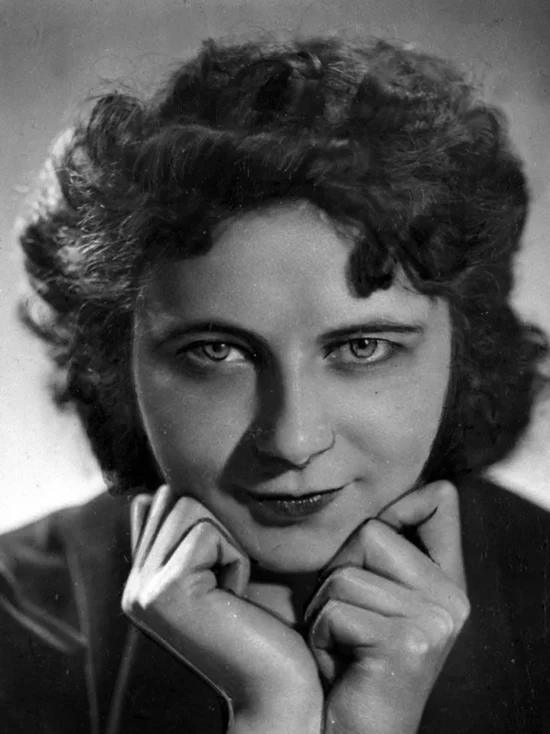
There’s possibly no better place for an aspiring composer to learn the intricacies of the symphony orchestra as an instrument than the concertmaster’s chair—sitting in the thick of things while responsible for the ensemble as a whole. And this is where Grażyna Bacewicz [grah-ZHEE-nah BAH-tseh-vitch] found herself in 1936, when she was invited to join the Polish Radio Symphony Orchestra in Warsaw. For a violinist with virtuoso prospects, this must have seemed a surprising career move, but as one Polish scholar writes: “Bacewicz the violinist joined the orchestra because of Bacewicz the composer.”
The founding conductor of the orchestra, Grzegorz Fitelberg, was also a composer, and he encouraged Bacewicz as she developed her orchestration skills. The results are evident in her Overture of 1943, her first acknowledged orchestral work and her most popular creation.
In her homeland, Bacewicz remains a major figure—an influential Polish composer of the 20th century, alongside her contemporaries Witold Lutosławski and Andrzej Panufnik. Outside Poland her name is less familiar, but American music lovers today are beginning to get to know her music, assisted by champions such as Anna Sułkowska-Migoń. (In April 2025, for instance, the SLSO, with Ruth Reinhardt conducting, played Bacewicz’s Concerto for string orchestra for the first time.)
Bacewicz faced extreme challenges in her life: the dangers of World War II followed by the specter of communism, and in 1954, a serious car accident that ended her performing career. But her early musical background was an enviable one. Both her parents were musical and Grażyna herself emerged as a child prodigy—a gifted pianist as well as violinist. As a teenager, she studied at the Warsaw Conservatory with Poland’s leading teachers, including composer Karol Szymanowski. Next stop was Paris, where she studied violin with André Touret and Carl Flesch, and composition with the best teacher of the day, Nadia Boulanger.
On her return to Warsaw, Bacewicz flourished, but her naturally evolving career was interrupted by the German occupation. Wehrmacht bombs destroyed the Philharmonic Hall and the opera house; Polish Radio and its ensembles were shut down; public concert life came to an end. Bacewicz herself barely escaped death when instinct prompted her to cross a bridge ahead of the bombardment of Garwolin in 1939.
From this turmoil emerged Bacewicz’s Overture, a beacon of musical optimism. As Stefan Kisielewski wrote after the premiere in 1945, this was music that sparkled with life, “racing as if on the wings of a rhythmic temperament.”
The first sounds come from the timpani. You’ll recognize the rhythm and the contour: it’s the “da da da dum” that begins Beethoven’s Fifth Symphony. As with Beethoven, the motif has a structural function, informing the entire movement and giving it impetus. But for Bacewicz this motif likely had symbolic significance as well.
In 1941, the BBC World Service launched London Calling Europe for listeners in occupied territories and the opening of Beethoven’s Fifth was adopted as a sting, with that rhythm (• • • –) matching the Morse code for V, or Victory. We can’t be certain that Bacewicz heard the broadcasts, but her prominent use of the rhythm suggests she was indeed familiar with them.
The timpani beats are underpinned by scurrying strings—thrilling, and completely idiomatic, virtuoso writing that reveals a violinist’s hand. But within a minute, the perpetual motion has yielded to a tranquil Andante section with a pensive flute theme. The respite is brief. Before another minute has elapsed, the opening Allegro idea returns, this time marked “energico”! The strings will be asked to play saltando, bouncing their bows on the strings in a literal dance. And throughout, even when the music is at its busiest and loudest, Bacewicz’s orchestration is luminous and transparent.
Yvonne Frindle © 2026
| First performance | September 1, 1945, by the Kraków Philharmonic, conducted by Mieczysław Mierzejewski |
| First SLSO performances | These concerts |
| Instrumentation | 2 flutes, piccolo, 2 oboes, 2 clarinets, bass clarinet, 2 bassoons, 4 horns, 2 trumpets, 3 trombones, tuba, timpani, percussion, strings |
| Approximate duration | 6 minutes |
Violin Concerto
Alban Berg
Born 1885, Vienna, Austria
Died 1935, Vienna

Alban Berg was, together with Arnold Schoenberg and Anton Webern, part of a triumvirate of Viennese composers who pioneered a radically new musical language in the early decades of the 20th century. Even so, Berg was not a musician of revolutionary temperament. On the contrary, he had great reverence for musical tradition. And his Violin Concerto is not an iconoclastic piece but, rather, one that draws substance from, and pays homage to, the musical past.
We owe this composition to the American violinist Louis Krasner, who early in 1935 asked Berg to write a new work for him. In response, the composer began sketching a violin concerto, but the character of the composition soon took on a new dimension. In April, the composer learned that Manon Gropius, the 18-year-old daughter of Alma Mahler by her second husband, the architect Walter Gropius, had died. Berg had remained close to Gustav Mahler’s widow since that composer’s death, in 1911. He was particularly fond of Manon, and he now developed a conception of the Violin Concerto as a requiem for her.
Working at a pace unprecedented in his career, he completed the concerto in a matter of months. Sadly, he never heard this, his final composition. By the end of the year, Berg himself was dead from blood poisoning as the result of an insect sting. [The composer photograph for this note is the last ever taken of Berg, dating from November 1935.]
To the Memory of an Angel
The concerto is built from a 12-note series that is pregnant with beautiful musical ideas. As its most basic feature, the series outlines a number of major, minor, and altered chords that permeate the work with dark harmonies and fleeting tonal relationships. Most of the thematic material also derives from the series, but Berg relaxes his serial procedures to allow two extraneous quotations.
The first quotation is an Austrian folk song, which appears near the end of the first movement. The second, and more significant, is the Lutheran chorale “Es ist genug” (It is enough) in its familiar harmonization by Bach. Although both melodies are tenuously related to the series, their appearance in the concerto can be attributed to poetic rather than formal considerations.
The concerto is in two movements, each in turn divided into two sections. The first movement, widely regarded as a portrait of Manon Gropius, begins with an elegiac Andante in which the solo violin is heard “tuning up” on its open strings. This tuning motif, the concerto’s most important theme, will recur in varied forms throughout the work. There follows a scherzo-like section in which Berg mimics popular Viennese tunes. Here we encounter the Austrian folk song, played nostalgically by the French horn.
The second movement opens with an accompanied soliloquy for the solo violin. Beginning with a succession of violent chords, this section builds to a climax, with the rhythms of the folk song transformed into piercing orchestral cries. This gives way almost at once to the comforting strains of the chorale, around which Berg constructs the final Adagio section. Again and again, phrases of the hymn emerge from the musical texture: “Es ist genug”—“It is enough.” A last, wistful recollection of the folk song dissolves back into the chorale, and the tuning motif brings the concerto peacefully to rest. The reverent quality of this final movement explains, and is explained by, Berg’s dedication of the concerto “To the Memory of an Angel.”
Paul Schiavo © 2013
| First performance | April 19, 1936, in Barcelona for the International Society for Contemporary Music; Louis Krasner was the soloist and Hermann Scherchen conducted the Orquestra Pau Casals |
| First SLSO performance | January 30, 1960, Edouard Van Remoortel conducting with Isaac Stern as soloist |
| Most recent SLSO performances | March 9, 2013, in St. Louis, David Robertson conducting with James Ehnes as soloist, followed by a performance at UC Davis |
| Instrumentation | solo violin; 2 flutes (both doubling piccolo), 2 oboes (one doubling English horn), 3 clarinets (one doubling alto saxophone), bass clarinet, 2 bassoons, contrabassoon, 4 horns, 2 trumpets, 2 trombones, tuba, timpani, percussion, harp, strings |
| Approximate duration | 23 minutes |
Scheherazade
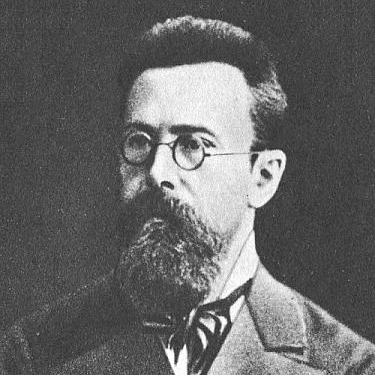
Nikolai Rimsky-Korsakov
Born 1844, Tikhvin near Novgorod, Russia
Died 1908, Lyubensk, Russia
The Sultan Shahryar, convinced of the duplicity and infidelity of all women, had vowed to slay each of his wives after the first night. The Sultana Scheherazade, however, saved her life by the expedient of recounting to the Sultan a succession of tales over a period of a thousand and one nights. Overcome by curiosity, the Sultan postponed from day to day the execution of his wife, and ended by renouncing altogether his sanguinary resolution.
***
We think we know the story of Scheherazade, Persian queen and fabled storyteller of The Thousand and One Nights. Some of her stories (and a few that were invented for her by Europeans) have become part of popular culture: Ali Baba and the Forty Thieves, Aladdin (an 18th-century French addition), and one you’ll recognize from the movement titles for Rimsky-Korsakov’s Scheherazade: Sinbad the Sailor.
Strictly speaking, orchestras shouldn’t publish those titles; the composer withdrew them so as not to constrain his listeners’ imaginations. Rimsky-Korsakov had taken the idea of Scheherazade and the Arabian Nights as his starting point, and the narrative titles he’d devised in the winter of 1887–88 were intended to suggest particular characters—the story of a kalandar or “beggar” prince, for example. But the end result, he said, was a “kaleidoscope of fairytale images and designs of Eastern character,” more concerned with the connotations of the East it brings to mind than with literal storytelling.
He believed it was futile to seek in Scheherazade leading motifs that could be consistently linked to particular characters or events. The motifs we recognize were “nothing but purely musical material … for symphonic development” and a means of creating unity between the four movements, and on each appearance they correspond to “different images, actions, and pictures.”
“All I had desired,” he later wrote in My Musical Life, “was that the hearer, if he liked my piece as symphonic music, should carry away the impression that it is beyond doubt an Eastern narrative describing a motley succession of fantastic happenings,” and not merely four pieces based on common themes.
The ominous pounding melody representing the stern Sultan Shahryar in the opening, for example, appears in the tale of the Kalandar Prince, although Shahryar plays no part in that narrative. And the muted fanfare of the second movement returns in the otherwise unconnected depiction of the foundering ship. Rimsky-Korsakov also cites the appearance of both the Kalandar Prince’s theme and the theme of the Young Princess in the Baghdad festival although “nothing is said about these persons taking part in the festivities.”
But Rimsky-Korsakov did admit that one of his motifs was quite specific, attached not to any of the stories, but to the storyteller who provides the frame story of The Arabian Nights: “The unifying thread consisted of the brief introductions to the first, second, and fourth movements and the intermezzo in movement three, written for violin solo and delineating Scheherazade herself as telling her wondrous tales to the stern Sultan.”
It is this idea—an intricately winding violin theme supported only by the harp—that soothes the thunderous opening and embarks upon the first tale: the sea and Sinbad’s ship. For Rimsky-Korsakov, who was synæsthesic, the choice of E major for the billowing cello figures was surely no accident: his ears “saw” this key as dark blue. But you don’t have to be synæsthesic to experience the marvelous colors of Rimsky-Korsakov’s orchestral writing. So formidable is his instinct that he can convince his listeners of the raging of a storm at sea, the exuberance of a festival, and the exotic colors of an imagined East.
A cajoling melody played by solo bassoon can be heard as a Kalandar (or “beggar”) Prince in the second movement. (Rimsky-Korsakov, perhaps deliberately, neglects to tell us which of the beggar princes in The Arabian Nights he had in mind.) The dramatic middle section features muted fanfares, based on the Sultan’s theme. The third movement opens with a sinuous violin melody—it’s easy to imagine Scheherazade telling this story in her own voice. The similarity between the two main themes of the third movement (for violin and then flute and clarinet) suggests that the Young Prince and Princess are perfectly matched in temperament and character.
An agitated transformation of the Sultan’s theme, in dialogue with Scheherazade’s theme, prefaces the final tale. The fourth movement combines the Festival in Baghdad and the tale of the shipwreck in music that’s both splendid and terrifying. Triangle and tambourines accompany the lively cross-rhythms of the carnival, and the mood builds in intensity before all is swamped by the return of the sea theme from the first movement. But after the fury of the shipwreck, it is Scheherazade who has the last word in this story. Her spinning violin solo emerges in gentle triumph over the Sultan’s bloodthirsty resolution.
Yvonne Frindle © 2024
The Arabian Nights
The Arabian Nights stories belong to an ancient and fluid tradition, a mixture of literature and oral tales from a variety of sources: mainly from what’s now Syria and Iraq, but also Iran, Turkey, and Greece. The stories reached Europe when Antoine Galland published a French translation of The Thousand and One Nights at the beginning of the 18th century. There are hundreds of stories. But we all know certain characters, some more authentic than others and, above all, we know the frame story about Scheherazade and the Sultan.
In many ways, The Thousand and One Nights, as literature, has always enjoyed more prominence and interest in the West than in the Middle East. They became hugely popular—the source and inspiration for all sorts of artistic creations. And in the 19th-century Europe of Rimsky- Korsakov, “Scheherazade” embodied all that was sumptuous, exotic, and romantic—part of an imagined East.
| First performance | November 9, 1888, in St. Petersburg, conducted by the composer |
| First SLSO performance | March 11, 1910, Max Zach conducting |
| Most recent SLSO performance | November 28, 2021, Gemma New conducting |
| Instrumentation | 3 flutes (two doubling piccolo), 2 oboes (one doubling English horn), 2 clarinets, 2 bassoons, 4 horns, 2 trumpets, 3 trombones, tuba, timpani, percussion, harp, strings |
| Approximate duration | 42 minutes |
Artists
Anna Sułkowska-Migoń

Born in Kraków, Poland, Anna Sułkowska-Migoń studied viola (Fryderyk Chopin University of Music) and conducting (Krzysztof Penderecki Academy of Music). A series of prestigious conducting programs and competition wins—including Dallas Opera’s Hart Institute for Women Conductors, working with the Chicago Symphony Orchestra at the Ravinia Festival, and the Taki Alsop Conducting Award—was capped by first prize in the 2022 La Maestra competition and the Neeme Järvi Prize at the 2023 Gstaad Conducting Academy.
Since then she has appeared regularly with all the major Polish orchestras, and is increasingly in demand throughout Europe and the UK, with recent highlights including debuts with the Deutsches Symphonie-Orchester Berlin, Dresden Philharmonic, Bern Symphony Orchestra, Orchestre de Chambre de Paris, Bournemouth Symphony Orchestra, and the RTÉ Concert Orchestra. In North America, she made her Philadelphia Orchestra debut to critical acclaim in 2024, followed by important debuts with the National Arts Centre, Ottawa and the Quebec Symphony Orchestra.
In addition to her SLSO debut, highlights of the 2025/26 season include concerts with the Minnesota Orchestra and San Diego Symphony, her Orchestre Philharmonique de Radio France debut, and opening the season for the Ulster Orchestra. Last year she toured Japan with the Warsaw Philharmonic and made her opera debut in Bern, conducting Eugene Onegin.
A champion of Polish composers, in 2023 she conducted the 25th anniversary of Penderecki’s Credo at the Oregon Bach Festival and a special concert marking the 80th Anniversary of the Warsaw Ghetto Uprising.
Leila Josefowicz

A favorite of living composers, violinist Leila Josefowicz has premiered many concertos written especially for her. A highlight of her collaborations with the SLSO include a Grammy-nominated recording with former Music Director David Robertson of Scheherazade.2 by John Adams, a work she premiered with the New York Philharmonic and the composer in 2015 and has since performed worldwide. Last year she made a highly anticipated reunion with Adams for Scheherazade.2 (Hallé Orchestra), and in May she will premiere Jüri Reinvere’s Concerto for Violin, Harp and Orchestra (Cleveland Orchestra).
Other premieres have included Matthias Pintscher’s Assonanza (Cincinnati Symphony Orchestra), Luca Francesconi’s Duende – The Dark Notes (Swedish Radio Symphony Orchestra), Steven Mackey’s Beautiful Passing (BBC Philharmonic), and the UK and US premieres of Helen Grime’s Violin Concerto (BBC Symphony Orchestra) at the Aldeburgh Festival. She enjoyed a close working relationship with Oliver Knussen, performing many concertos with him, including his own, and last year again performed his Violin Concerto (Munich Philharmonic).
She is also an enthusiastic champion of 20th-century repertoire, and highlights of 2025/26 have included Karol Szymanowski’s Violin Concerto No. 2 (New York Philharmonic and David Robertson).
She has performed with pianist John Novacek since 1985, giving recitals in venues such as New York’s Zankel Hall and Park Avenue Armory, and the Kennedy Center and Library of Congress. This season they give the US premiere of Charlotte Bray’s Mriya at the Lincoln Center, and the Australian premiere in a multi-city tour for Musica Viva.
Her recent recordings include two releases with the Finnish Radio Symphony Orchestra: Bernd Alois Zimmermann’s Violin Concerto, and a Grammy-nominated recording of Esa-Pekka Salonen’s Violin Concerto, conducted by the composer. Her accolades include the 2018 Avery Fisher Prize and a MacArthur Fellowship in 2008.