5 Things You May Not Know About the SLSO’s Education Programs
By Maddie Hurst
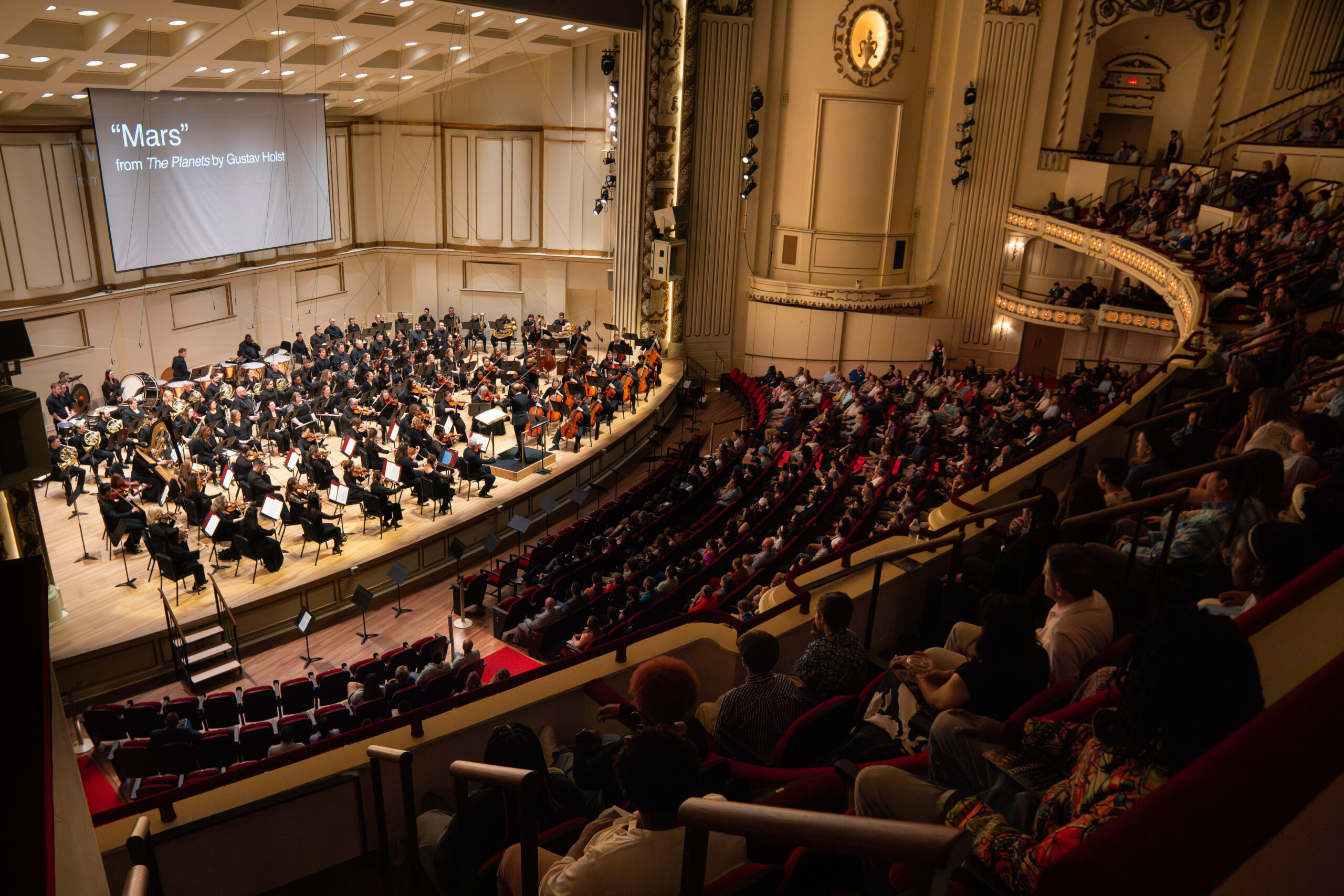
The St. Louis Symphony Orchestra has cultivated an international reputation for its artistry, ranging from the symphonies of Prokofiev and Tchaikovsky to the music of John Adams, film scores, and music across genres; however, its impact stretches far beyond the stage and into classrooms around the world. Thousands of students each year encounter the SLSO outside of a traditional concert via digital learning materials, a classroom visit, or a field trip.
In its first season back at the renovated Powell Hall at the new Jack C. Taylor Music Center, SLSO education programs expanded in new ways by launching its first concert specifically for teens, livestreaming an education concert into classrooms, and continuing to welcome thousands into Powell Hall for concert field trips. These efforts furthered the organization’s commitment to supporting students of all ages in St. Louis and beyond.
Here are five things you may not know about the SLSO’s education programs, which inspire students to get involved, and stay involved, in music.
SLSO education programs prioritize support of teachers.
The SLSO views teachers’ work as transformational, a vital part of the story when it comes to music education. “We know the incredible benefits that being involved with music has on a child and music educators in our schools are fundamental to opening those opportunities,” Jessica Ingraham, Senior Director of Education, said. Partnerships with teachers are at the heart of SLSO education programs, serving as the foundation for all its initiatives. In the 2024/25 season, more than 800 teachers in 46 states and seven countries experienced the impact of music in their classrooms using SLSO resources.
These materials include teacher guides for every education concert, Learning Lab—a free digital resource with content for all grade levels, and a plethora of professional development opportunities. From full-length concerts to complete online curricula developed by educators, digital resources created by the SLSO for teachers reached more than 237,000 students with orchestral music in the 2024/25 season.
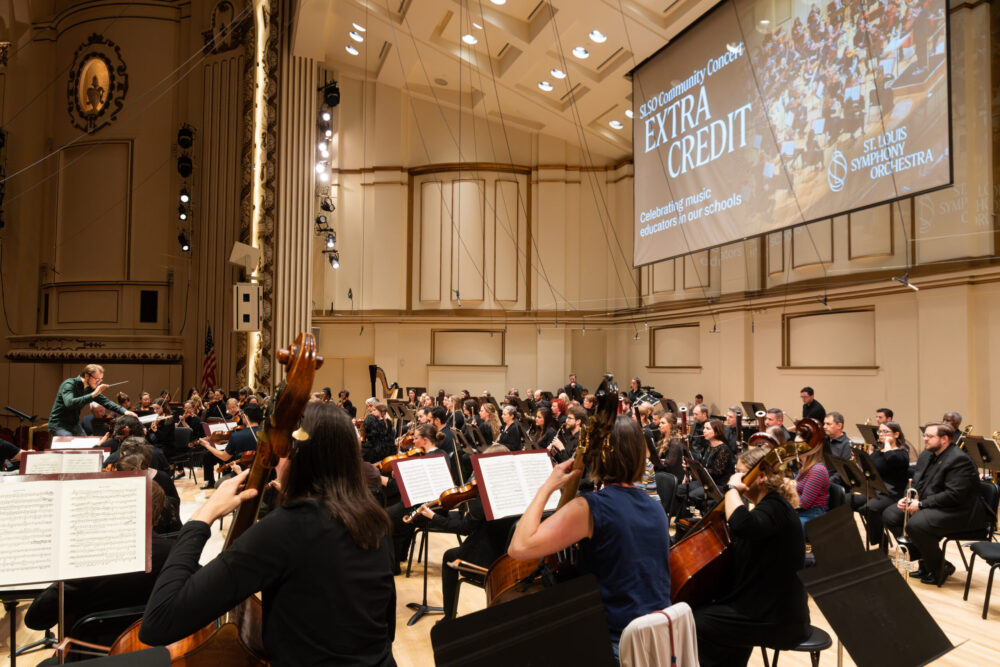
The Extra Credit program further fortifies the SLSO’s support of educators, by highlighting their talents alongside orchestra musicians on stage at Powell Hall in a free community concert. In the upcoming 2026/27 season, choral teachers will share the Powell Hall stage for the first time with members of the SLSO and its two choruses.
“Part of our role is to support arts education in our schools and shine a light on the incredible educators who teach these programs. They play such a vital role, not only in raising well-rounded children, but also ensuring the future of the arts,” Maureen Byrne, SLSO Vice President of Education and Community Programs, said. Therefore, by investing in teachers, the SLSO is investing in the future of music education itself.
Elementary students become the heroes in a musical fairytale—right in their own classroom.
With the SLSO’s in-school program, Music Quest, first through third graders embark on a musical escapade led by a host and six SLSO musicians. The objective of their quest? Save music from the evil villain, Dischordy. Students become the heroes of the story when they help secure the core elements of music, such as tempo, dynamics, and instrumentation, with the help of Harmonia, the protagonist host, and the orchestra members.
Music Quest taps into a need many children have: to explore and discover the world around them in a manner that meets them where they are. Born out of teacher recommendations, it also fulfills the needs of educators themselves. When residency-style programs no longer worked with elementary school schedules, the SLSO pivoted and partnered with St. Louis educators to dream up a program that meets both administrative and education needs, allowing more students to experience orchestral music. In just 45 minutes, students encounter classic works such as Beethoven’s Fifth Symphony and Rossini’s William Tell Overture, acquainting them with orchestral music in a digestible, adventurous way.
Education programs highlight the SLSO’s emphasis on accessibility.
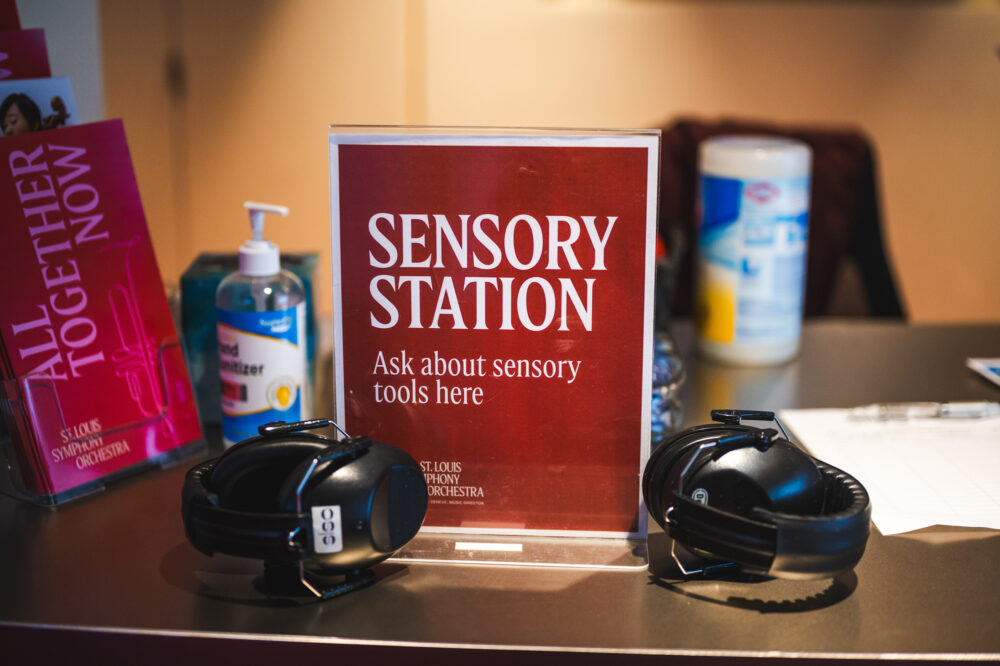
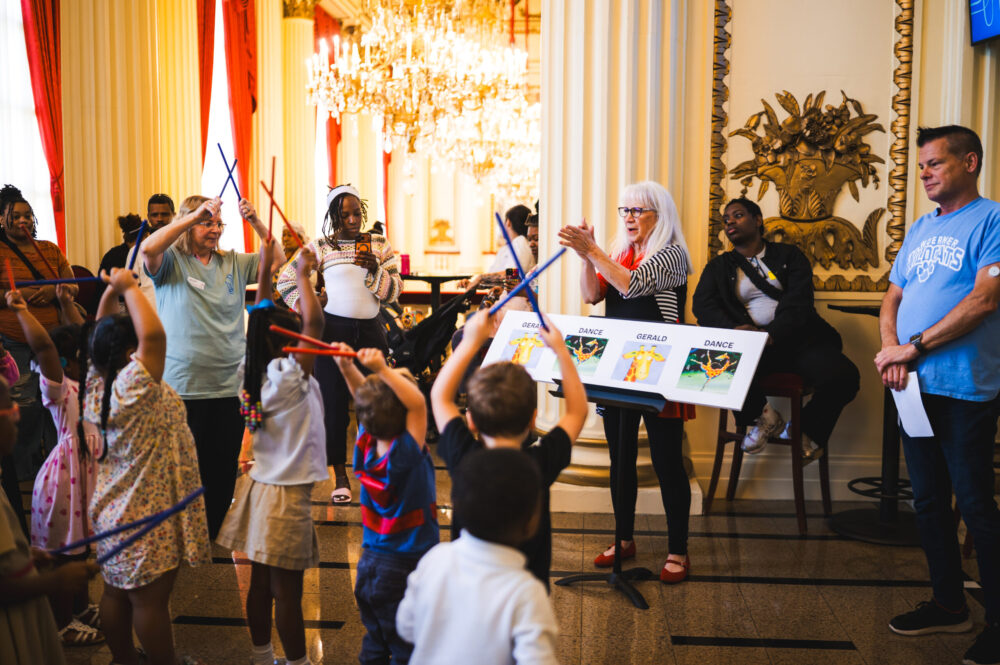
At a May 2026 concert designed for Pre-K classrooms, students started their visit to Powell Hall by running through an obstacle course, practicing their conducting skills, making music with SLSO volunteers, using their favorite colors to draw a picture, and taking a dance class in the Wightman Foyer. Students experienced music and joy in whichever form felt best to them before the concert even began.
SLSO education concerts remind students that music is for any age, ability, or background. This sentiment is backed by a financial commitment: around 30 percent of tickets and transportation measures are subsidized by the SLSO, welcoming students from all socioeconomic backgrounds into Powell Hall to experience live orchestral music.
Additionally, sensory-conscious accommodations for students at all concerts take access a step further, ensuring students of all abilities and neurotypes can enjoy the musical narrative being brought to life.
“Access is not extra—it is part of the work,” Ingraham said.
The Youth Orchestra: sharing music stands with professionals.
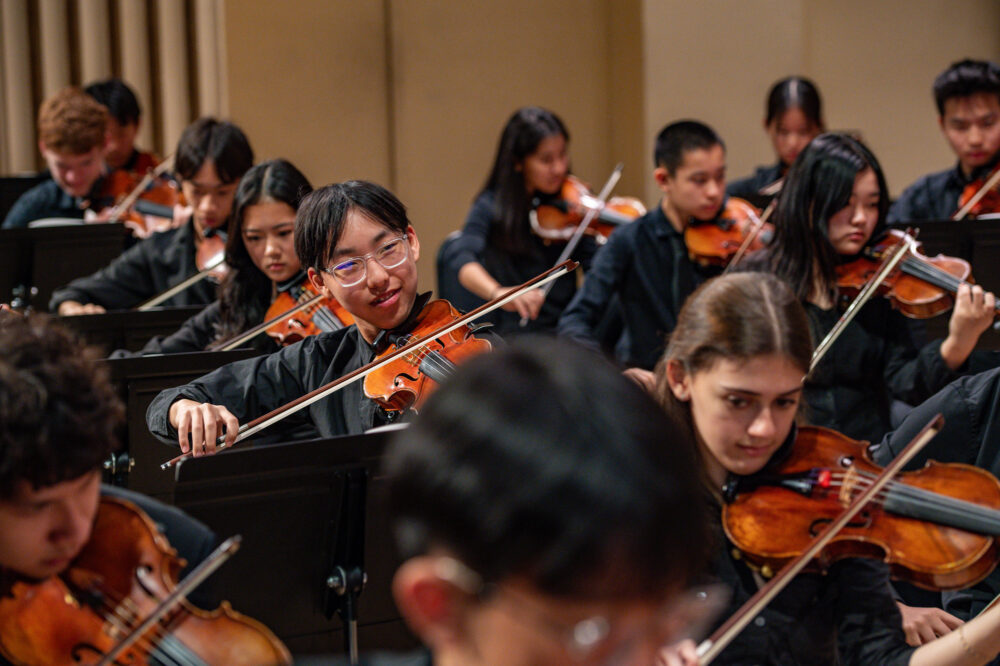
The SLSO’s education department also includes the St. Louis Symphony Youth Orchestra, a nationally recognized ensemble comprised of 100 musicians aged 12 to 22. The YO performs three concerts every season, each showcasing the high caliber at which its young musicians perform.
But the YO doesn’t work alone.
Each season, SLSO musicians join YO musicians join for a side-by-side rehearsal. Sharing a music stand and a passion for music, both students and professionals look forward to this invaluable learning experience and time of fellowship.
“When they get to truly be in this orchestra, with professionals, it’s mind-blowing to them,” Byrne shared.
YO and SLSO members share lunch after the rehearsal, building relationships and reinforcing the organization’s value of community. Experiences like these, combined with regular mentorship from SLSO musicians, are what help create a well-rounded experience that support YO musician growth. The YO members aren’t navigating their budding careers alone; they have a network of seasoned musicians cheering them on.
An unlikely partnership
Many of the best creative experiences begin with an unlikely partnership. The SLSO has one of its own with the Endangered Wolf Center. The Endangered Wolf Center is a wildlife sanctuary housed in St. Louis County that preserves and protects a variety of wolf and canine species. Seemingly unassociated, the SLSO has struck the perfect partnership chord with a beloved classic: Sergei Prokofiev’s Peter and the Wolf. In a program for both a live concert and a streaming digital setting, the SLSO strategically adapted the story, reassuring the audience that their wolf ends up safe and protected at the Endangered Wolf Center. Additionally, the SLSO provides teachers with educational materials about the canines and music, showing how music education can intersect with science and conservation.
Partnerships like this are deeply woven into the SLSO’s education portfolio, creating a rich network of cultural companions, fortifying the SLSO’s mission by creating a connected community centered around the power of music.
Additional partnerships include collaborations with Center of Creative Arts (COCA), The St. Louis Zoo, the Missouri Botanical Garden, Opera Theater of Saint Louis, Ballet 314, Saint Louis Art Museum, and more.
Explore upcoming education concerts, register for the Learning Lab, and learn more about SLSO education programs below:
Maddie Hurst is the Summer 2026 SLSO Communications and Public Relations Intern.