Beethoven’s Emperor Concerto (March 27-28, 2026)
Program
March 27-28, 2026
- Stéphane Denève, conductor
- Víkingur Ólafsson, piano
Ludwig van Beethoven (1770-1827)
- The Consecration of the House Overture, Op. 124
Moni (Jasmine) Guo (b. 1993)
- the sound of where i came from (乡音 Xiāng Yīn)
Kevin Puts (b. 1972)
- Concerto for Orchestra
- Hymn for the Hurting –
- Caccia No. 1
- Music Box with Arietta
- Toccata
- (Refrain) – Sicilienne
- (Refrain) – Ecco la Marcia? (Caccia No. 2)
Intermission
Ludwig van Beethoven
- Piano Concerto No. 5 in E-flat major, Op. 73 (Emperor)
- Allegro
- Adagio un poco mosso –
- Rondo (Allegro)
Víkingur Ólafsson, piano
The Consecration of the House Overture
Ludwig van Beethoven
Born 1770, Bonn, Germany
Died 1827, Vienna, Austria
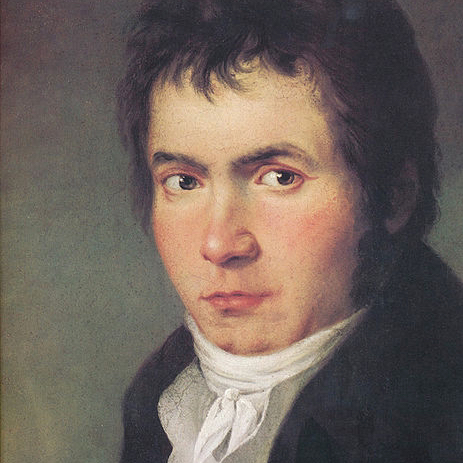
In 1822, the newly rebuilt theatre in Vienna’s Josefstadt was officially reopened. Then as now, such occasions were a cause for celebration, and music was central to the pomp and ceremony. For Josefstadt, Beethoven’s incidental music for the play The Ruins of Athens was pressed into service, having been used ten years earlier for the opening of the Royal Theatre in Pest. A new play, The Consecration of the House, was cobbled together by Viennese playwright Carl Meisl, while Beethoven revised his music and added new numbers to fit. The original Ruins overture, however, was thought too insubstantial for Vienna’s festivities, and Beethoven devised two plans for a new, more imposing, overture: one in free style, the other (his eventual choice) in the “strict” style of Handel. For Beethoven, this meant an old-fashioned French overture with a majestic opening followed by an exciting fugue built up from intricately weaving melodic lines.
The music begins with the brisk snapping rhythms that give a French overture its grandeur. The bassoon, with good-humored virtuosity, introduces the first of the melodic ideas underneath a trumpet fanfare. A brief moment of quiet playfulness follows before the overture launches into the extensive fugal section. But what’s noteworthy here is not Beethoven’s mastery of strict counterpoint so much as the colorful development and variation in the music. The sprightly theme and rapid passagework drives the overture to a spirited conclusion.
Yvonne Frindle © 2026
| First performance | October 3, 1822, at the Theater in der Josefstadt, Vienna |
| First SLSO performance | September 19, 1968, Walter Susskind conducting |
| Most recent SLSO performance | September 29, 1984, Leonard Slatkin conducting |
| Instrumentation | 2 flutes, 2 oboes, 2 clarinets, 2 bassoons, 4 horns, 2 trumpets, 3 trombones, timpani, strings |
| Approximate duration | 11 minutes |
the sound of where i came from (乡音 Xiāng Yīn)
Moni (Jasmine) Guo
Born 1993, Taiyuan, Shanxi, China
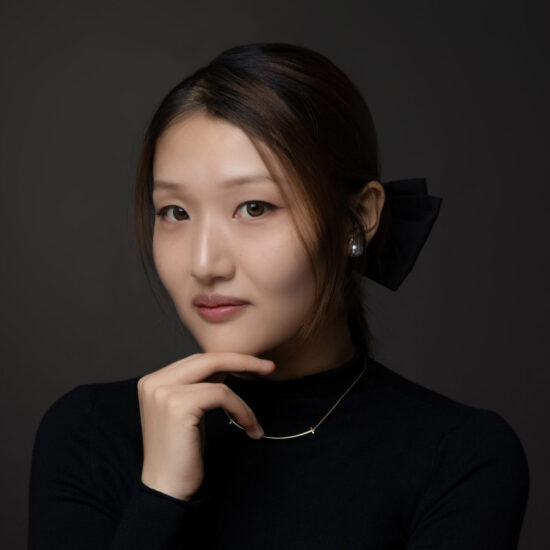
The composer writes:
This piece began as an exploration of the idea of “home.” As I researched the culture of my hometown and listened to folk tunes, I couldn’t stop hearing my grandmother’s voice in my head and my childhood self calling back in the same dialect. There’s a saying in my home province: 做甚唱甚, 想甚唱甚, 见甚喝甚 (sing what you do, sing what you think, sing what you see). In my case, it’s “write what you think.”
That call-and-response became the seed of this work: I translated the way we used to call each other— “grandma” and “little moni”—into musical pitches.
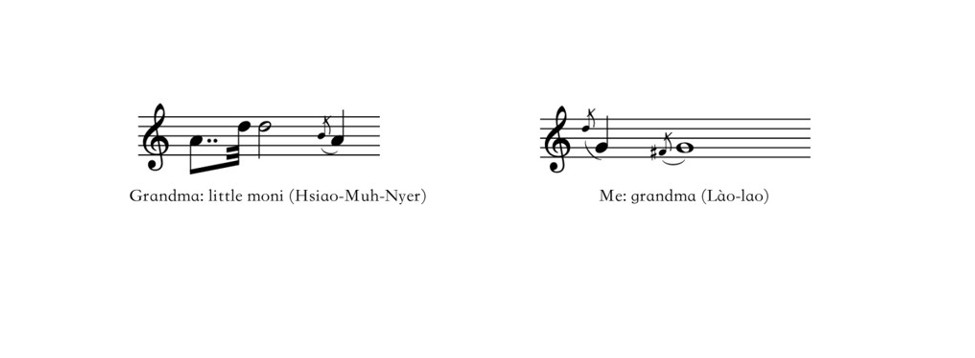
Writing this piece was unexpectedly emotional. When I first left home as a teenager, I missed my grandma so deeply that I quietly decided not to think of her when we were apart. That resolve lasted for years—until I began working on this piece. Composing it opened a sealed box of longing, and memories of her came flooding back.
My grandmother now has Alzheimer’s. She can no longer say my name, but the sound of her voice lives on in me.
Moni (Jasmine) Guo © 2025
About the composer
Moni (Jasmine) Guo is a film and concert composer and classical pianist from China. She has appeared as both a performer and composer in Asia, Europe, South America, and the United States, and her music has been performed by renowned soloists such as Bella Hristova and Stefano Greco, and ensembles such as IIIZ+ (Three Zee Plus), Deviant Septet, Dallas Symphony Orchestra, the Shepherd School Symphony Orchestra, and the Cleveland Institute of Music Symphony Orchestra. Her piece Fallen Skin, Flying Wings was performed in the 2021 Hear Now Music Festival in Los Angeles, at concert:nova—Made in Cincinnati (2023), and at the 2023 California Festival. She is passionate about using music to encourage and comfort others, and also hopes to use her work to bridge Western and Eastern culture.
Over the years, she has received numerous awards and fellowships, including the 2021 ASCAP Foundation Morton Gould Young Composer Award, was a featured composer in the 2023 American Composers Orchestra’s EarShot program, and in 2023 was named in Forbes China’s “100 Most Influential Chinese” list.
As a film composer, she has scored more than 40 short films and several features, with many of these appearing at film festivals worldwide. One short film, Summer Ends, was nominated for the Student Academy Awards of 2021; another, Foreign Uncle, was distributed by The New Yorker; her score for de closin night was nominated for Best Soundtrack in a Short Film at the 2022 Seattle Film Festival; and Pianoman was awarded Best Feature Documentary at the 2023 Nepal America International Film Festival. Her semi-improvised score for Robert Vignola’s silent feature film Enchantment (1921), which she also performed as pianist, was commissioned by and showcased at the Cincinnati Art Museum.
She is an alumna of the Interlochen Arts Academy and holds degrees from the Peabody Institute of The Johns Hopkins University and Rice University. Having received her PhD from UCLA, Moni Guo is now Assistant Professor of Commercial Music Production at University of Cincinnati College-Conservatory of Music.
| First performance | November 20, 2025, Shira Samuels-Shragg conducting the Dallas Symphony Orchestra |
| First SLSO performances | These concerts |
| Instrumentation | 3 flutes, 3 oboes, 3 clarinets, 3 bassoons, 4 horns, 2 trumpets, 3 trombones, tuba, timpani, percussion, harp, piano (doubling celeste), strings |
| Approximate duration | 7 minutes |
Concerto for Orchestra
Kevin Puts
Born 1972, St. Louis
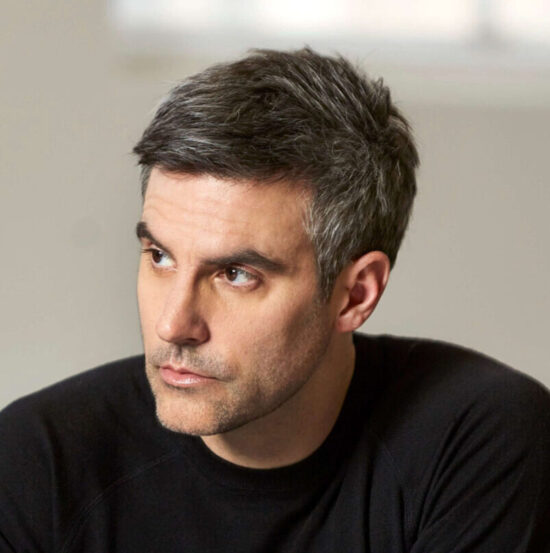
Béla Bartók wasn’t the first composer to write a “concerto for orchestra,” but it was his work that cemented the concerto for orchestra as a genre. The repertoire now boasts more than a hundred of these “symphony-like orchestral works” in which all the orchestral instruments appear as joint soloists. All, in short, receive “virtuoso treatment” and it’s the perfect genre for showcasing the skills of a fine orchestra.
The composer writes:
The Concerto for Orchestra grew out of my friendship with Stéphane Denève. It is dedicated both to him and to the musicians of the SLSO, for whom I have developed great admiration since their first performance of my music in 2004.
The creative entry point for me was Amanda Gorman’s poem “Hymn for the Hurting,” written in response to the horrific school shooting—an occurrence now routine in our country—in Uvalde, Texas, in 2022. [The poem concludes: Maybeeverythinghurts,/Ourheartsshadowed& strange./ But only when everything hurts/ May everything change.] The music that begins the concerto—and is recalled throughout—is my immediate musical reaction to it.
The title of the second movement, Caccia No. 1, refers to the 14th-century musical form depicting the hunt or the chase. Flowing directly from the brief opening Hymn, it continues the focus on the various groups of instruments in the orchestra, beginning with the oboes and punctuated at all times by the percussionists playing identical collections of six drums. Music Box with Arietta, by contrast, explores the gentler side of the percussion section, led here by cascading gestures from the harp and celeste, giving way to a lyrical counterpoint of woodwinds.
Toccata is a quick exchange between strings, winds, and percussion. Eventually the brass section asserts itself, cutting across these exchanges with brash, angular lines. A brief refrain of the opening Hymn leads to a gentle Sicilienne with a prominent part for the piano. Another refrain introduces the final movement, a second caccia, this one containing a brief quotation (“Ecco la marcia”) from the Mozart opera that inspired it.
About the composer
Kevin Puts is the SLSO’s Composer in Residence. Earlier this season, the SLSO commission House of Tomorrow received its premiere with Joyce DiDonato, and last week the SLSO performed Contact, his concerto for Time for Three. In the coming weeks the SLSO will perform more music by Puts: Virelai (after Guillaume de Machaut) features in our classical season finale (May 8–10), Home (at the Contemporary Art Museum on May 19), and on Sunday, March 29, the Youth Orchestra will perform his Hymn to the Sun. In 2022, his fourth opera, The Hours, received a triumphant stage premiere at the Metropolitan Opera. Other accolades include the 2012 Pulitzer Prize for his opera Silent Night, the 2023 Grammy Award for Best Contemporary Classical Composition (Contact), and Musical America’s Composer of the Year in 2024.
| First and most recent SLSO performances | January 21 and 22, 2023, conducted by Stéphane Denève |
| Instrumentation | 3 flutes (one doubling piccolo), 2 oboes, English horn, 3 clarinets, 3 bassoons (one doubling contrabassoon), 4 horns, 3 trumpets, 3 trombones, tuba, timpani, percussion, harp, piano (doubling celeste), strings |
| Approximate durations | 24 minutes |
The “Emperor” Concerto
Ludwig van Beethoven
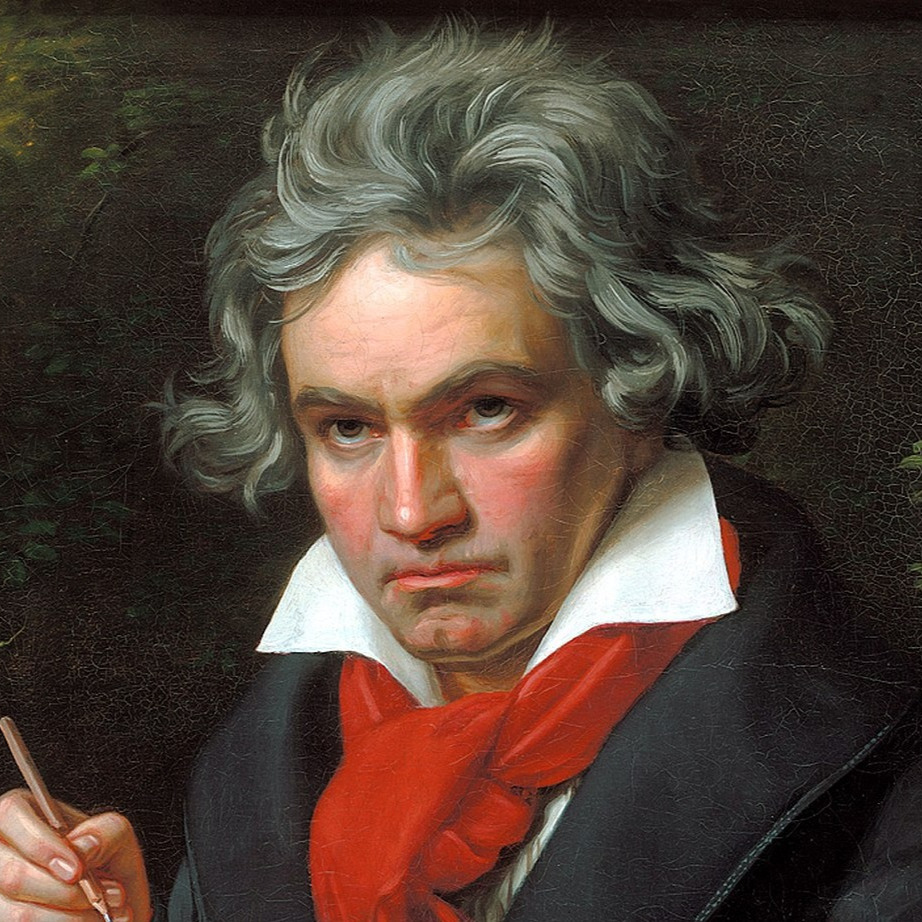
According to one famous (but apocryphal) story, a French army officer stationed in Vienna was so moved by the first performance of Beethoven’s Fifth Piano Concerto that he cried out “C’est l’Empereur!” (It is the Emperor!), thereby giving the work its nickname. Another, more likely, explanation is that it was coined by the English pianist and publisher Johann Baptist Cramer, which would explain why the “Emperor” nickname caught on in English-speaking countries but not German-speaking ones and was likely unknown to Beethoven.
Beethoven would not have been flattered by the comparison with Napoleon. Once an ardent admirer, Beethoven had become bitterly disenchanted after hearing that Napoleon had crowned himself emperor— he scratched out the title of his third symphony, replacing “Buonapart” with “Sinfonia eroica” (Heroic Symphony). Even so, “Emperor” seems an appropriate title. In 1809, when it was composed, this work surpassed other concertos in its expression of majesty and heroism, and it retains an imperious position among piano concertos today.
Beethoven establishes the lordly character of the concerto with an innovative opening: three sonorous orchestral chords each give way to cadenza-like flourishes from the piano. This serves as a prelude to the usual orchestral exposition, one of the grandest and longest in any concerto. When the piano rejoins the proceedings, it is as a member of a thoughtfully integrated ensemble rather than merely an exalted soloist. Far from being a virtuoso display piece, the piano concerto had acquired an almost symphonic character in Beethoven’s mind, and the prominence the orchestra enjoys throughout this first movement is virtually unparalleled in the concerto literature.
Also unparalleled was Beethoven’s handling of the solo cadenza. This was the first concerto in which the first-movement cadenza—traditionally improvised by the soloist—was written out in full. Beethoven had the integrity of the music in mind, but there was another entirely pragmatic motivation: this was the first of his piano concertos he’d been unable to introduce to the world himself—his deafness making public performance impossible. And so he wrote out a brief, integrated cadenza that echoed the magisterial flourishes from the opening, adding a stern instruction for the soloist: “Non si fa una Cadenza, ma s’attacca subito il seguente.” (Do not make up a cadenza, but go straight on to what follows.) This proved to be influential—in all the major concertos since, only one (Brahms’s Violin Concerto) has invited the soloist to provide their own cadenza.
The slow second movement (Adagio) is one of Beethoven’s most beautiful and tender creations. It concludes with a final musing by the piano that evolves magically into the principal theme of the third movement (Allegro). After the militaristic first movement and the profound serenity of the second, this rondo-finale with its dance-like recurring theme brings emotional relief with a mood of irrepressible joy.
Adapted from notes by Paul Schiavo © 2014 and Yvonne Frindle
| First performance | November 28, 1811, Johann Schultz conducting the Leipzig Gewandhaus Orchestra, Friedrich Schneider as soloist |
| First SLSO performance | November 14, 1913, Max Zach conducting, Wilhelm Backhaus as soloist |
| Most recent SLSO performance | March 23, 2024, Stéphane Denève conducting, Tom Borrow as soloist |
| Instrumentation | solo piano; 2 flutes, 2 oboes, 2 clarinets, 2 bassoons, 2 horns, 2 trumpets, timpani, strings |
| Approximate durations | 38 minutes |
Artist
Víkingur Ólafsson
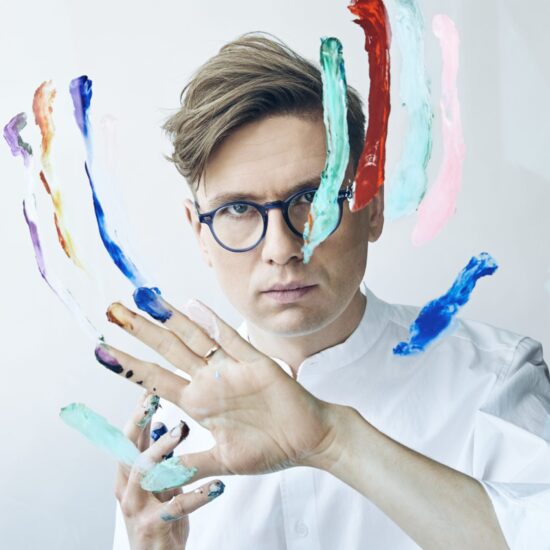
Víkingur Ólafsson is one of the most celebrated classical artists of our time—a unique and visionary musician who brings his profound originality to some of the greatest works in music history. His recordings resonate with audiences worldwide, reaching over a billion streams and winning numerous awards, including the 2025 Grammy Award for Best Classical Instrumental Solo (Bach’s Goldberg Variations), BBC Music magazine Album of the Year, and twice receiving Opus Klassik’s Solo Recording of the Year award.
Other notable honors include the Royal Philharmonic Society Gold Medal, Rolf Schock Music Prize, Gramophone Artist of the Year, Musical America Instrumentalist of the Year, the Nordic Council Music Prize, and the Order of the Falcon (the highest honor awarded by the Icelandic state), as well as the Icelandic Export Award, given by the President of Iceland.
He released his latest album, Opus 109 in November 2025, and this season he is touring the program widely, bringing it to the great concert halls throughout Europe and North America.
Last year he toured the US with the Philharmonia Orchestra and returned to the Czech Philharmonic with Antonio Pappano. Earlier this year he reunited with John Adams and the Los Angeles Philharmonic for performances of After the Fall, a concerto written for him, as well as marking the György Kurtág centenary celebrations. Following his concerts in St. Louis, he returns to the Berlin Philharmonic with Semyon Bychkov and will appear at Müpa Budapest and as Artist in Residence at Cal Performances in Berkeley, California.