From Mozart to Wagner (April 18-19, 2026)
Program
April 18-19, 2026
- Hannu Lintu, conductor
- Jan Lisiecki, piano
Richard Wagner (1813-1883)
- Prelude to Act I of Lohengrin
Wolfgang Amadeus Mozart (1756-1791)
- Piano Concerto No. 9 in E-flat major, K.271 (“Jeunehomme”)
- Allegro
- Andantino
- Rondeau (Presto)
Jan Lisiecki, piano
Cadenzas by the composer
Intermission
Samy Moussa (b. 1984)
- Elysium for Orchestra
Ottorino Respighi (1879-1936)
- Church Windows – Four Symphonic Impressions
- The Flight into Egypt
- St. Michael, Archangel
- The Matins of St. Clare
- St. Gregory the Great
Mysticism and Wonder
With each visit to St. Louis, Hannu Lintu brings rich and imaginative programming, deftly combining music old and new, familiar and unfamiliar. This concert is no exception.
Each half of the program begins with transporting music that shimmers and glows. The Prelude to Act I of Richard Wagner’s Lohengrin was not your typical curtain-raiser when it premiered in 1850, nor is it your typical concert-opener today. Instead, it sets the tone for a musical vision that’s deeply spiritual—a meditation. Wagner describes it best when he writes of a wonderful yet at first hardly perceptible vision “condensing” from the clear blue ether of the sky. Imagine angels descending to earth bearing the mythical Grail before returning to heaven.
Samy Moussa’s Elysium can be heard as a 21st-century response to the Lohengrin prelude, although its style is more often compared to Anton Bruckner than Wagner. Since its premiere in 2021, this radiant work has received more than 80 performances, and it’s easy to hear why. When Lintu conducted it in London, the performance was described as “magically unfolding through the orchestral space”—waves of glorious sound creating an ecstatic vision of an afterlife in paradise.
Elysium introduces Ottorino Respighi’s Church Windows, a set of four “symphonic impressions.” Again, music demonstrates its power to evoke images—never mind that Respighi’s titles and stories were devised after the fact! His true inspiration was the spellbinding effect of Gregorian chant, and his wife Elsa would later recall his “delighted wonder … and the mystic exaltation of profound religious feeling.”
Wagner’s prelude similarly prepares our ears for the translucence and clarity of a great Mozart piano concerto. It’s a relatively early work, composed on commission for a visiting French virtuoso, Louise Victoire Jenamy, but Mozart was clearly very proud of it, taking it into his own repertoire as a musical calling card. In this concert it’s the calling card for Canadian pianist Jan Lisiecki, making his SLSO debut.
Prelude to Act I of Lohengrin
Richard Wagner
Born 1813, Leipzig, Germany
Died 1883, Venice, Italy
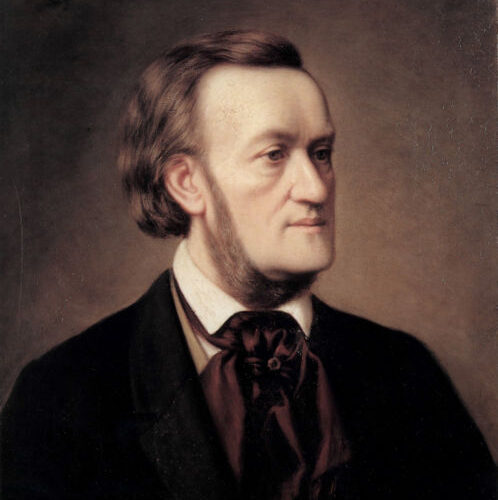
For 19th-century audiences (or even 21st-century ones) expecting an opera overture to begin with a bang, Wagner’s Lohengrin would have presented the most exquisite surprise. Listen, and watch, as sustained chords emerge from alternating groups of four violins, with flutes and oboes floating above. It will be two minutes before the lower strings, or even the rest of the violins, join this ethereal texture. This is musical poetry that transcends description, but Wagner had the words:
“Out of the clear blue ether of the sky there seems to condense a wonderful yet at first hardly perceptible vision; and out of this there gradually emerges, ever more and more clearly, an angel host bearing in its midst the sacred Grail.”
Lohengrin (1850) is a Grail story, with a libretto by Wagner himself, drawing on medieval legends. Elsa of Brabant has been falsely accused of murdering her brother, heir to the dukedom. She prays for a champion to defend her honor, a knight she has seen in a vision, and Lohengrin appears in a boat drawn by a swan. Lohengrin defeats Elsa’s accuser in combat and proposes marriage but with one condition: she must never ask him his name or origin. (In German accounts of the Arthurian stories, he is the son of Percival and a knight of the Holy Grail whose power comes from his remaining incognito.) Elsa, however, cannot quell her curiosity or withstand the seeds of doubt, and the story ends in tragedy when she asks the forbidden question.
The hushed opening captures attention in its own way, setting the tone of a mystical, visionary story. As the Prelude continues, and the lower voices of the orchestra enter, the opera’s “Grail theme” emerges. Eventually the horns and other brass instruments enter until “the Grail is revealed in all its glorious reality.” From this climactic point, theGrail having been brought to earth, Wagner imagined a band of angels ascending into heaven, “having once more made pure the hearts of men.”
In 1882, Wagner would again return to the Grail legends for Parsifal, reflecting an abiding interest in myth, symbolism, and its dramatic potential that surpassed his disdain for formal Christianity. Meanwhile, the influence of Lohengrin would become far-reaching, from Ludwig II of Bavaria’s fairy-tale castle Neuschwanstein to the wedding march from Act III that even those who do not care about opera will recognize as “Here comes the bride.”
Yvonne Frindle © 2026
| First performance | August 28, 1850, in Weimar, conducted by Franz Liszt |
| First SLSO performance | January 28, 1910, Max Zach conducting |
| Most recent SLSO performance | May 2, 2010, David Robertson conducting |
| Instrumentation | 3 flutes, 2 oboes, English horn, 2 clarinets, bass clarinet, 3 bassoons, 4 horns, 3 trumpets, 3 trombones, tuba, timpani, percussion, strings |
| Approximate duration | 8 minutes |
Piano Concerto No. 9 (“Jeunehomme”)
Wolfgang Amadeus Mozart
Born 1756, Salzburg, Austria
Died 1791 Vienna, Austria
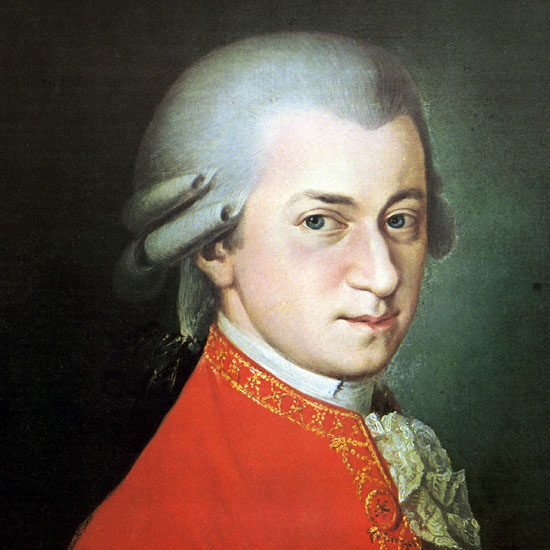
Mozart’s Piano Concerto in E-flat major, K.271 owes its familiar nickname to a mystery pianist who turns up in the Mozart family letters as “Genomai” (Leopold) and “Jenomè” or “Jenomy” (Wolfgang). It was Mozart’s French biographers who invented “Mademoiselle Jeunehomme” and so she was known until 2005, when she was identified as Louise Victoire Jenamy, daughter of the distinguished French choreographer Jean-Georges Noverre, to whose ballet Les Petits riens (The Little Nothings) Mozart had contributed music.
Jenamy visited Salzburg in the winter of 1776–77, commissioning a concerto for her own use, which Mozart completed in January 1777. The result is extraordinary. Despite its scoring for an orchestra of modest size and its position as one of Mozart’s earlier piano concertos, its depth of feeling is nearly on a par with the masterful works the composer wrote years later in Vienna. Moreover, its formal daring surpasses any of his other compositions in this genre. It is revealing that Mozart regarded this concerto highly enough to resurrect it for performance in the Austrian capital during the period of his greatest success there, in the mid-1780s.
Mozart surprises us at once. The customary way to begin a concerto in the 18th century was with an extended orchestral passage introducing the themes of the first movement. Only with this exposition accomplished would the solo instrument make its entrance. Here, however, the piano joins the orchestra to present, in alternating phrases, the start of the initial subject. This is the only concerto in which Mozart violated the precept of the orchestral opening, and the last significant infraction of that rule in the piano concerto literature until Beethoven’s Fourth Piano Concerto, composed some three decades later.
Soon, though, the orchestra wrests control of the music from the solo instrument and proceeds on its own to set forth the rest of the march- like first theme, as well as several subsidiary melodies. These themes are then elaborated with help from the soloist. More than any composer of the 18th century, Mozart developed the keyboard concerto beyond a simple solo with accompaniment texture into a format entailing true dialogue between piano and orchestra, and soloist Jan Lisiecki considers this direct interplay between soloist and orchestra to be the most revolutionary aspect of this concerto. Few of Mozart’s subsequent concertos attain a more satisfying integration of ensemble and soloist.
The second movement (Andantino) is also surprising—not for any formal innovation, but for its dark intensity. It unfolds in C minor, a key Mozart generally used for the expression of anguish or grief. The opening orchestral passage sets the tone for one of the most heartfelt utterances of Mozart’s early maturity.
The closing movement—marked Presto or “as fast as possible”—quickly chases the somber tone of the Andantino. This third movement has all the markings of a conventional rondo-finale, with a long principal theme that recurs after an excursion through new ideas. But Mozart is in too inventive and too audacious a mood merely to observe convention. Following the second of several brief flourishes by the piano alone, the music breaks off for a genteel minuet and the high degree of contrast between this digression and the rest of the movement makes it a startling development. Had Mozart not effected the transition so gracefully, we might even imagine that this music has somehow wandered into the wrong composition. The interpolated minuet culminates in one last tiny cadenza for the piano. After this, the music resumes in its original vein, as though nothing unusual had occurred, and proceeds cheerfully and confidently to its final cadence.
Adapted from a note by Paul Schiavo © 2004
Note: K.271 is among the piano concertos for which Mozart provided cadenzas— intended for students or perhaps in this instance for the soloist. The modern performer can choose between two options for cadenzas in the first and second movements, and three for each of the two Eingänge (“lead-ins”or mini cadenzas) in the third.
| First performance | Probably in 1777, in Salzburg, with pianist Louise Victoire Jenamy accompanied by the Salzburg court orchestra |
| First SLSO performance | May 9, 1974, Walter Susskind conducting, with soloist John Browning |
| Most recent SLSO performance | May 7, 2015, Nicholas McGegan conducting, with soloist Orli Shaham |
| Instrumentation | solo piano; 2 oboes, 2 horns, strings |
| Approximate duration | 32 minutes |
Elysium
Samy Moussa
Born 1984, Montreal, Canada

The title “Elysium” reflects Moussa’s fascination with ancient Greek and Classical sources. Also known by the epithet “the Elysian Fields,” Elysium refers to a paradisiacal realm, distinct from the Underworld in Greek mythology, that offered a blissful afterlife to heroes and those favored by the gods. Its idyllic promise is described by Homer and Hesiod and echoes through the epics of Virgil and Dante down to the present—even occurring in Beethoven’s Ninth Symphony (in his setting of Schiller’s description of Joy as “daughter of Elysium”).
Samy Moussa, however, insists on steering clear of any Romantic idealization of the Hellenic world. He particularly admires the work of the pre-Socratic philosophers (most of which survives only in fragmentary form) and singles out a text on the afterlife by Empedocles, a remarkable fifth-century BCE pioneer of natural philosophy who lived in what today is Sicily.
Moussa notes that he interprets Empedocles’ image of Elysium “as the ultimate reward for an ethical life”—a reward no longer limited to an elite of god-favored heroes—as “a metaphor for a beautiful life, for a life well-lived on this planet.”
From Empedocles’ large-scale poem known as Purifications, which treats religious and ethical topics, Moussa cites this fragment, in which Elysium is envisioned as a final escape from the cycle of reincarnation:
εἰς δὲ τέλος μάντεις τε καὶ ὑμνοπόλοι καὶ ἰητροὶ καὶ πρόμοι ἀνθρώποισιν ἐπιχθονίοισι πέλονται, ἔνθεν ἀναβλαστοῦσι θεοὶ τιμῇσι φέριστοι. ἀθανάτοις ἄλλοισιν ὁμέστιοι, αὐτοτράπεζοι, ἐόντες, ἀνδρείων ἀχέων ἀπόκληροι, ἀτειρεῖς.
(But, at the last, they appear among mortal men as prophets, songwriters, physicians, and princes; and thence they rise up as gods exalted in honor, sharing the hearth of the other gods and the same table, free from human woes, safe from destiny, and incapable of hurt.)
Thomas May © 2021
About the composer
Born in Montreal and now based in Berlin, Samy Moussa is both a composer and a conductor. His work has been performed by many prestigious orchestras including the Vienna Philharmonic, Royal Concertgebouw Orchestra, London Symphony Orchestra, and New York Philharmonic. This season, highlights include the world premiere of his Flute Concerto for Emmanuel Pahud (Orchestre National de France) followed by its US premiere in February 2026 (Detroit Symphony Orchestra), a new work premiered by the Deutsches Symphonie- Orchester Berlin, the premiere of Ring for cello and chamber orchestra (National Arts Centre Orchestra Ottawa), and the Norwegian premiere of his oratorio Antigone.
Highlights of recent seasons include Elysium, which was first performed by the Vienna Philharmonic Orchestra and Christian Thielemann in 2021. His Symphony No. 2 was premiered in 2022 by the Toronto Symphony Orchestra and performed at the BBC Proms, and in 2025 the Dutch National Opera & Ballet gave the premiere of Antigone. Other highlights include the premieres of Adgilis Deda (Pittsburgh Symphony Orchestra) and the trombone concerto Yericho (Orchestre National de Lyon and soloist Jörgen van Rijen).
Moussa’s works have also been commissioned and performed by the Bavarian Radio Symphony Orchestra, Staatskapelle Berlin, Dutch National Opera and Ballet, NDR Elbphilharmonie Orchestra, Frankfurt Radio Symphony Orchestra, Rotterdam Philharmonic and Los Angeles Philharmonic. He has been Artist in Residence at the Toronto Symphony Orchestra, Composer in Residence with the Helsinki Philharmonic, and frequently collaborates with the Montreal Symphony Orchestra. His works have been championed by conductors such as Manfred Honeck, Kent Nagano, Christian Thielemann, Christoph Eschenbach, Gustavo Gimeno, Kevin John Edusei, Eva Ollikainen, Fabien Gabel, and Lorenzo Viotti, as well as Hannu Lintu and Stéphane Denève.
| First performance | September 18, 2021, in Barcelona, Christian Thielemann conducting the Vienna Philharmonic Orchestra |
| First SLSO performances | These concerts |
| Instrumentation | 2 flutes, piccolo, 2 oboes, 2 clarinets, 2 bassoons, contrabassoon, 4 horns, 3 trumpets, 3 trombones, tuba, timpani, percussion, strings |
| Approximate duration | 12 minutes |
Church Windows
Ottorino Respighi
Born 1879, Bologna, Italy
Died 1936, Rome
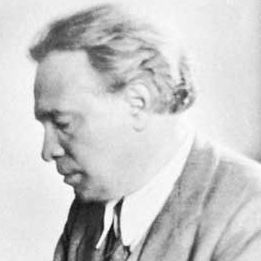
Ottorino Respighi was schooled in his native Bologna, but he started his career in earnest with an appointment as a viola player at the Imperial Opera in St. Petersburg, where he had the opportunity to study with Nikolai Rimsky-Korsakov. After Respighi returned to Italy he occasionally flirted with modernism, but he always retreated to an essentially conservative stance. In 1932, he joined nine other conservative composers to sign a declaration condemning the deleterious effect of music by such figures as Schoenberg and Stravinsky and encouraging a return to established Italian tradition. By then he was rich and famous— success had arrived through his hugely popular tone poem Fountains of Rome, composed in 1915–16, and he had ridden its wave with the ensuing Pines of Rome (1923–24) and Roman Festivals (1928).
In 1919, Respighi married the mezzo-soprano Elsa Olivieri-Sangiacomo, who, for several years, had been his composition pupil at the Accademia di Santa Cecilia in Rome. In her memoirs, she recalled:
We had been married for some weeks when one day I asked Ottorino if he had ever studied Gregorian Chant. He replied that it was something he had long wanted to do but never found the opportunity. For my part, I had studied the subject with particular enthusiasm and been given a first-class diploma a few months previously. I offered to teach him. Not a day passed but he asked me to intone a passage from the Roman Gradual while he listened spellbound. The Maestro was considerably influenced by this music, for there are echoes of Gregorian Chant in almost everything he wrote after 1920. The Three Piano Preludes on Gregorian Melodies [sic] were completed a few months later at Capri in the summer of 1919 and brightly reflect Respighi’s state of mind at that time—delighted wonder at a revelation and the mystic exaltation of profound religious feeling which matched the harmony of our life together. The Maestro told me how wonderful it would be to recast those magnificent melodies in a new language of sounds, free them from the rigidly formal Catholic liturgy of the Roman Gradual and revive the indestructible germ of real human values contained therein.
Respighi adapted the three pieces for orchestral forces in 1925–26, maintaining their original order, and added a fourth piece to conclude the suite. His friend Claudio Guastalla, an editor and professor of literature, recounted:
What were these four symphonic impressions to be called? Respighi thought of four church doorways. I objected that it was too colorless. Why not Vetrate di chiesa (Church Windows), I suggested? The name remained and was perhaps responsible for some of the more idly superficial critics comparing the work to the symphonic poems, which are quite different.
It’s a fair distinction. Whereas a symphonic poem is inspired by some pre-existent extramusical impetus—usually a literary program, sometimes a painting or other source—Vetratedi chiesa traveled the opposite route, with the extramusical reference being dreamed up only after the composition was completed. (In the original Three Preludes, the movements were presented without any programmatic titles.)
Having settled on the overall “subject,” Guastalla and Respighi set about deciding the topics of the individual movements. Guastalla heard in the opening movement “the passing of a chariot beneath a brilliant, starry sky,” which in turn suggested to him the Flight into Egypt, as recounted in the Gospel of Matthew.
The riotous second movement evoked “a clash of weapons—a battle in the skies,” and this brought to mind the vision of the Archangel Michael in the Book of Revelation. The third called for a reference to support its “mystical, pure, and convent-like” character, and that led them to a passage about St. Clare in The Little Flowers of St. Francis. Applicable literary quotations were noted in the published score for these three adapted movements as well as for the very grand finale, the splendor of which reminded Guastalla of St. Gregory the Great, the sixth-century pope whose reforms to the liturgy led to his name being attached to the repertoire of Gregorian chant.
James M. Keller © 2016
| First performance | February 27, 1927, Serge Koussevitzky conducting the Boston Symphony Orchestra |
| First and most SLSO performance | January 17, 2002, at the Cathedral Basilica of St. Louis; these concerts are the first time the SLSO has performed the work as part of a subscription series program |
| Instrumentation | 3 flutes (one doubling piccolo), 2 oboes, English horn, 2 clarinets, bass clarinet, 2 bassoons, contrabassoon, 4 horns, 3 trumpets, 3 trombones, tuba, timpani, percussion, harp, celeste, organ, piano, strings |
| Approximate durations | 27 minutes |
Artists
Hannu Lintu
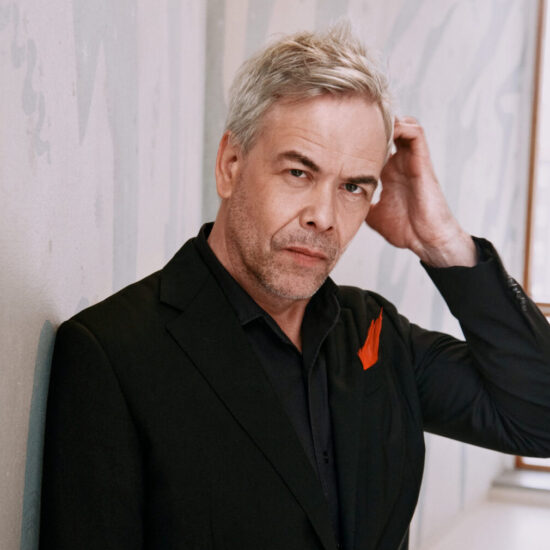
These concerts see Hannu Lintu making his 12th appearance with the St. Louis Symphony Orchestra. He is Music Director of the Gulbenkian Orchestra and Chief Conductor of the Finnish National Opera and Ballet, proving himself a master of both symphonic and operatic repertoire. In 2025, he began his tenure as Artistic Partner of the Lahti Symphony Orchestra and Artistic Director of the International Sibelius Festival. In 2026/27, he will take up the post of Music Director of the Singapore Symphony Orchestra.
Guest conducting highlights of this season have included return engagements with the BBC, Toronto, Baltimore, and Detroit symphony orchestras. He also conducted Richard Strauss’ Elektra and the premiere of Sebastian Fagerlund’s The Morning Star (Finnish National Opera).
In recent years he has conducted the Chicago, Boston, and Atlanta symphony orchestras, New York Philharmonic, Berlin Philharmonic, Cleveland Orchestra, Bavarian and Swedish radio symphony orchestras, London Philharmonic Orchestra, French National Radio Orchestra, Deutsches Symphonie-Orchester Berlin, Netherlands Radio Philharmonic Orchestra, Konzerthaus Berlin, and Montreal Symphony Orchestra.
His diverse discography includes recordings of Magnus Lindberg’s orchestral works, the Beethoven piano concertos with Stephen Hough, and the four Witold Lutosławski symphonies, all with Finnish Radio Symphony Orchestra. He has won acclaim for projects such as Béla Bartók’s violin concertos with Christian Tetzlaff, a Jean Sibelius recording featuring Anne Sofie von Otter, and a recording of Einojuhani Rautavaara, Sibelius, and Thomas Adès with Augustin Hadelich.
Hannu Lintu studied cello and piano at the Sibelius Academy, where he also studied conducting with Jorma Panula.
Jan Lisiecki
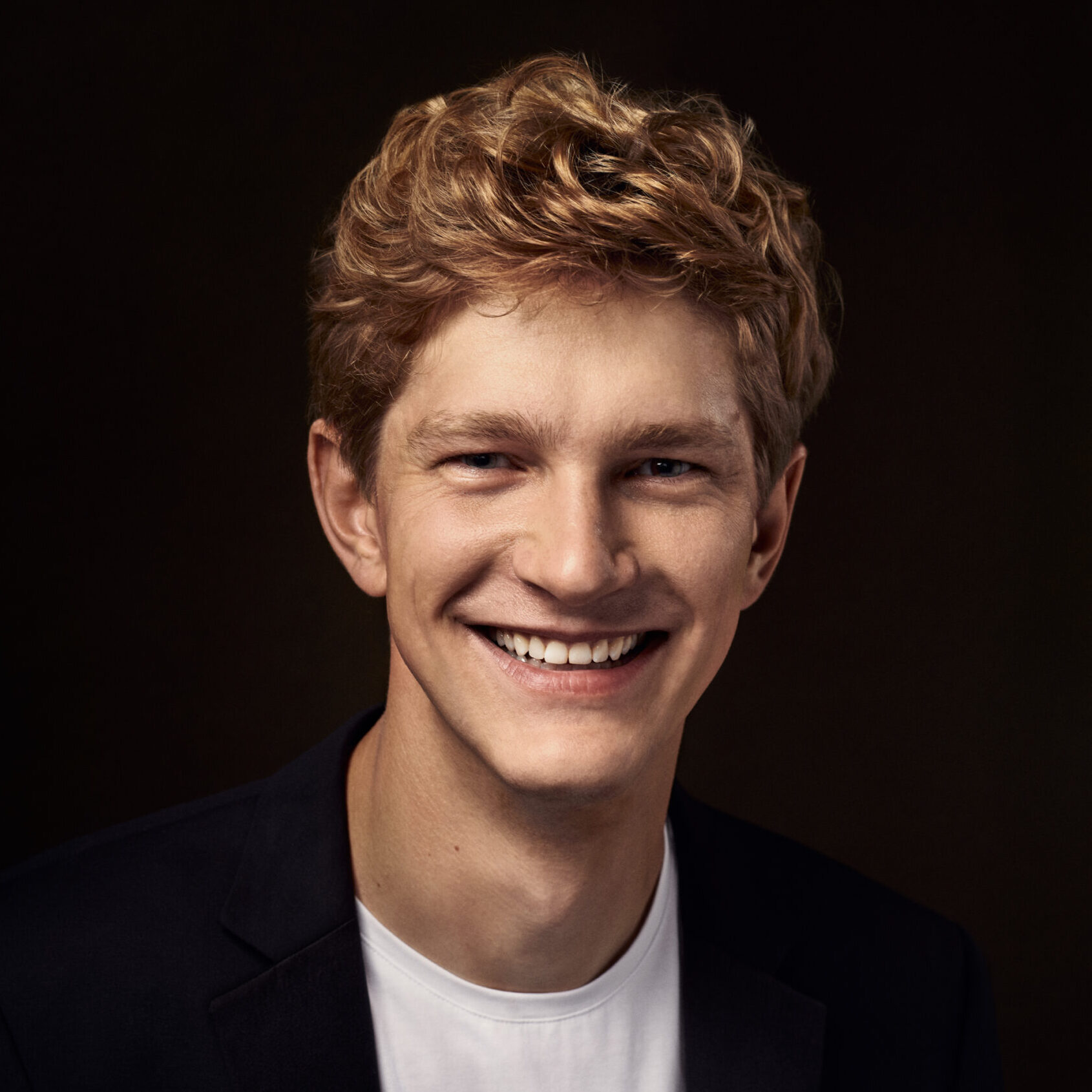
Canadian pianist Jan Lisiecki looks back on a career spanning a decade and a half on the world’s greatest stages, working closely with leading conductors and orchestras and performing more than a hundred concerts annually.
The 2025/26 season has seen him returning to Rotterdam Philharmonic Orchestra, Vienna Symphony Orchestra, Finnish Radio Symphony Orchestra, Warsaw Philharmonic, Gulbenkian Orchestra, and Radio- Sinfonieorchester Berlin, as well as the San Francisco Symphony and Houston Symphony. In August, he concluded the Seoul International Music Festival with Beethoven’s Piano Concerto No. 3 and a solo recital with his acclaimed Preludes program. He has also given recitals across Europe and North America, appearing at the Philharmonie Berlin, Vienna Konzerthaus, Palau Barcelona, Koerner Hall Toronto, and National Arts Centre Ottawa. Continuing his collaboration with the Academy of St. Martin in the Fields, conducting from the piano, he performed Beethoven concerto cycles at the Enescu and Merano festivals.
Recent return invitations include the New York Philharmonic, Cleveland Orchestra, Chicago Symphony Orchestra, Orchestre de Paris, Tonhalle- Orchester Zürich, and Staatskapelle Dresden, and he made his Berlin Philharmonic Orchestra debut in 2024. He is a fixture at major summer festivals, has performed at the Salzburg Festival, and recently made his third appearance at the BBC Proms.
Jan Lisiecki has recorded exclusively for Deutsche Grammophon since the age of 15, releasing nine albums and receiving the JUNO Award, ECHO Klassik, Gramophone Critics’ Choice, Diapason d’Or, and Edison Klassiek. Earlier this week he released his new Mozart concerto album, including K.271. At 18, he received both the Leonard Bernstein Award and Gramophone’s Young Artist Award—the youngest ever recipient of the latter. In 2012, he was named UNICEF Ambassador to Canada