Ravel’s Daphnis and Chloé (May 8-10, 2026)
Program
May 8-10, 2026
- Stéphane Denève, conductor
- St. Louis Symphony IN UNISON Chorus
- Kevin McBeth, director
- St. Louis Symphony Chorus
- Erin Freeman, director
Kevin Puts (b. 1972)
- Virelai (after Guillaume de Machaut)
Nathalie Joachim (b. 1983)
- Family for Chorus and Orchestra
World Premiere, commissioned by the SLSO
St. Louis Symphony IN UNISON Chorus
Intermission
Maurice Ravel (1875-1937)
- Daphnis et Chloé–Symphonie chorégraphique
St. Louis Symphony Chorus
Note: This performance of Daphnis et Chloé will be accompanied by scene titles taken from Ravel’s score.
Virelai (after Guillaume de Machaut)
Kevin Puts
Born 1972, St. Louis
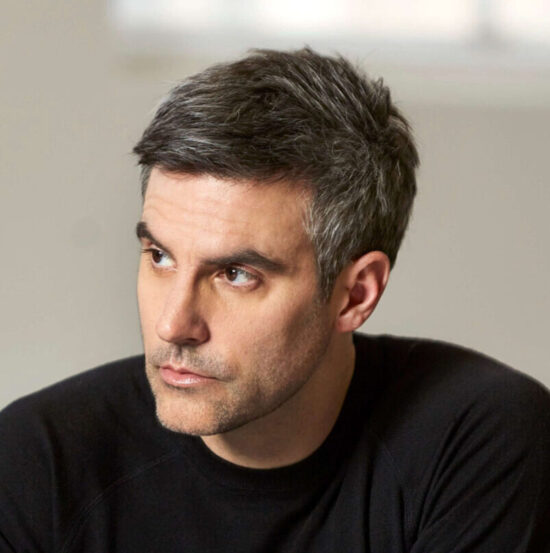
Virelai (after Guillaume de Machaut) was commissioned by the SLSO to mark the beginning of Stéphane Denève’s tenure as music director, and premiered in a festive program of French-American connections that included music by Claude Debussy, Maurice Ravel, and George Gershwin (his American in Paris), as well as Jennifer Higdon’s blue cathedral. With this theme in mind, Kevin Puts took as his starting point a song he’d first heard as a student, “Dame, a vous sans retollir” by 14th-century French composer Guillaume de Machaut.
Machaut was the most famous poet and musician of his time, significant in the development of ars nova (new music). “Dame, a vous” is a virelai, a fashionable form of dance-song characterised by simple rhythmic tunes. Machaut’s text begins with a declaration: “Lady, to you without reservation, I give my heart, thoughts, self, and love.” Later, the poet writes: “Your virtue surpasses goodness itself, your beauty extinguishes all others … you are a rose by your complexion, and your glance can cure all pain.”
Machaut’s original tune, which Puts presents unchanged in the opening piccolo solo, features unpredictable long and short notes that play with the accents of the words and propel the song forward—and, by extension, the feet. In particular, the tune switches between groups of three and two beats in a technique called hemiola. (“America” from Leonard Bernstein’s West Side Story is a modern example of hemiola rhythm.) The result, as one critic has described it, is perky, joyous, and diverting.
Stéphane Denève refers to Virelai as “a kind of brief American version of Ravel’s Boléro,” referring to the “clever and irresistible orchestral crescendo” that Puts adopts. Unlike Ravel, however, Puts breaks into this incremental growth of volume and intensity, splintering the melody in a broadly phrased central section before returning to the fleet- footed character of the opening.
Yvonne Frindle © 2026
About the composer
Kevin Puts is the SLSO’s 2025/26 Composer in Residence. The SLSO commission House of Tomorrow received its premiere with mezzo- soprano Joyce DiDonato on the Opening Weekend of 25/26, followed by performances of his Concerto for Orchestra and Contact (his concerto for the trio Time for Three) in March. On May 19, his string quartet Home will be performed at the Contemporary Art Museum St. Louis. The Youth Orchestra also performed his Hymn to the Sun in March.
Last year, the SLSO and Stéphane Denève released a recording of his music, featuring Concerto for Orchestra, Virelai (after Guillaume de Machaut), and Silent Night Elegy, an orchestral suite drawn from his Pulitzer prize-winning opera Silent Night. Other accolades include the 2023 Grammy Award for Best Contemporary Classical Composition (Contact) and Musical America’s Composer of the Year in 2024. In 2022, his fourth opera, The Hours, received a triumphant stage premiere at the Metropolitan Opera.
Puts has said, “I want audiences to be held in the moment, and be taken to the next moment. If that’s not happening, I feel like I’m falling short.” This emotional directness has led to him becoming one of the most frequently performed living American composers. Highlights include commissions and performances by the Philadelphia Orchestra, Carnegie Hall, Opera Philadelphia, Minnesota Opera, and cellist Yo-Yo Ma. Since 2018, Stéphane Denève has been an enthusiastic champion of his music, sharing a mutual love of the music of John Williams as well as the vocal music of Bach and Mozart, and the city of St. Louis.
| First performance | September 21, 2019, Stéphane Denève conducting the SLSO |
| Most recent SLSO performance | December 31, 2023, Norman Huynh conducting |
| Instrumentation | 2 flutes, piccolo, 2 oboes, English horn, 3 clarinets, 3 bassoons (one doubling contrabassoon), 4 horns, 3 trumpets, 3 trombones, tuba, timpani, percussion, harp, piano, strings |
| Approximate duration | 4 minutes |
Family
Nathalie Joachim
Born 1983, Brooklyn, New York
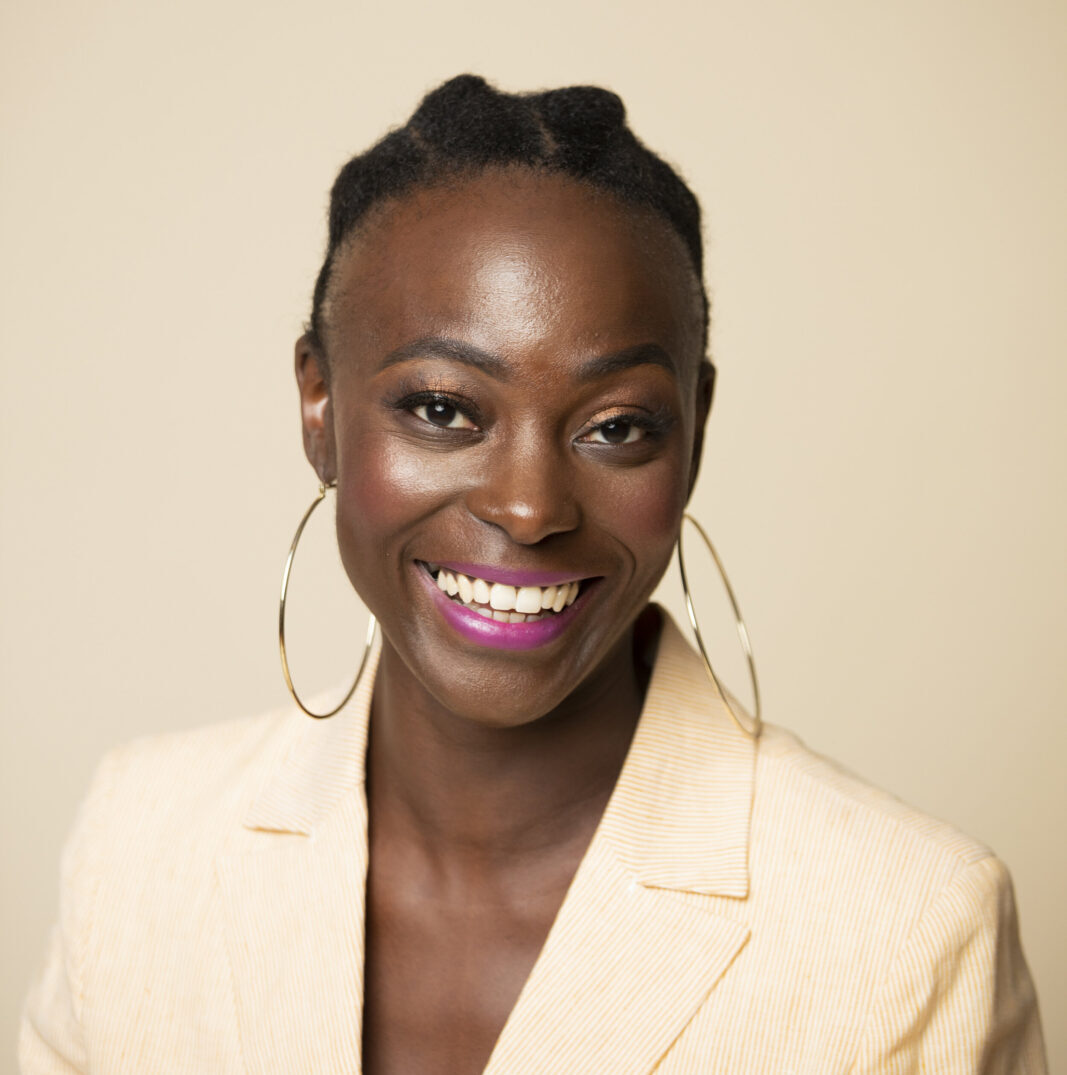
Family was written for the IN UNISON Chorus, and Nathalie Joachim knew she wanted to write something that was truly about the chorus, “that was centered around their story.” The chorus members themselves were eager to be part of the artistic process.
“I’m a collaborative spirit,” says Joachim. “As musicians, we make ourselves incredibly vulnerable. I like to work closely with the people I write for because it allows me to stay in a vulnerable space and feel safe.”
The work was begun during the pandemic, which made in-person collaboration impossible, but Joachim recorded conversations with individual chorus members, asking them about the role music has played in their lives and what being in the ensemble has meant to them. “These offered me a space for connection that I really needed at that time. June 2020 was a tough moment for me. It was the pandemic, George Floyd had been murdered, and I was coming up on the first anniversary of my sister passing away.”
These conversations were “beautifully rich, honest, and intimate,” Joachim recalls. “We talked about being in the chorus, about what was happening in the world, about not being able to meet and sing and find fellowship with one another. There were a lot of tears shed.”
As Joachim writes in her program note: “Each person shared stories of generational connections to music within their own families that contributed to deep fellowship and community, but also an explicit description of IN UNISON as their chosen musical family. I have shaped this work to share their collective story—one brimming with love, support, joy, sorrow, longevity, and belonging. To me, they remind us all of the true meaning of family, chosen or otherwise: the deep sense of comfort that no matter what, you will always have each other.”
The title of the work was clear early in the process. Joachim asked every person, “If you had to describe IN UNISON to somebody who knows nothing about the chorus, what would you say?” Every single person responded, “This is like a family to me.” In addition, every person had a generational connection to music: “My grandmother taught me how to play piano,” or “My family sang in church.”
These conversations gave Joachim the text of Family. Early in the work, the chorus sings, “We’re still here after all these years.” Joachim says that several chorus members expressed this idea. “It was their response to the longevity of the chorus. It was about the resilience of this ensemble.” This line also celebrates the ensemble’s role in sustaining music from the African diaspora, affirming their enduring presence and voice. “Everybody I talked to expressed the sentiment that ‘We should be seen, and we should be heard, because we have been here for a really long time. And we’re still here.’”
Midway into the work is an almost wistful section with heartfelt alliteration: “Here Hope Heart Home Hug,” sing the voices, at first alone, then joined by delicate strands of orchestral writing, building to a literal expression of “Love.” Only after this does Joachim use the word “Family” for the first time, its spoken rhythm giving the music a lilting quality.
Family ends with the words, “We want you to feel a part of that, because you are, you are…” Here, Joachim allows a little of herself into the work. In conversations with chorus members, Joachim says, they welcomed her into their family. But the sentence is left unfinished. “I liked this notion of ‘you are, you are…’” she says. “That you are a living, breathing being. That you are here, you are enough. We acknowledge that and we love that.”
Adapted from notes by Tim Munro © 2022 and Nathalie Joachim © 2026
About the composer
Nathalie Joachim is a Grammy-nominated composer, vocalist, and flutist, whose work runs the gamut from classical music to indie- rock. A Haitian American artist, she has been hailed as “a fresh and invigorating cross-cultural voice” (The Nation), and her commitment to storytelling and human connectivity while advocating for social change and cultural awareness has gained her a reputation as a “powerful and unpretentious” voice (The New York Times).
Joachim is Assistant Professor of Composition at Princeton University and is regularly commissioned to write for orchestra, instrumental and vocal ensembles, dance, and interdisciplinary theater. Her evening- length work, Fanm d’Ayiti, explores her Haitian heritage and received a Grammy nomination for Best World Music Album.
Highlights of this season have included premieres of Solitude + S P A C E and of works for the London Sinfonietta/Holland Festival and the Jacksonville Symphony; performances of Fanm d’Ayiti in San Francisco and at Stanford University; and performances at Carnegie Hall and her alma mater the Juilliard School as an Arnhold Creative Associate. She has also made appearances at Opera Philadelphia as their Composer in Residence, including contributing to the new collaborative opera Complications in Sue, and presented material from her upcoming opera Le Présent éternel at MoMA in New York City. Later this month, the New York Philharmonic will give the premiere of an expanded, instrumental version of Le Présent éternel.
| First performance | These concerts |
| Instrumentation | mixed chorus; 2 flutes (one doubling piccolo), 2 oboes, 2 clarinets (one doubling bass clarinet), 2 bassoons, 4 horns, 2 trumpets, 2 trombones, tuba, percussion, harp, celeste, strings |
| Approximate duration | 12 minutes |
Daphnis et Chloé
Maurice Ravel
Born 1875, Ciboure, France
Died 1937, Paris
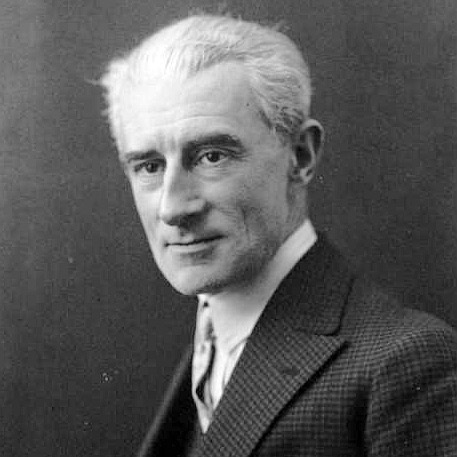
In the years preceding World War I, the Ballets Russes, led by impresario Sergei Diaghilev, had a huge impact on Parisian cultural life. No less than Claude Debussy, Igor Stravinsky, Erik Satie, and Manuel de Falla were commissioned to write music for the groundbreaking Russian troupe. Also in that distinguished company was Maurice Ravel, who was in his early 30s when the Ballets Russes hit it big.
For Ravel, who loved exoticism, fairy tales, and archaic forms draped in musical sensuality, there was something naturally attractive in the ancient Greek story of Daphnis and Chloe as a ballet. The pastoral romance of a goatherd and a shepherdess also accorded with Diaghilev’s vision of finding the radical and pioneering in the primitive and folkloric. In 1909, Diaghilev commissioned Ravel to write the music to Daphnis et Chloé, in a collaboration that included Michel Fokine, Diaghilev’s choreographer at the time, who also supplied the ballet’s narrative.
The project’s gestation, however, was long, exhausting, and fraught with difficulty, particularly since Ravel and Fokine seemed to have different ideas for how the ballet should proceed. In a letter to a friend dated June 1909, Ravel wrote:
I’ve just had an insane week: preparation of a ballet libretto for the next Russian season. Almost every night, work until 3 a.m. What complicates things is that Fokine doesn’t know a word of French and I only know how to swear in Russian. In spite of the interpreters, you can imagine the savor of these meetings.
At one point, Diaghilev even considered cancelling the project out of frustration. By the middle of 1910, Ravel was still formulating musical ideas for the ballet. The following year, he labored over its orchestration, while making substantial revisions to the ballet’s finale.
There was ample reason for the work’s delay. Daphnis et Chloé turned out to be the longest composition that Ravel had written, as well as calling for one of the largest contingents of instrumentalists and chorus ever employed by the French composer. Daphnis et Chloé received its premiere on June 8, 1912, in a production that included sets and costumes by Leon Bakst, with Vaslav Nijinsky and Tamara Karsavina dancing the title roles. Pierre Monteux conducted.
The premiere (part of an enormous program including Debussy’s Prelude to the Afternoon of a Faun and Nikolai Rimsky-Korsakov’s Scheherazade) was not successful. The ballet was under-rehearsed, and many of its dancers found the complicated beat of the work’s finale too challenging. Still, the music caught on with listeners. Stravinsky later wrote that the score was “one of the most beautiful products of all of French music.”
It was the bold choreography of Diaghilev’s ballet company that had captured Ravel’s interest, and his music for Daphnis et Chloé exudes rhythm and love of the dance. In fact, he subtitled the score Symphonie chorégraphique or “choreographic symphony.”
The ballet is in three parts, which are played without pause. The first (and at nearly 30 minutes, the longest) of these is set in a meadow at the edge of a sacred wood. In two solo variations, Daphnis and the cowherd Dorcon compete for a kiss from Chloé—Dorcon clumsily in a Danse grotesque, Daphnis lightly and gracefully. Another woman, Lyceion, dances to tempt Daphnis but is unsuccessful. (Listen for the clarinets, followed by an alluring flute solo.) This rustic scene is interrupted by the approach of a pirate ship, and Chloé is kidnapped by the intruders. In slow and mysterious music, Nymphs call on Pan to rescue her.
Part II is set in the pirate’s camp on a rugged seacoast. The wordless chorus sings in the distance before trumpet fanfares introduce the Danse guerrière (Warlike dance). Commanded to dance, Chloé pleads for her freedom (Danse suppliante) but to no avail, and the pirate chief Bryaxis tries to carry his prized prisoner away. Pan sends satyrs and other fantastic beings to rout the pirates and everyone flees in horror.
Part III begins with a blissful musical sunrise, Lever du jour. Twittering violins and piccolo imitate birdsong in this section, one of several evocations of nature, and the woodwind writing is intricate and richly textured. This is followed by a sensuously orchestrated Pantomime in which the two characters re-enact the legend of Pan and Syrinx. (Syrinx escapes Pan’s amorous pursuit when she is transformed into a bunch of reeds, out of which Pan makes pan pipes to play in his sorrow—naturally, the flute figures prominently.) But it’s only a story, and in real life the lovers are united.
The ballet concludes in a riot of rhythm and orchestral color with the ecstatic Danse générale—a kind of bacchanale. Occasionally reminiscent of Alexander Borodin’s Polovtsian Dances, the Danse générale features an infectious five-beat meter. (It was this that caused the dancers so much grief, and legend has it that Ravel solved the problem by getting them to chant their boss’ name as they danced: Ser-gei-Dia-ghi-lev, Ser-gei-Dia-ghi-lev…)
Ravel later wrote that Daphnis et Chloé is “less concerned with archaism than with fidelity to the Greece of my dreams.” That sentiment surfaced years later when Ravel was bestowed an honorary degree by Oxford University, where he was described as “a charming artist who persuades all cultivated people that Pan is not dead, and that even now Mt. Helicon [the Greek mountain of the muses] is green.”
Adapted from a note by Matthew Erikson © 2011
| First performance | June 8, 1912, in Paris, Pierre Monteux conducting |
| First SLSO performance | February 1, 1964, Eleazar de Carvalho conducted the complete ballet music, with the Sumner High School A Cappella Choir and Sumner Alumni Choir; prior to this, Suite No. 2 (Part III of the ballet without chorus) was frequently programmed, with Eugene Goossens conducting the first SLSO performance on December 16, 1927 |
| Most recent SLSO performance | November 5, 2011, Stéphane Denève conducting, with the St. Louis Symphony Chorus |
| Instrumentation | 3 flutes (2 doubling piccolo), alto flute, 2 oboes, English horn, 2 clarinets, E-flat clarinet, bass clarinet, 3 bassoons, contrabassoon (playing a part written for sarrusophone), 4 horns, 4 trumpets, 3 trombones, tuba, timpani, large percussion section, 2 harps, celeste, strings, wordless mixed chorus |
| Approximate duration | 55 minutes |
Artists
Kevin McBeth
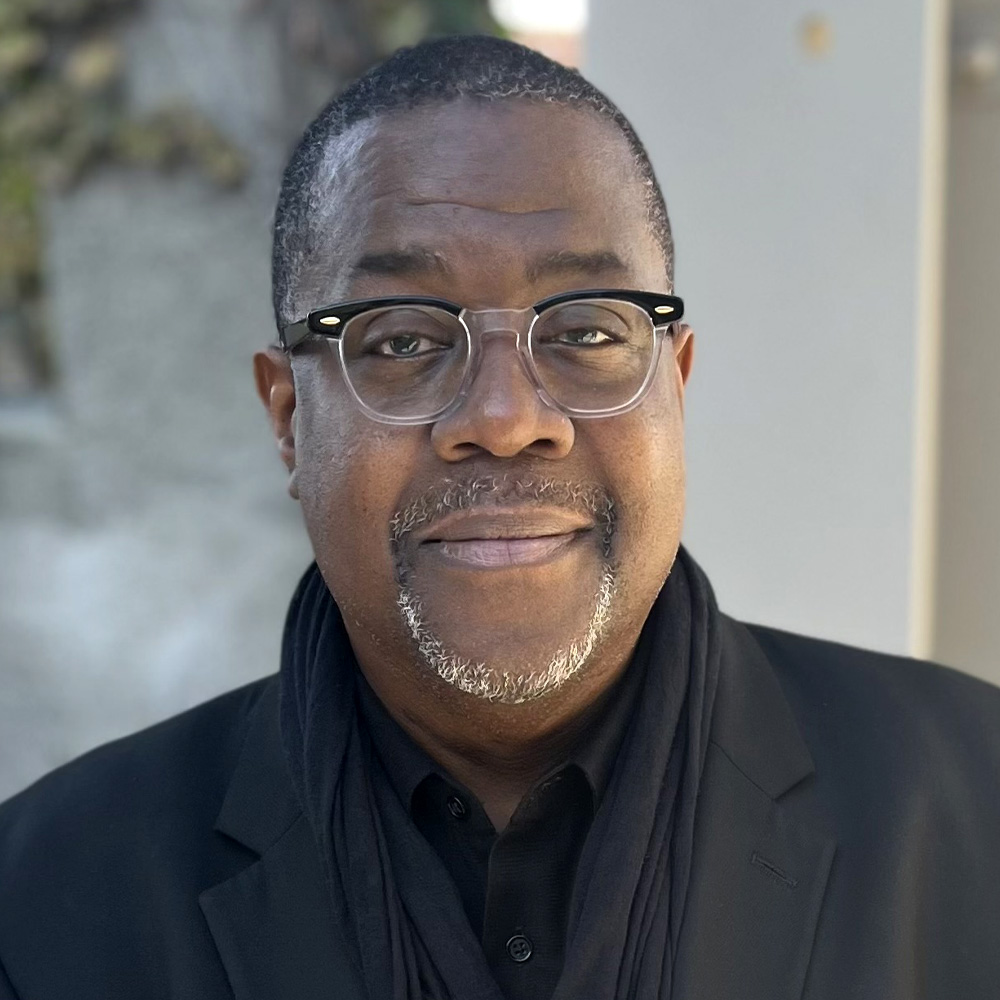
Director of the St. Louis Symphony IN UNISON Chorus
Kevin McBeth was appointed Director of the St. Louis Symphony Orchestra IN UNISON Chorus in 2011. He is also the Director of Worship Arts at Manchester United Methodist Church in suburban St. Louis, a post he has held for 30 years.
Previous appointments include Adjunct Professor of Choral Music at Webster University and Music Director of the St. Louis Metro Singers. A published composer and author, he was also choral music editor for Abingdon Press and now serves as music editor for the SLSO IN UNISON Chorus Choral Series with MorningStar Music. He is a featured author in the book Choral Reflections: Insights from American Choral Conductor- Teachers, edited by Brandon Williams.
McBeth has served on state, division, and national boards of the American Choral Directors Association (ACDA) and is Past-President of the Missouri ACDA. He has presented conducting masterclasses at state and national level and served as guest lecturer at Westminster Choir College, the Juilliard School of Music, Temple University, and Webster University.
McBeth has conducted concerts at Carnegie Hall and the John F. Kennedy Center for the Performing Arts and was selected to participate in the Cambridge Choral Academy in England. He has prepared choruses for performances with Oleta Adams, Boyz II Men, Sarah Brightman, Sutton Foster, Josh Groban, Barry Manilow, Leslie Odom, Jr., Billy Porter, Take 6, and Andy Williams. His orchestral conducting credits feature performances with the Indianapolis Symphony Orchestra, Houston Civic Symphony, New Jersey Symphony, and the New England Symphonic Ensemble. He appears regularly with the SLSO for specials and education concerts.
St. Louis Symphony IN UNISON Chorus
- Kevin McBeth
- Director
- Beth Enloe Fritz
- Assistant Director
- Michelle Byrd
- Manager
- Joseph Welch
- Accompanist
- Tiffany Alexander
- Cassandra Allen
- Cassie Allen
- Armando Asebedo Jr.
- Glenda Bastain
- Angelic Berry
- Juanita Blackshear
- Candice Boyd
- Valencia Branch
- Raven Brooks
- Patricia Brown
- Michelle Byrd
- Rochelle Calhoun
- Dillon Carl*
- Orelando Carodine
- Beverly Charisse†
- Vernetta Cox
- Janet Davis
- Jaylen Davis*
- Reginald Davis
- Zacheriah Davis
- Linda Davner†
- Lucy Debro
- Charita Dones
- Maggie Dorsey†
- Carole Dula-Bell
- Kim Durr
- Beth Enloe Fritz
- Alayna Epps*
- Bekah Ford*
- Maggie Gann
- Ousmane Gaye
- Eugene Gilliam
- Ruth Gilliam†
- Johnny Gillings Jr.
- Gregory Green
- Tracy Hall
- Leslie Hanlin
- Jared Hennings
- Dorothy Heyward
- Natalie Hill
- Carole Hughes†
- Don Hutcherson
- Joyce Jefferson
- Alexandar Johnson*
- Lisa Johnson
- Stanley Johnson
- Barrie Jones†
- Carmen Jones
- Tericida Jones†
- Jacob Krznar
- Nikkirra Loyd
- Nadia Maddex*
- Vickie Minter
- Mary Moorehead
- Harry Moppins Jr.
- Cathie Muschany
- Kristie Osi
- Nayomi Osi
- Alexandria Paul
- Diane J. Peal†
- Eric Pitts
- Althelia Powell-Thomas†
- Veronica Rice*
- Christopher Scott
- Austin Shariff*
- Teresia A. Simmons
- Denise Sleet
- Diane Smoot
- Charles Stancil
- Bridget Stegall†
- Jeffrey Struckhoff
- Wynton Stuart
- Nyla Thomas*
- Karen Thomas-Stuart
- Sharon Thurman
- Aaron Tucker Jr.
- Beverly Versey-Smith
- Kwamina Walker-Williams
- Gracie Ward
- Kelly Ward
- Shannon Wesselmann
- Elsa Whitfield
- Tom Wilkerson
- Robyn Williams
- Haley Yonke
- Thomas Yonke
- †Charter Member
- *Young Artists
Erin Freeman
Director of the St. Louis Symphony Chorus; AT&T Foundation Chair
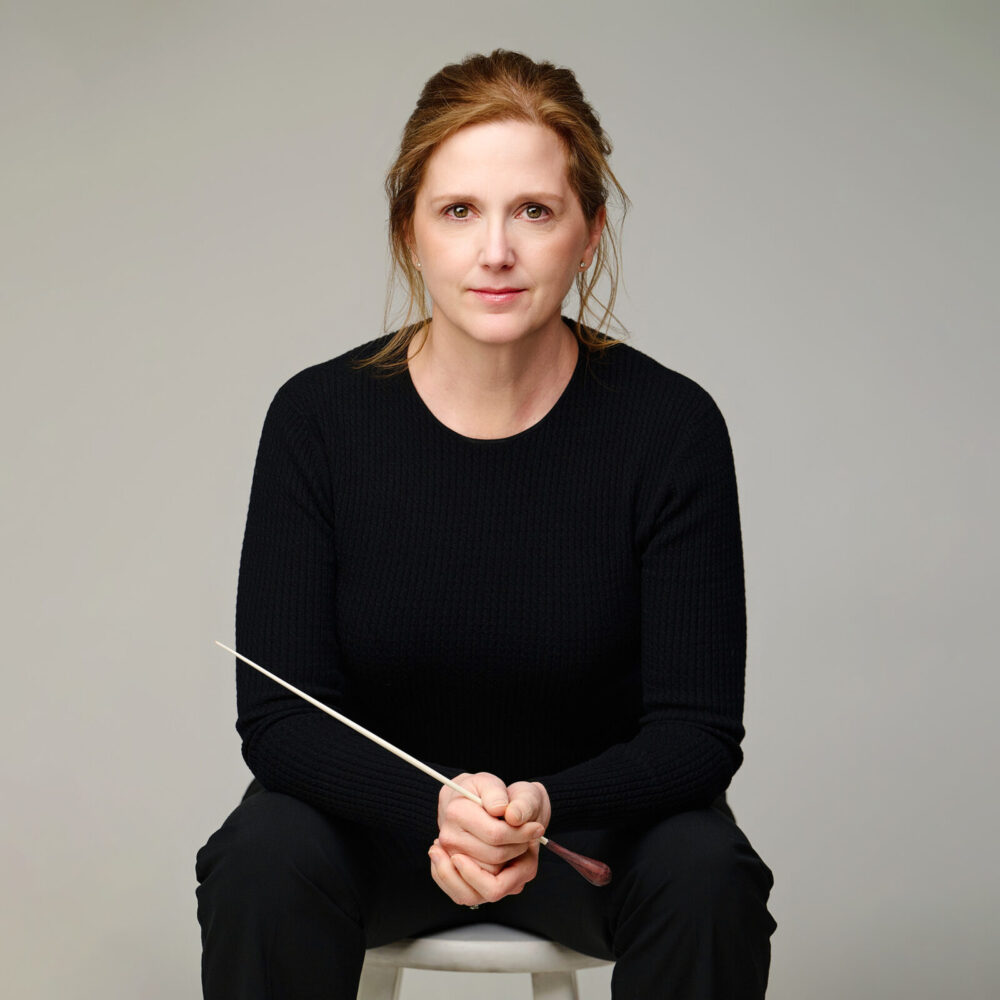
A versatile and engaging artist, conductor Erin Freeman was named Director of the St. Louis Symphony Chorus in July 2024. She also serves in positions throughout the District of Columbia and the Commonwealth of Virginia, and maintains an international presence through guest conducting. She is Artistic Director of the City Choir of Washington and Wintergreen Music, and Principal Conductor of the Richmond Ballet (State Ballet of Virginia), and recent positions include Director of the award-winning Richmond Symphony Chorus and Director of Choral Activities at Virginia Commonwealth University and George Washington University.
In addition to directing the St. Louis Symphony Chorus, recent performance highlights have included concerts at Brazil’s Sala São Paulo with the City Choir of Washington and Brazilian Mozarteum Academic Orchestra, productions for Washington Ballet and Richmond Ballet (Carmina Burana for her debut at Wolf Trap National Park for the Performing Arts), and her New York City Ballet debut (George Balanchine’s The Nutcracker).
Guest conducting engagements include concerts with the Toledo, Detroit, Portland (Maine), and Virginia symphony orchestras; Charlottesville Symphony; Buffalo and Savannah philharmonic orchestras; and Berkshire Choral International (at the Vienna Musikverein). She has also conducted at Carnegie Hall, Boston Symphony Hall, Cadogan Hall, Lincoln Center, La Madeleine in Paris, and the Kennedy Center, and has led and/or prepared the Richmond Symphony Chorus for multiple recordings, including the 2019 Grammy-nominated release of Children of Adam by Mason Bates.
In the 2025/26 season she will conduct productions of Nutcracker and Giselle (Richmond Ballet) and Coppélia (Toledo Ballet), a concert performance of The Music Man (City Choir of Washington and the Washington National Opera Orchestra), and a performance of Bach’s Mass in B minor in Washington’s historic National Presbyterian Church.
St. Louis Symphony Chorus
- Erin Freeman
- Director
- Leon Burke III
- Assistant Director
- Gail Hintz
- Accompanist & Manager
- Timothy Anderson
- George Aplin
- Charles Badami
- Nicholas D. Bashaw
- Maureen Bierhals
- Pamela Bingham
- Jerry Bolain
- Joy Boland*
- Michael Bouman
- Keith Boyer*
- Robyn Brandon
- Kyrstan Brantley*
- Daniel P. Brodsky
- Elise Brubaker
- Spencer Lee Burbach*
- Catherine Burge
- Leon Burke III*
- Leslie Caplan
- Victoria Carmichael*
- Mark P. Cereghino
- Rhonda Collins Coates
- David T. Cox
- Derek Dahlke*
- Kelly Daniel-Decker
- Laurel Ellison Dantas*
- Ladd Faszold
- Alan Freed
- Mark Freiman*
- Lea Luecking Frost
- Warren Fryeton
- Mason German
- Gavin Ghafoori
- Megan E. Glass
- Justino Gordón-LeChevalié*
- H. Everett Gossard
- James Haessig*
- Susan H. Hagen
- Carlea Halverson
- Jessica Hansen
- Kevin D. Hart
- Nancy J. Helmich
- Ellen Henschen
- Carole Hughes
- Laura Colette Jarasek
- Matthew Jellinek
- Samantha Johnson
- James Kalkbrenner*
- Jason D. Keune
- Patricia Anne Kofron
- Nancy Kowalczyk
- Christina Kruger*
- Paul Kunnath
- Patricia Lacoss-Arnold
- Sarah Lancaster
- William Larson
- Karyn Lisker
- Julie Longyear
- Gina Malone*
- Kellen Markovich
- Patrick C. Mattia
- Charles McCall
- Elizabeth McKinney
- Scott Meidroth
- Ashleigh CS Moffit-Brunngraber
- Abby C. Nahlik
- Emily Mae Nelson
- Hannah Nelson
- Shelby Niemann
- Duane L. Olson
- Nadiana Ortiz
- Yeeun Paik
- Matt Pentecost*
- Brian Pezza
- Sarah Price*
- Shelly Ragan
- Robert Reed*
- Valerie Christy Reichert
- Kate Reimann*
- Casey Ridenour
- Joy Rikli
- Nathan Tulloch Ruggles*
- Paul N. Runnion
- Taran N. Sachak
- Mark V. Scharff
- Leann Schuering*
- Sophie Shugart-Fischer*
- Victoria Siddell*
- Charles G. Smith
- David Spencer
- Allyson Stokes
- Alyssa Strauss
- Laura Swearingen
- Heather Butler Taylor
- Andrew Thomas
- Natanja Tomich*
- Philip Touchette*
- Greg Upchurch
- Robert Valentine*
- Nancy Maxwell Walther
- Diane Watson
- Andrew Wilson*
- Paula N. Wohldmann
- Tristan Wood
- Samuel Wright*
- Susan Donahue Yates
- Danielle Yilmaz*
- Raphaella Zavaglia*
- Carl Scott Zimmerman
- *Section Principals