Rachmaninoff’s Third (April 24-25, 2026)
Program
April 24-25, 2026
- Samuel Hollister, conductor
- Gabriela Montero, piano
Gabriella Smith (b. 1991)
- Tumblebird Contrails
Sergei Prokofiev (1891-1953)
- Piano Concerto No. 3 in C major, Op. 26
- Andante – Allegro
- Tema (Andantino) con variazioni
- Allegro ma non troppo
Gabriela Montero, piano
Intermission
Sergei Rachmaninoff (1873-1943)
- Symphony No. 3 in A minor, Op. 44
- Lento – Allegro moderato
- Adagio ma non troppo – Allegro vivace – Tempo come prima
- Allegro
Tumblebird Contrails
Gabriella Smith
Born 1991, Berkeley, California
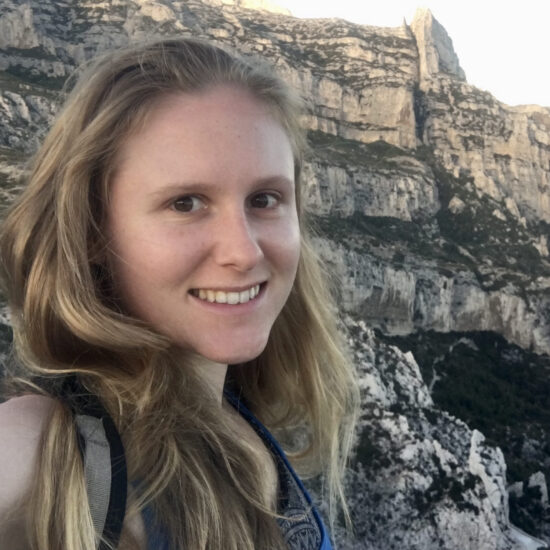
Gabriella Smith is driven by a love for the natural world. As a teenager in Berkeley, California, she volunteered for a songbird research project, and planned to study ecology at university. Music took over, but Smith still spends time in nature, hiking and observing.
The natural world is the catalyst for many of Smith’s works. “The destruction of our biosphere is the biggest issue facing humans and all species on Earth right now,” she told fellow composer Gemma Peacocke in a 2018 interview. Her music responds to this threat in works like Field Guide, Bioluminescence Chaconne, Lost Coast, and Tidalwave Kitchen.
The title of this work, Tumblebird Contrails, “is a Kerouac-inspired, nonsense phrase I invented to evoke the sound and feeling of the piece.” Indeed, Smith’s introduction to the work could have been written by one of the beat poets:
Tumblebird Contrails is inspired by a single moment I experienced while backpacking in Point Reyes, sitting in the sand at the edge of the ocean, listening to the hallucinatory sounds of the Pacific (the keening gulls, pounding surf, rush of approaching waves, sizzle of sand and sea foam in receding tides), the constant ebb and flow of pitch to pitchless, tune to texture, grooving to free-flowing, watching a pair of ravens playing in the wind, rolling, swooping, diving, soaring— imagining the ecstasy of wind in the wings—jet trails painting never-ending streaks across the sky.
Tim Munro © 2022
About the composer
Gabriella Smith grew up in the San Francisco Bay Area playing and writing music, hiking, backpacking, and volunteering on a songbird research project. Her music comes from a love of play, exploring new instrumental sounds, and creating musical arcs that transport audiences into sonic landscapes inspired by the natural world. The Los Angeles Times described her as an “outright sensation,” while The New York Times has said her music “exudes inventiveness with a welcoming personality, rousing energy and torrents of joy.”
Lost Coast, a concerto for cello and orchestra written for her longtime collaborator Gabriel Cabezas, received its world premiere in May 2023 with the Los Angeles Philharmonic, conducted by Gustavo Dudamel. Her organ concerto, Breathing Forests—written for James McVinnie— was also premiered by the Los Angeles Philharmonic, conducted by Esa-Pekka Salonen.
Other current projects include a large-scale work for Kronos Quartet, commissioned in celebration of their 50th anniversary season, and an album-length work for yMusic featuring underwater field recordings. In December 2023, Tumblebird Contrails was performed as part of the Nobel Prize Concert by the Royal Stockholm Philharmonic Orchestra, conducted by Salonen.
Her first full-length album, Lost Coast, was recorded with Cabezas and producer Nadia Sirota at Greenhouse Studios in Iceland. The album was named one of NPR Music’s “26 Favorite Albums Of 2021” and a “Classical Album to Hear Right Now” by The New York Times. Gabriel Cabezas and Gabriella Smith, as a cello-violin-voice-electronics duo, have performed together around the world, including in Reykjavík, New York City, and Paris.
| First performance | August 9, 2014, in Santa Cruz, California, Marin Alsop conducting the Cabrillo Festival Orchestra |
| First and most recent SLSO performances | January 28 and 29, 2022, John Adams conducting |
| Instrumentation | 3 flutes, 3 oboes, 3 clarinets (one doubling bass clarinet), 2 bassoons, contrabassoon, 4 horns, 3 trumpets, 3 trombones, tuba, timpani, percussion, strings |
| Approximate duration | 12 minutes |
Piano Concerto No. 3
Sergei Prokofiev
Born 1891, Sontsovka, Russia
Died 1953, Moscow, Russia
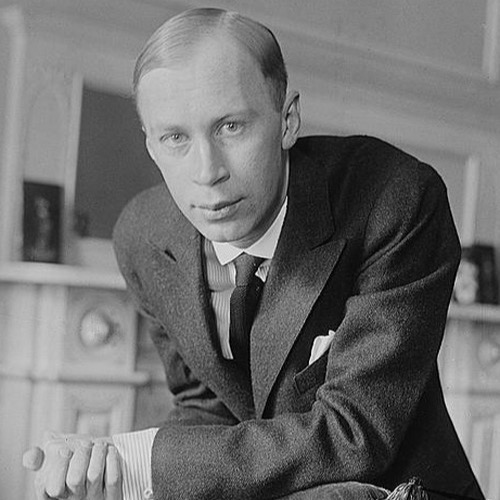
Sergei Prokofiev made propulsive sonic energy his compositional signature. Prokofiev could also write delicately, and he had a wonderful gift for lyrical melody, attributes clearly demonstrated in his popular violin concertos and his ballet score for Romeo and Juliet. But few composers of the 20th century or any other period had such a keen ability to create and sustain musical momentum by establishing a driving pulse and steely rhythmic figures within it.
The diverse virtues of Prokofiev’s work inform his Piano Concerto No. 3. Although the composer wrote this piece during a vacation in France in 1921, most of the musical ideas that went into it had originated some time earlier, during his early career in Russia. Prokofiev salvaged much of the third movement from a string quartet he had begun, but abandoned, three years previously. The second movement had been sketched in 1913, and some of the passages in the first movement date from as early as 1911. So rich in ideas were Prokofiev’s sketch books that he could later declare: “When I began working on the concerto … I already had all the thematic material I needed except for the third theme of the finale and the subordinate theme of the first movement.”
This is the most brilliant—and in all ways the most successful—of Prokofiev’s five piano concertos. The composer performed the solo part when the work received its premiere in 1921 in Chicago. This duty proved more demanding than Prokofiev had anticipated. “I’m nervous and practicing hard … every day,” he wrote shortly before the event, but the performance went well and the piece was warmly received. It has since gained a secure position as the most popular of the composer’s concertos and, indeed, as one of the most popular of all his works.
The Third Piano Concerto follows the outline of the classical concerto form: three movements in a fast-slow-fast pattern. The first opens with a lyrical melody having something of the flavor of a Russian folk song; subsequent developments tap Prokofiev’s rhythmic vein, as well as the impish humor we often encounter in his music. In the second movement, a curiously somber march theme stated at the outset by the orchestra gives rise to five contrasting variations. The finale recaptures the drive of the opening movement, but Prokofiev balances its athletic passages with a warmly romantic interlude in the middle of the movement.
Adapted from a note by Paul Schiavo © 2007
| First performance | December 16, 1921, Frederick Stock conducting the Chicago Symphony Orchestra with the composer as soloist |
| First SLSO performance | January 29, 1937, Vladimir Golschmann conducting with the composer as soloist |
| Most recent SLSO performance | February 2, 2013, Hannu Lintu conducting with Conrad Tao as soloist |
| Instrumentation | solo piano; 2 flutes (one doubling piccolo), 2 oboes, 2 clarinets, 2 bassoons, 4 horns, 2 trumpets, 3 trombones, timpani, percussion, strings |
| Approximate duration | 27 minutes |
Symphony No. 3
Sergei Rachmaninoff
Born 1873, Semyonovo, Russia
Died 1943, Beverly Hills, California
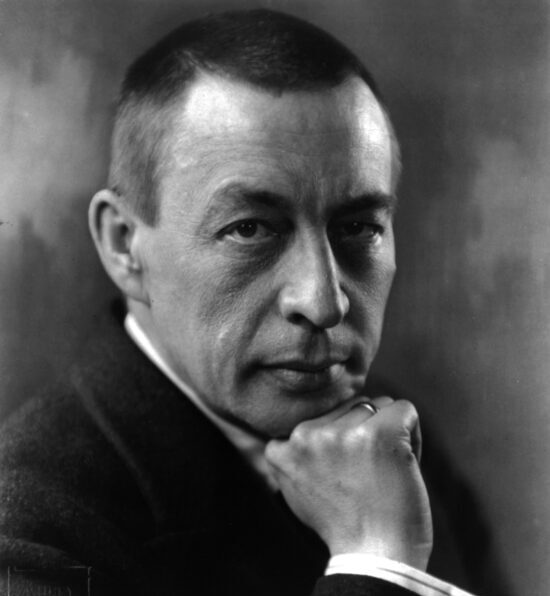
In 1917, the Bolshevik Revolution threw Russia into turmoil. Inflation spun out of control, food was scarce, and uprisings threatened rich and poor. With life and livelihood at stake, the 44-year-old Sergei Rachmaninoff left his homeland.
The exile would be permanent. “This is a burden heavier to me than any other,” wrote Rachmaninoff. “I have no country. I had to leave the land where I was born, where I struggled and suffered all the sorrows of the young, and where I finally achieved success.”
Between 1918 and his death in 1943, Rachmaninoff would write only six new works. “Losing my country, I lost myself also,” he wrote. “To the exile whose musical roots have been annihilated, there remains no desire for self-expression; no solace apart from the unbreakable silence of memory.”
Summers activated Rachmaninoff’s homesickness. Yearning for a place of escape and refuge, the composer and his wife built the Villa Senar on Lake Lucerne in Switzerland in the early 1930s. Here, they could surround themselves with Russian food, literature, friends, and customs.
It had been three decades since his previous symphony, and he had once vowed never to write another. But lakeside calm and renewal must have spurred action, because by the end of his third summer at the villa, Rachmaninoff had two movements of a new symphony.
The Third Symphony, like Rachmaninoff himself, is a collision of old and new. Rachmaninoff was resolutely Old World, locking himself in something of a pre-Russian Revolution bubble. Yet he was fascinated by modern contraptions: fast cars, speedboats, new-fangled inventions.
The symphony opens with an invented church chant, an otherworldly sound intoned by clarinet, viola, and horn. This chant reappears throughout the work, always in different guises: sometimes murmured, sometimes sung, sometimes screamed.
But the Third Symphony has a modern edge. Its music is in near- constant flux, shocking with an extreme change or shuffling impatiently from one idea to the next. Newer sounds abound: strange combinations, muted brass, violinists playing with the wood of their bows.
The work’s ambivalence is perfectly captured in the middle movement. Here, slow movement and fast scherzo are fused. Indeed, we might see a portrait of Rachmaninoff himself, the slow-moving melancholy of the Old World wedded to the fast-forward impatience of the new.
Tim Munro © 2022
| First performance | November 6, 1936, Leopold Stokowski conducting the Philadelphia Orchestra |
| First SLSO performance | November 27, 1936, Vladimir Golschmann conducting |
| Most recent SLSO performance | March 19, 2022, Stéphane Denève conducting |
| Instrumentation | 2 flutes, piccolo, 2 oboes, English horn, 2 clarinets, bass clarinet, 2 bassoons, contrabassoon, 4 horns, 2 trumpets, alto trumpet, 3 trombones, tuba, timpani, percussion, 2 harps, celesta, strings |
| Approximate duration | 39 minutes |
Artists
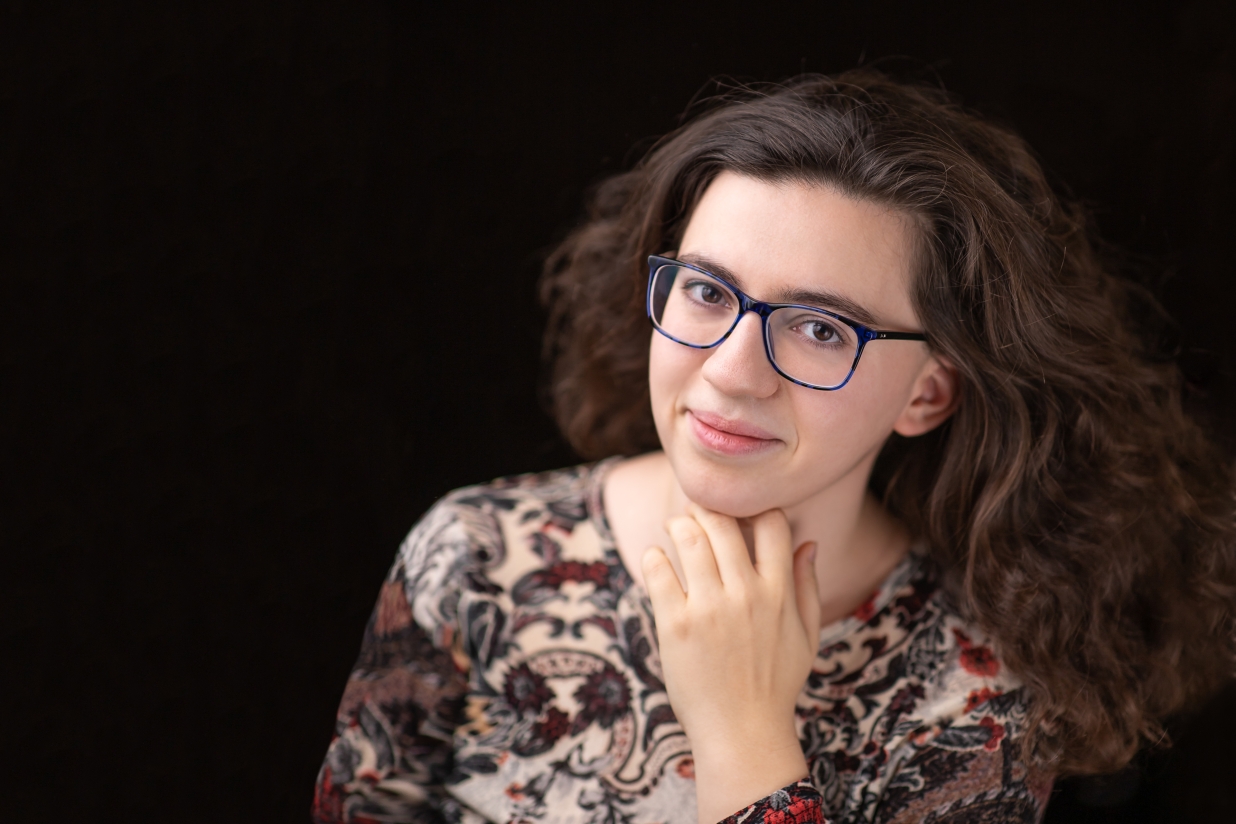
Samuel Hollister
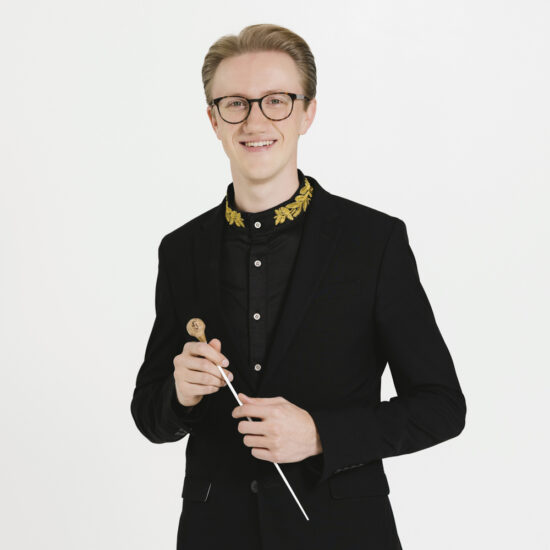
Assistant Conductor and The Fred M. Saigh Youth Orchestra Music Director
Samuel Hollister is a dynamic conductor, pianist, harpsichordist, and composer who believes in the power of music to build community and tell meaningful stories. He serves as the Assistant Conductor of the St. Louis Symphony Orchestra and The Fred M. Saigh Youth Orchestra Music Director. He completed his residency in orchestral conducting at the Yale School of Music in 2024, has previously led the Civic Orchestra of New Haven, and also taught at the University of Rhode Island as Director of Orchestral Activities. These concerts mark his classical SLSO debut.
Hollister is a fierce advocate for new music and has collaborated with composers such as John Corigliano, Joan Tower, and Adolphus Hailstork. His initiatives have included commissioning new concertos for guitar and marimba and co-founding the Emilie Mayer Project, which published the first public domain edition of Mayer’s Overture No. 3. Through his nonprofit, Aurora Collaborative, he has championed innovative concert experiences and the blending of music with visual art and writing.
As a composer, Hollister has written for piano, chamber ensembles, orchestra, and choir, while his work as a pianist, harpsichordist, and vocal coach includes positions with Opera Saratoga and Peabody’s Opera Department. He has performed and conducted internationally, with appearances in South Africa, Spain, Mexico, Hungary, Austria, Ukraine, Bulgaria, and Canada, and he has participated in masterclasses with such notable figures as Yo-Yo Ma and Jeffrey Kahane.
In addition to his musical endeavors, Hollister enjoys chess and exploring nature with his camera.
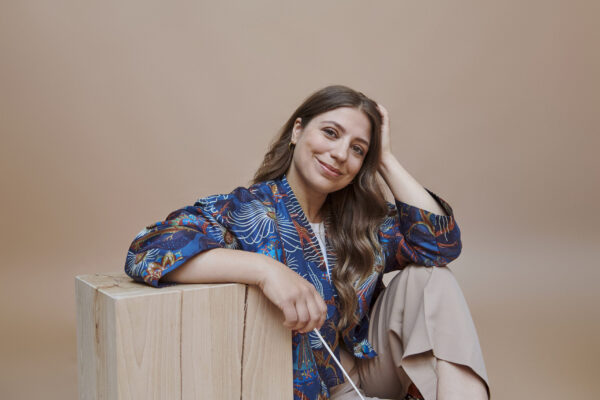
Gabriela Montero
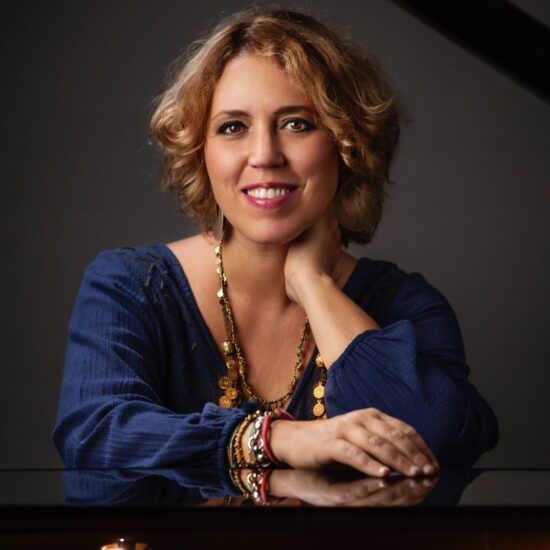
Gabriela Montero’s visionary interpretations and unique compositional gifts have garnered her critical acclaim and a devoted following on the world stage.
The 2025/26 season sees Montero as Artist in Residence at London’s acclaimed Barbican Centre. Other 25/26 highlights include her debut with the BBC Symphony Orchestra and a new solo recital programme, Iberia, showcasing Spain’s rich influence on the piano repertoire. She is also currently a faculty member and the Jonathan and Linn Epstein
Artist in Residence at the Cleveland Institute of Music. She has previously held residencies with the São Paolo Symphony Orchestra, Prague Radio Symphony Orchestra, Bournemouth Symphony Orchestra, Basel Symphony, and at the Rheingau Musik Festival.
Other recent and forthcoming highlights include debuts with Amsterdam’s Concertgebouw Orchestra, Orchestra dell’Accademia Nazionale di Santa Cecilia in Rome, Munich Philharmonic, Orchestre National de France, and Deutsches Symphonie Orchester Berlin; extensive tours with the City of Birmingham and Prague symphonies; performances with Martha Argerich at Munich’s Isarphilharmonie and Lisbon’s Calouste Gulbenkian Museum; and performances of her own “Latin Concerto” with leading American and European orchestras. Montero is also a frequent recitalist, giving concerts at leading concert halls and festivals around the world. Her compositions have been performed around the world, and she is an acclaimed recording artist. Her 2006 album, Bach and Beyond, won two Echo Klassik Awards, and she received a Latin Grammy Award for Best Classical Album for her recording of Sergei Rachmaninoff’s Piano Concerto No. 2 and her own composition, Ex Patria. As the winner of the 4th International Beethoven Award and a featured performer at Barack Obama’s first presidential inauguration, Gabriela Montero is a committed human rights advocate whose voice regularly reaches beyond the concert platform