Debussy’s La Mer (October 2 & 4, 2026)
Program
October 2 & 4, 2026
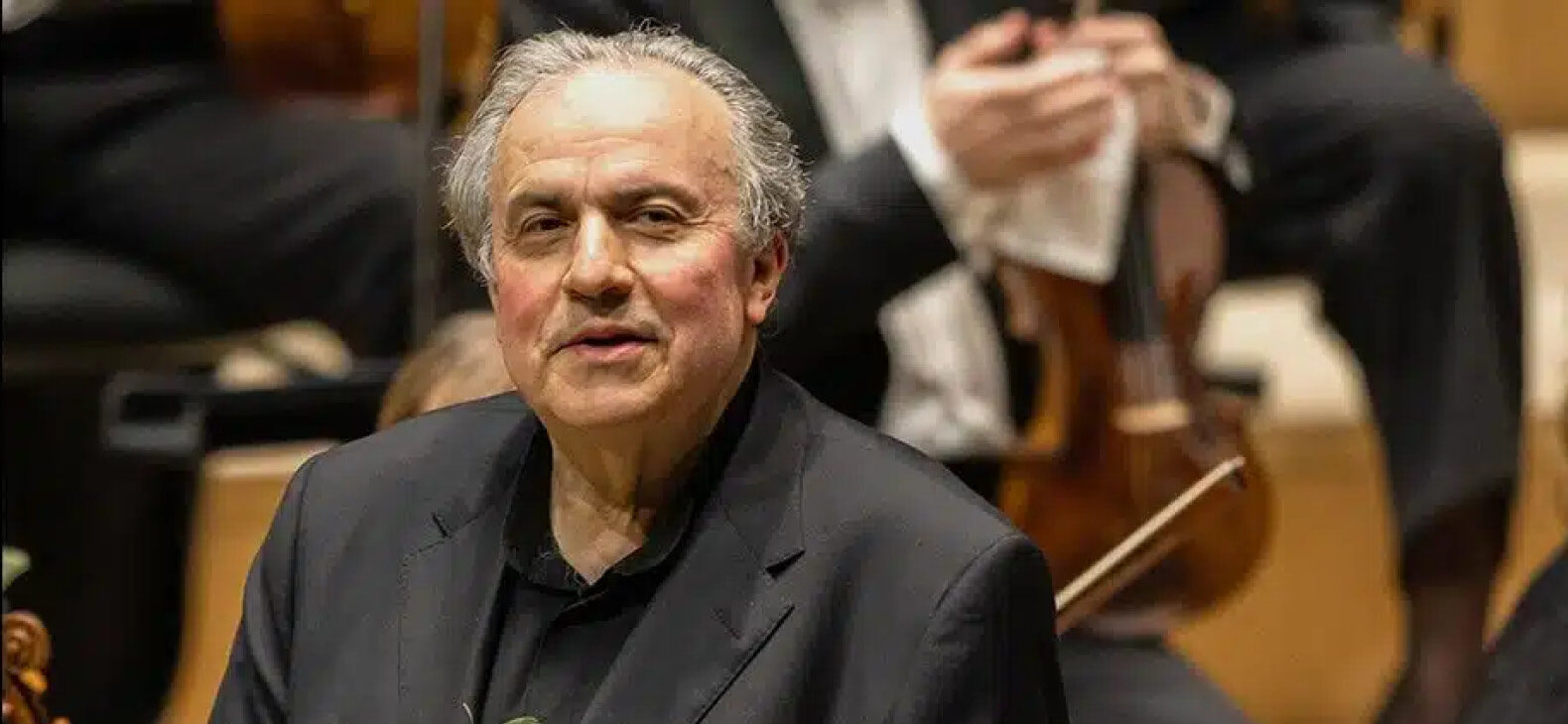
- Dalia Stasevska, conductor
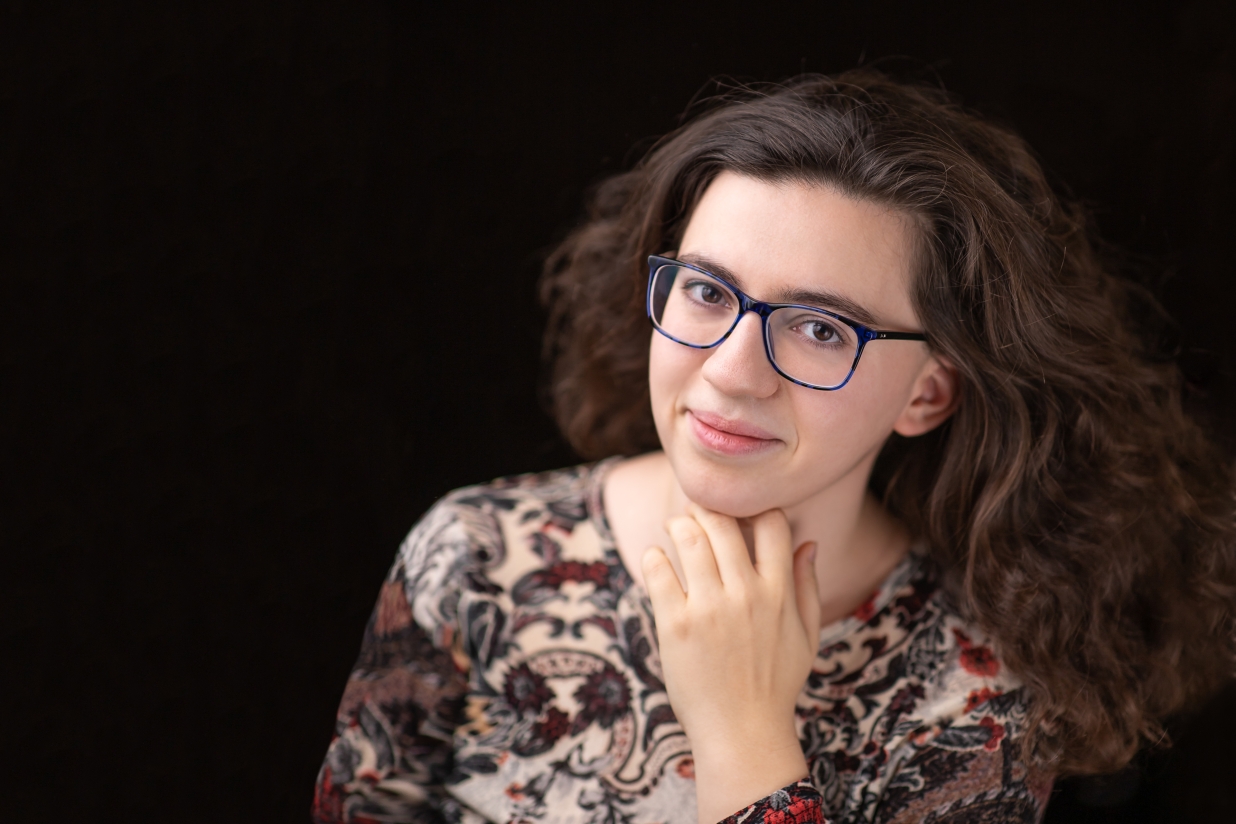
- Aphrodite Patoulidou, soprano and nyckelharpa
Anna Meredith (b. 1978)
- Nautilus (6 minutes)
Jean Sibelius (1865–1957)
- Scene with Cranes from Kuolema (Death), Op. 44, No. 2 (6 minutes)
Luciano Berio (1925–2003)
- Folk Songs (23 minutes)
- 1. “Black is the colour…” (USA)
- 2. “I wonder as I wander…” (USA)
- 3. “Loosin yelav…” (The moon has risen) (Armenia)
- 4. “Rossignolet du bois” (Little nightingale) (France)
- 5. “A la femminisca” (May the Lord send fine weather) (Sicily, Italy)
- 6. “La donna ideale” (The ideal woman) (Italy)
- 7. “Ballo” (Dance) (Italy)
- 8. “Motettu de tristura” (Song of sadness) (Sardinia, Italy)
- 9. “Malurous qu’o uno fenno” (Wretched is he) (Auvergne, France)
- 10. “Lo fiolaire” (The spinner) (Auvergne, France)
- 11. “Azerbaijan love song” (Azerbaijian)
Aphrodite Patoulidou, soprano
Intermission
Traditional
Arranged by Aphrodite Patoulidou
- Kalevala Melody (5 minutes)
Aphrodite Patoulidou, soprano and nyckelharpa
The performance will continue without pause
Jean Sibelius
- Luonnotar (Kalevala), Op. 70 (10 minutes)
Aphrodite Patoulidou, soprano
Claude Debussy (1862–1918)
- La mer (23 minutes)
- De l’aube à midi sur la mer (From Dawn to Noon on the Sea)
- Jeux des vagues (Play of the Waves)
- Dialogue du vent et de la mer (Dialogue of Wind and Sea)
Stories in Sound
Conductor Dalia Stasevska makes her SLSO debut with a program bookended by works alluding to aquatic voyages. In 2021, Stasevska was the conductor for the world premiere of Anna Meredith’s Nautilus, which plunges us into a thrilling realm of relentless, climbing horns, ferocious bass, and thunderous, stomping percussion. Finnish composer—and avid bird-watcher—Jean Sibelius invites us to listen for the avian-like call of the clarinets in Scene with Cranes, and a globe-trotting tour of traditional song unfolds in Luciano Berio’s Folk Songs. Soprano Aphrodite Patoulidou’s vocals immerse us in the epic folklore of Finland’s Kalevala, underpinning a rare performance of Sibelius’ Luonnotar. Finally, Stasevska steers us home with Claude Debussy’s La mer, infused with the intrigue, excitement, and jeopardy of life on the ocean waves.
Nautilus
Anna Meredith
Born 1978, London, England

Defying Labels
Scottish composer-producer Anna Meredith’s work blurs the lines between classical, acoustic, and electronic music, and experimental rock. The original, electronic-driven version of her uncompromising, irrepressible Nautilus first appeared on Meredith’s Black Prince Fury EP in 2012, and later also on her 2016 debut album, Varmints. Meredith’s composer’s note for Nautilus described the work as a “call to arms” for herself, as she embarked on her career as an electronic artist. Meanwhile, Pitchfork writer Laura Snape praised the track’s “imperious brass fanfares, artillery-fire percussion, and earth-quaking bass.”
From Electronic to Orchestra
In 2021, Finland’s Lahti Symphony Orchestra commissioned an orchestral version of Nautilus to commemorate Dalia Stasevska’s inaugural concert as Chief Conductor. Meredith’s bandmate and close collaborator, Jack Ross, arranged Nautilus for a full symphony orchestra, and Stasevska conducted the premiere at Lahti’s Sibelius Hall in September 2021.
The orchestral version of Nautilus intensifies the impact of the original’s constituent parts. For the opening fanfare, trumpets, horns, oboes, and B-flat clarinets replace synthesizers. In the hands of a full orchestra, the escalating brass lines that Meredith conceived of “whilst stomping along a beach in Scotland” are more potent than ever. The thunderous percussion that erupts into life in the final third of the piece also originated from Meredith’s beach “stomp,” as she experimented and played with the sounds created by her steps on the sand.
Iain Shaw © 2026
| First performance | September 16, 2021, Dalia Stasevska conducting the Lahti Symphony Orchestra in Lahti, Finland |
| First SLSO performance | These concerts |
| Instrumentation | 2 flutes (one doubling piccolo), 2 oboes, 2 clarinets (one doubling bass clarinet), 2 bassoons, 4 horns, 4 trumpets, 3 trombones, tuba, timpani, percussion, strings |
Scene with Cranes
Jean Sibelius
Born 1865, Hämeenlinna, Finland
Died 1957, Järvenpää, Finland
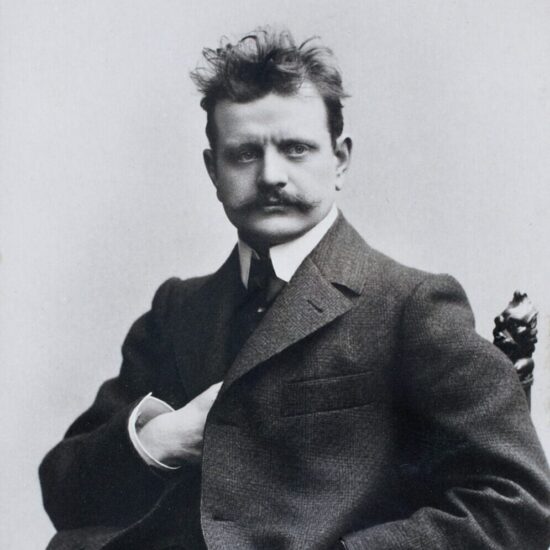
In the autumn of 1903, around the time he was composing the music for Arvid Järnefelt’s symbolist play Kuolema (Death), Sibelius laid the foundation for Ainola, his lifelong home. Located 24 miles north of Helsinki, with a view of Lake Tuusula, Ainola gave him a connection to nature and to the local birds—the swans, cranes, and wild geese—that ran through his creative life.
You may have heard this obsession in The Swan of Tuonela (begun in 1893), with its darkly poetic English horn solo, or in the Fifth Symphony (1915), with its stirring horn theme. “Every day I have seen the cranes. Flying south in full cry with their music,” Sibelius wrote in his diary in 1915. “Their cries echo throughout my being.” Cranes echo, too, in this orchestral miniature, when descending pairs of notes from the clarinets interrupt the glassy stillness of the muted strings.
Scene with Cranes was compiled in 1906 from two numbers Sibelius had written for the play. The main music represents a vision of Elsa, beautiful and proud, as she gazes at her reflection in a forest spring and hums (“Eilaa, eilaa”). Later, Elsa and her beloved wake to the cries of cranes in flight. A single bird detaches itself from the flock and brings them a baby. (Yes, that myth is both ancient and universal.) Transferring the penetrating calls of the cranes from the original strings to clarinets was a stroke of genius. As the music draws to a close, solo violin and cello return to the vision of Elsa.
Yvonne Frindle © 2026
| First performance | December 14, 1906, the composer conducting in Vassa, Finland; |
| First SLSO performance | These concerts |
| Instrumentation | 2 clarinets, timpani, strings |
Folk Songs
Luciano Berio
Born 1925, Oneglia, Italy
Died 2003, Rome, Italy
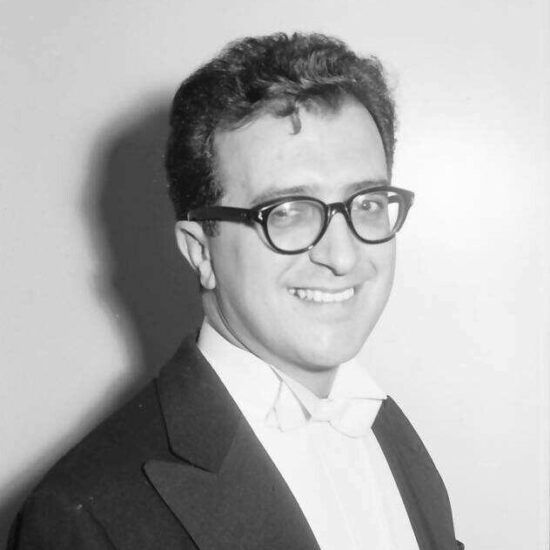
Two violas play “like a wistful ‘country dance fiddler,’” quite independently of the singer, who enters with the harp. This delicate arrangement of “Black is the colour…” echoes with authenticity.
Or does it? The first of Berio’s Folk Songs was a “new” tune, composed by Kentucky folklore enthusiast John Jacob Niles (1892–1980). It caught on; when Berio first arranged it, recordings by Nina Simone and Joan Baez were in circulation.
Niles also composed “I wonder as I wander…,” based on a Christmas song he’d tried to collect from a preacher’s daughter: “After eight tries, I had only three lines of verse, a garbled fragment of melodic material— and a magnificent idea.” Berio’s treatment is equally magnificent. Naive simplicity emerges in lilting voice and harp, while clarinets, viola, and cellos evoke a portable reed organ. A rhapsodic flute coda suggests “a bird on the wing.”
Thus begins Berio’s anthology of folk songs from the US to Azerbaijan. Giving the songs new rhythmic and harmonic interpretations, he effectively “recomposed them,” the instrumental parts underlining “the expressive and cultural roots of each song.”
Berio created the original chamber version of Folk Songs in 1964 when he was still married to singer-composer Cathy Berberian, and her voice and enthusiasms permeate the music. The first two songs represent Berberian’s country of birth; the third, “Loosin yelav…,” her Armenian heritage. In the second verse of this song in praise of the rising moon, a silvery clarinet chases the darkness away.
“Rossignolet du bois” offers relationship advice from a French nightingale. The troubadour’s melody has the focus, accompanied by harp, pensive clarinet tones and antique cymbals. At the end, Berio brings in the full ensemble for one clanging chord—a ship’s bell?—introducing “A la femminisca,” a prayer sung by the wives of Sicilian fishermen. The singer now adopts a fiercely resonant chest voice as supplication alternates with sobbing in a soundscape of ringing bells.
Two original songs by Berio follow. In “La donna ideale” (a Genoese listicle on choosing a wife) folk-song flavor emerges in uneven phrases and vocal ornaments. “Ballo” (a Sicilian text) dazzles with sheer speed— madness and folly!—grounded by rhythmic strumming.
The nightingale makes another agony-aunt appearance as the singer seeks consolation for lost love in the Sardinian “Motettu de tristura.” Berio dresses the mournful tune in an elusive and eerie blanket of sound. The piccolo, like the nightingale, never repeats itself in song.
Berio’s lean treatment of the next two songs offers a striking contrast to the familiar lush orchestrations in Joseph Canteloube’s Chants d’Auvergne. “Malurous qu’o uno fenno” might be an ironic commentary on Berio’s relationships—“Unfortunate is he who has a wife…”! The cellos’ buzzing hurdy-gurdy effects color the spinner’s tale of youthful flirtation in “Lo Fiolaire.”
Berberian “went crazy for” the “Azerbaijan love song,” and not knowing the language, she listened to it hundreds of times, making a (hilariously garbled) phonetic transcription. To date, no one has been able to translate it! This vivacious song with its pipe-and-tabor vibe and uninhibited vocal oscillations makes a thrilling finale.
Yvonne Frindle © 2019/2026
| First performance | The chamber ensemble arrangement premiered in 1964 at Mills College in Oakland, California, the composer conducting with Cathy Berberian as soloist. Berio’s arrangement for symphony orchestra premiered in 1973 |
| First SLSO performance | These concerts |
| Instrumentation | soprano; 2 flutes, oboe, 3 clarinets, bassoon, horn, trumpet, trombone, percussion, harp, strings |
Luonnotar
Jean Sibelius
Born 1879, Bologna, Italy
Died 1936, Rome, Italy
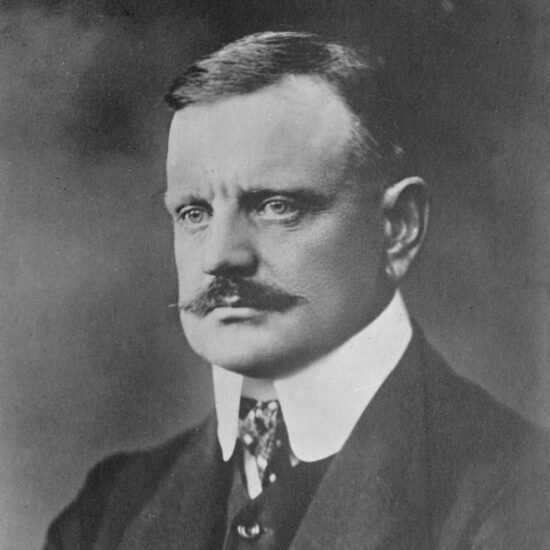
An Improvised Prelude: Kalevala Melody
Before today’s performance of Jean Sibelius’ Luonnotar, soprano Aphrodite Patoulidou sets the scene with an improvised prelude. Patoulidou’s Kalevala Melody is inspired by the same source material that Sibelius drew on for Luonnotar: Finland’s national epic, the Kalevala. First published in 1835, then expanded in 1849, the Kalevala became a cornerstone of Finland’s blossoming national identity as the 19th century progressed. Generations of artists—Sibelius among them—have been influenced by this wellspring of folklore and mythology.
Patoulidou riffs on the meter and melodic style used to chant the Kalevala’s tales. She accompanies her atmospheric vocals with the nyckelharpa, a Swedish stringed folk instrument. The nyckelharpa is played with a bow, but the musician creates different notes by pressing on dozens of wooden keys along the neck. Patoulidou’s improvisation is a stirring gateway to the world of the Kalevala. After a brief pause, the orchestra launches us into the story of Luonnotar.
Sibelius and the Kalevala
During the 1890s, Sibelius wrote several major works based on episodes from the Kalevala, and he continued to draw inspiration from the epic poem over the course of his long career. Sibelius may have written Luonnotar in 1910, when Finnish newspapers announced that he had completed such a work for the renowned soprano Aino Ackté. However, the music was not performed until nearly three years later, when Sibelius used it to fulfill a commission from the Gloucester Music Festival, in England.
The Tale of Luonnotar
The text of Luonnotar comes from the opening canto of the Kalevala, which sets forth a creation myth. Luonnotar is the “Spirit of Nature,” who floated alone in the universe before the earth and heavens were made. Tired of her lonely maiden’s existence, she descended to the primordial ocean, where she swam for seven centuries. Longing to conceive, she called to the god Ukko. At last, a sea bird flew by her, seeking a place to nest. Luonnotar raised her knee above the water, and upon it the bird lay her eggs. But at length the eggs emitted such great heat that Luonnotar flinched, spilling them into the water. The eggs shattered, and from their pieces were formed the earth, sky, sunlight, moon, and stars.
A Distinctive Voice
Luonnotar is not often heard, mostly because the soprano part, with its very wide range, is extremely challenging. The composition deserves more frequent performance. Writing to a friend, Sibelius declared that whatever else might be said of it, “this piece is written in ‘my own’ style.” That assessment is entirely accurate. As much as any of his works, Luonnotar embodies the distinctive “voice” of the composer’s maturity.
Adapted from a note by Paul Schiavo © 2009; note on Kalevala Melody by Iain Shaw © 2026
| First performance | September 10, 1913, Herbert Brewer conducting the Gloucester Festival Orchestra in Gloucester, England, with Aino Ackté as soloist |
| First and most recent SLSO performances | March 27, 2009, followed by three subsequent performances in March and April 2009, David Robertson conducting with Karita Mattila as soloist |
| Instrumentation | soprano; 2 flutes, 2 oboes, 2 clarinets, bass clarinet, 2 bassoons, 4 horns, 2 trumpets, 3 trombones, 2 timpani, 2 harps, strings |
La mer
Claude Debussy
Born 1862, Saint-Germain-en-Laye, France
Died 1918, Paris, France
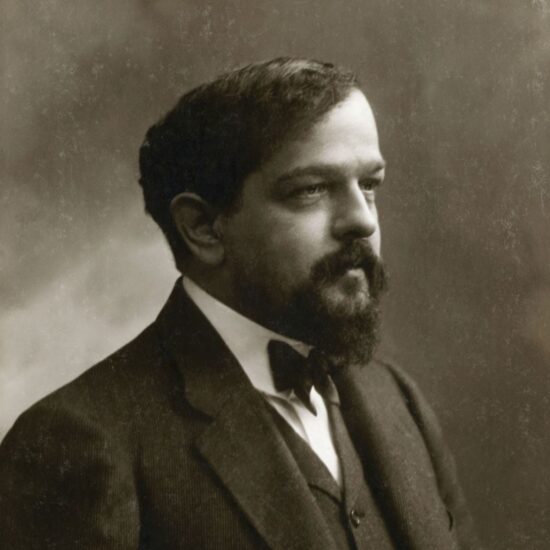
Musical Escape
In 1904, Debussy was in pain. After leaving his unhappy marriage, his wife threatened suicide and eventually shot herself, non-fatally. Debussy was cast adrift, deserted by friends, a shell of his former self. As he so often did, he escaped into music—a musical ocean, to be precise. For a man who had once considered life as a sailor, the open sea retained its power, both beautiful and terrifying.
Symphonic Sketches
La mer (The Sea) is subtitled “three symphonic sketches.” Debussy chose these words carefully, fearing the word “symphony” aligned him with a reviled conservative culture. “I feel more and more that music,” wrote Debussy, “is not something that can flow inside a rigorous, traditional form.” The sounds of La mer flow like ocean waters: sometimes still, sometimes storm-tossed, sometimes forming recognizable shapes, sometimes slipping from our grasp. La mer’s new musical world confounded many listeners. Debussy dismissed the criticisms of those who “love and defend traditions which, for me, no longer exist.”
The Music
Debussy is a sonic magician. With pen and paper, he conjures whole worlds that might be gone in an instant. A trumpet and an English horn produce new colors through alchemy. Cellos soar through the air, leaving French horn contrails. Clarinet and flute play hide-and-seek amid plucked violas. Each movement takes a journey that feels simultaneously unpredictable and organic. The first movement glows and flutters, ending with an overwhelming surge. In the second, slippery melodies dart and weave around the orchestra. The finale is wild and violent, barely able to contain its radiant, hymn-like conclusion.
Abridged from a note by Tim Munro © 2019
| First performance | October 15, 1905, conducted by Camille Chevillard at the Concerts Lamoureux in Paris |
| First SLSO performance | January 23, 1913, Max Zach conducting |
| Most recent SLSO performance | May 3, 2024, Stéphane Denève conducting the SLSO at the Stifel Theatre |
| Instrumentation | 2 flutes, piccolo, 2 oboes, English horn, 2 clarinets, 3 bassoons, contrabassoon, 4 horns, 3 trumpets, 2 cornets, 3 trombones, tuba, timpani, percussion, 2 harps, celesta, strings |
Artists
Dalia Stasevska
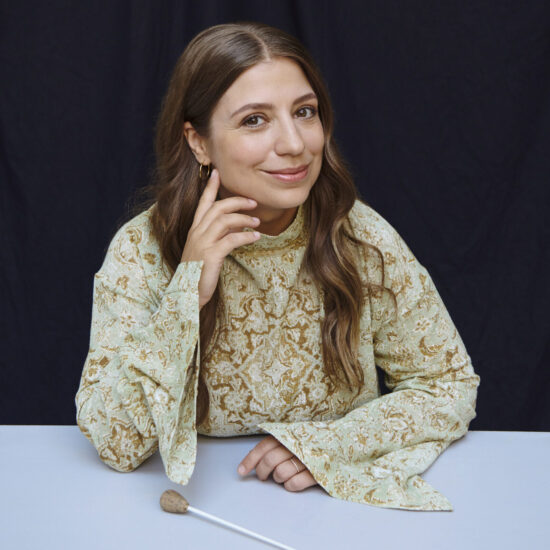
Dalia Stasevska is the Principal Guest Conductor of the BBC Symphony Orchestra. She has established herself as a commanding musical voice, a boundary-pushing innovator, and a fearless activist and advocate for change. Stasevska has conducted leading orchestras around the world, including recent performances with soloists including Augustin Hadelich, Yo-Yo Ma, and Carol Jantsch.
She is also a passionate opera conductor. Her solo debut album with the BBC Symphony Orchestra, Dalia’s Mixtape, was nominated for a Gramophone Award. Born in Ukraine, Stasevska grew up in Finland, studying violin and composition at the Tampere Conservatoire before studying violin, viola, and conducting at the Sibelius Academy. These concerts mark Dalia Stasevska’s SLSO debut.
Aphrodite Patoulidou
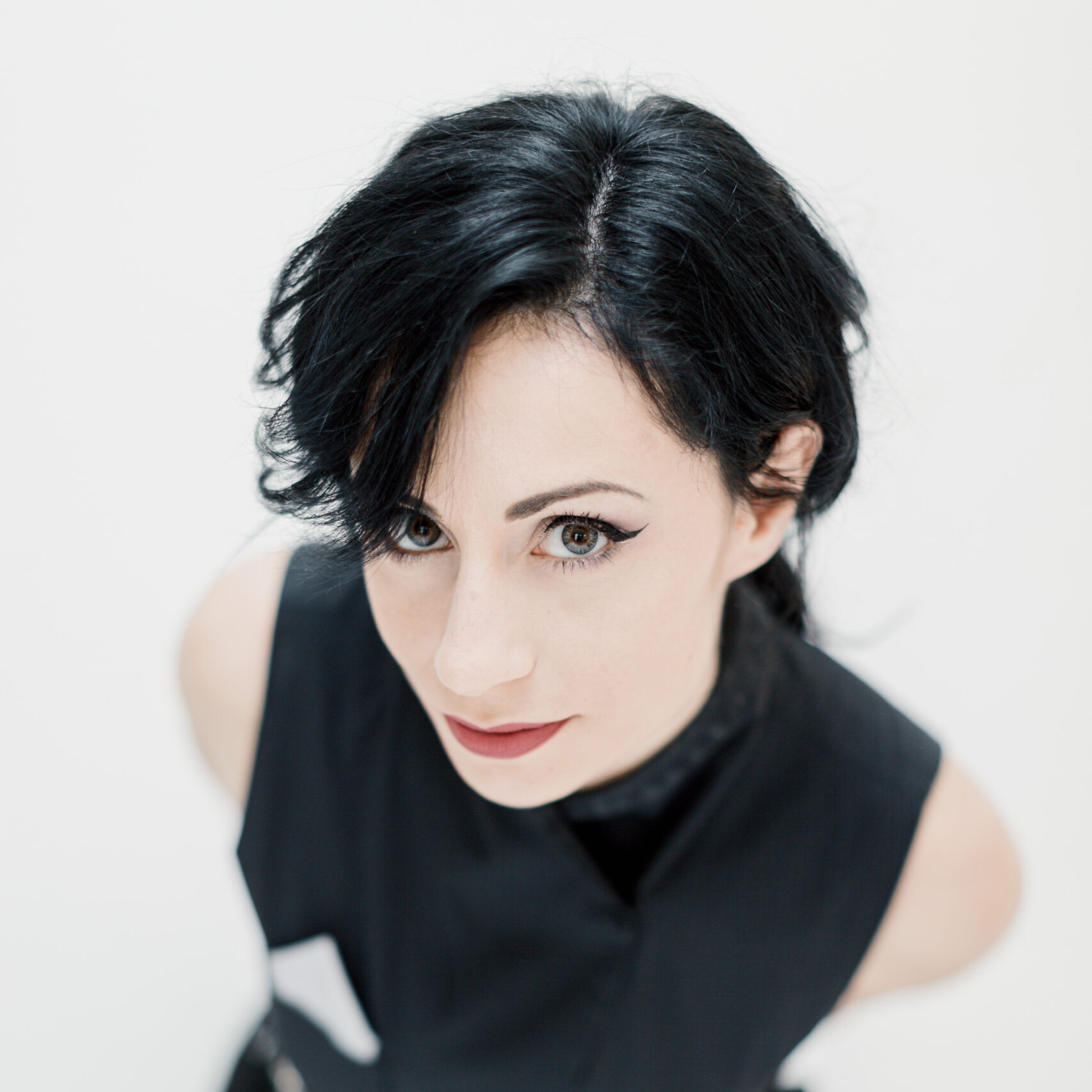
Aphrodite Patoulidou has been praised for her luminous, richly colored voice, compelling stage presence, and remarkable artistic versatility. Equally at home in Mozart, Mahler, Strauss, and contemporary repertoire, her artistic practice extends beyond the classical stage, bringing music into dialogue with folk traditions, visual art, and the Swedish nyckelharpa. She has performed with world-renowned orchestras such as the Royal Concertgebouw Orchestra, Munich Philharmonic, and Orchestre Philharmonique de Radio France, among many others. Her operatic roles include Elle (La voix humaine), Susanna (Le nozze di Figaro), Belinda (Dido & Aeneas), and Sophie Scholl (Weisse Rose). As a visual artist, she creates special projects inspired by her passion for dark romantic themes. These concerts mark Aphrodite Patoulidou’s SLSO debut.