Rachmaninoff and Tchaikovsky (November 6–8, 2026)
Program
November 6–8, 2026
- Stéphane Denève, conductor
- Daniil Trifonov, piano
Michael Tilson Thomas (1944–2026)
- Agnegram (8 minutes)
Sergei Rachmaninoff (1873–1943)
- Piano Concerto No. 1 in F sharp minor (27 minutes)
- Vivace
- Andante
- Allegro vivace
Daniil Trifonov, piano
Intermission
Pyotr Ilyich Tchaikovsky (1840–1893)
- Symphony No. 6 in B minor, Op. 74, “Pathétique” (46 minutes)
- Adagio; Allegro non troppo
- Allegro con grazia
- Allegro molto vivace
- Finale: Adagio lamentoso
Passion and Fate
Music Director Stéphane Denève leads us off today with the late Michael Tilson Thomas’ jazzy, elliptical, and spirited Agnegram, written in honor of an “indefatigably enthusiastic” champion of live orchestral music. The same could be said of Tilson Thomas himself, who passed away in April 2026. We welcome the SLSO debut of Daniil Trifonov, performing a work that announced the arrival of a generational talent: Sergei Rachmaninoff’s soulful Piano Concerto No. 1. Often overlooked in orchestral programming, the concerto offers a wonderful showcase for Trifonov’s exceptional artistry. The concert closes with similarly heartfelt music from another Russian master. Brimming with beauty and sorrow, Pyotr Ilyich Tchaikovsky’s “Pathétique” Symphony was a personal triumph for the composer—although it also proved to be a farewell.
Agnegram
Michael Tilson Thomas
Born 1944, Los Angeles, California
Died 2026, San Francisco, California
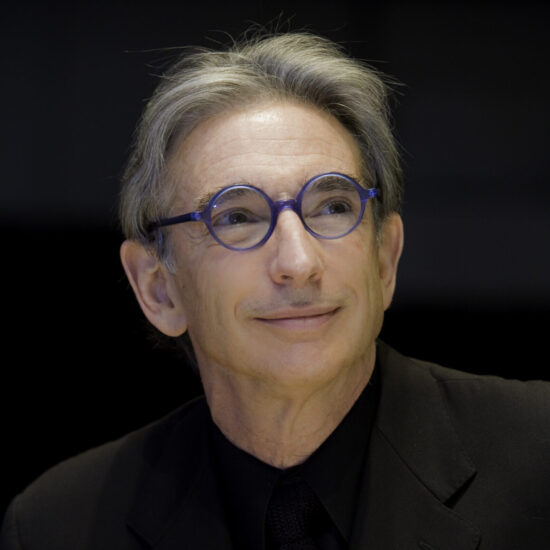
The composer writes:
Agnegram was written to celebrate the 90th birthday of Agnes Albert and is a portrait of her sophisticated and indefatigably enthusiastic spirit. Agnes led a remarkable life. For half a century she was the San Francisco Symphony’s friend, mentor, patroness, and muse. She grew up performing music and mingling with musicians of all ages. She appeared as a soloist with Pierre Monteux on his last concerts as Music Director of the San Francisco Symphony. She loved young people, and one of her enduring legacies is the SFS Youth Orchestra.
The piece is composed of themes derived from the spelling of her name. A–G–E are obviously the notes that they name. B is B flat (as this note is called in German). S is E flat, also a German musical term. T is used to represent one note, B natural, the “ti” of the solfège scale. From these arcane but not unprecedented manipulations (Bach, Schumann, and Brahms, among others, enjoyed this game), a basic “scale” of eight unusually arranged notes emerges, from which all the themes are drawn. The piece itself is a march for large orchestra.
The first part of the march is in 6/8 and is almost a mini-concerto for orchestra, giving brief sound-bite opportunities for the different sections of settling into a jazzy and hyper-rangy tune. The middle section of the march, or trio, is in 2/4 and settles into a kind of sly circus atmosphere. Different groups of instruments in different keys make their appearance in an aural procession. First, the winds in C play a new march tune saying “Agnes Albert.” Then, the instruments in F are heard playing the same tune. But as these instruments are transposing instruments, although the notes they play read A–G–N–E–S etc., the notes that are heard are completely different. They are followed by instruments in E flat and B flat until quite a jungle-like cacophony is built up—punctuated by alternately elegant and goofball percussion entrances. The section recalls many famous tunes that amused Agnes. There are surreal references to Schumann, Tchaikovsky, Verdi, and Irish lullabies, but they appear only to the degree that the notes that they have in common with her name will allow. The jazzy 6/8 tune reappears now in canon and the piece progresses to a jubilant and noisy ending.
Michael Tilson Thomas © 1998
| First performance | May 14, 1998, the composer conducting the San Francisco Symphony at Davies Symphony Hall |
| First SLSO performance | These concerts |
| Instrumentation | 2 flutes (two doubling piccolo), piccolo, 2 oboes, English horn, 2 clarinets, E flat clarinet, bass clarinet, 2 bassoons, contrabassoon, 4 horns, 3 trumpets, 3 trombones, tuba, timpani, percussion, harp, piano, strings |
Piano Concerto No. 1
Sergei Rachmaninoff
Born 1873, Semyonovo, Russia
Died 1943, Beverly Hills, California
The Original Concerto
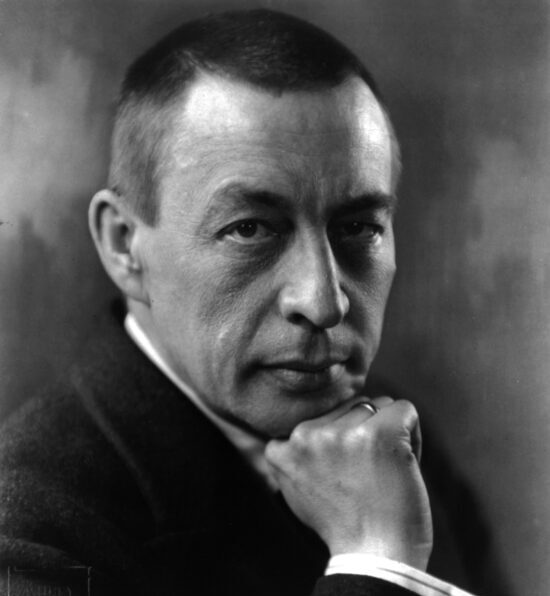
Sergei Rachmaninoff completed his Piano Concerto No. 1 in 1891, as an 18-year-old student at the Moscow Conservatory. He also played the solo part for its premiere at the Conservatory in March 1892. However, although the concerto is designated “Opus 1” (i.e. the composer’s first published work), the music as we know it today is the product of a mature artist.
Revision and Revolution
By the late 1890s, Rachmaninoff had lost faith in the First Concerto, refusing to perform it. Nearly 20 years passed before he set about correcting what he perceived as its defects. In 1917, with Russia in the throes of its epochal October Revolution, Rachmaninoff began to revise the concerto. His memoirs give a picture of serene detachment, “so engrossed with my work that I did not notice what went on around me…. I sat at the writing table or the piano all day without troubling about the rattle of machine guns and rifle shots.”
After he left Russia, Rachmaninoff performed the thoroughly revised piece frequently in Europe and America and subsequently recorded it. Nevertheless, the composer’s First Piano Concerto never attained the popularity of his Second or Third, and it remains the least known of Rachmaninoff’s works for piano and orchestra.
The Music
The short passage that opens the concerto could hardly be more dramatic: bold fanfares in the brass are answered by cascading figures from the soloist. This leads directly to the first movement’s principal theme, a melody in that soulful, lyrical vein so typical of Rachmaninoff. More animated ideas follow, leading eventually to a resounding cadenza for the soloist. The second movement casts the piano as a poetic dreamer, with melodies conveying a sense of romantic reverie. The finale again brings a change of mood, with lively music and dazzling keyboard work.
Adapted from a note by Paul Schiavo © 2007
| First performance | March 17, 1892, Vasily Safonov conducting the Moscow Conservatory orchestra with the composer as soloist |
| First SLSO performance | December 29, 1911, Max Zach conducting with Arthur Shattuck as soloist |
| Most recent SLSO performance | April 28, 2019, Leonard Slatkin conducting with Olga Kern as soloist |
| Instrumentation | solo piano; 2 flutes, 2 oboes, 2 clarinets, 2 bassoons, 4 horns, 2 trumpets, 3 trombones, timpani, percussion, strings |
Symphony No. 6
Pyotr Ilyich Tchaikovsky
Born 1840, Votkinsk, Russia
Died 1893, St. Petersburg, Russia
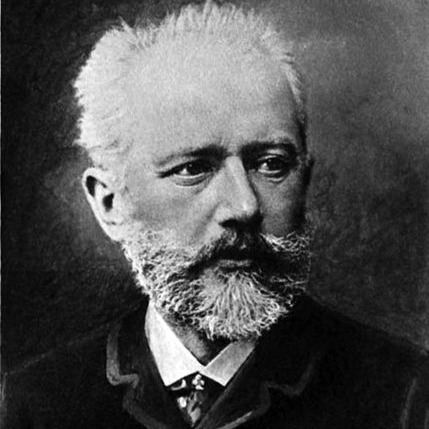
Inspiration from Anguish
The story of Tchaikovsky’s final years presents a poignant conjunction of artistic triumph and growing personal anguish. By 1891, the composer had established himself as Russia’s foremost musician, yet Tchaikovsky suffered increasingly from fits of anxiety and depression. His feelings of pathos often found expression in his music, so it is not surprising that a symphony Tchaikovsky began in the winter of 1891–92 was intended to express a grand program of life, disappointed love, and death.
The composer soon abandoned this effort, but sometime during the following year, Tchaikovsky found the inspiration he needed. In February 1893 he wrote to his nephew, a favorite correspondent: “There will be much that is novel in the form of this work. For one thing, the final movement will not be a noisy Allegro but a broad Adagio. You can’t imagine what bliss it is to know that my time is not yet over, that I can still do good work.”
A Last Testament
The “Pathétique” Symphony—its title was suggested by the composer’s brother—crowns Tchaikovsky’s output. Passion, delicacy, heroism, and tragedy all find a place in its music. Shortly before completing the symphony, Tchaikovsky wrote: “I have never felt such satisfaction, such pride, such happiness as I do now in knowing that I am the composer of this beautiful work.” Less than two weeks after its premiere, he was dead. The circumstances of his passing remain uncertain, but it does not seem too much to suggest that—knowingly or not—Tchaikovsky composed his own requiem.
What to Listen For
– The introductory Adagio’s brooding theme is carried over and developed in the searing harmonies and thunderous brass of the succeeding Allegro.
– The second movement’s waltz-like themes, which flow smoothly despite being written in an asymmetric 5/4 time
– The triumphal march of the third movement shares many of the characteristics of a typical symphonic finale. However, the concluding Adagio plunges the music back into the sorrowful mood of the symphony’s opening moments.
Adapted from a note by Paul Schiavo © 2007
| First performance | October 28, 1893, the composer conducting in St. Petersburg |
| First SLSO performance | January 9, 1906, Alfred Ernst conducting |
| Most recent SLSO performance | May 4, 2019, Leonard Slatkin conducting |
| Instrumentation | 3 flutes (one doubling piccolo), 2 oboes, 2 clarinets, 2 bassoons, 4 horns, 2 trumpets, 3 trombones, tuba, timpani, percussion, strings |
Artists
Daniil Trifonov
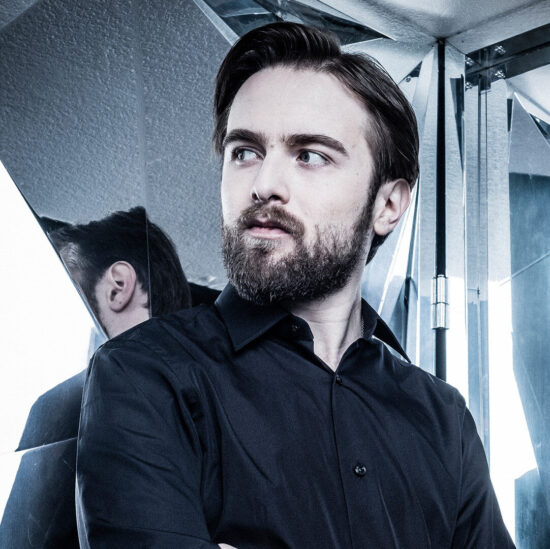
Daniil Trifonov has made a spectacular ascent of the classical music world, as a solo artist, champion of the concerto repertoire, chamber and vocal collaborator, and composer. Described by The Times of London as “without question the most astounding pianist of our age,” Trifonov is also a Grammy Award–winning artist for his 2018 album Transcendental. His career highlights include acclaimed performances with the world’s leading orchestras, world premieres, solo recitals, and a season-long tenure as the New York Philharmonic’s Artist in Residence.
In the 2026/27 season, Trifonov joins the Berlin Philharmonic and Kirill Petrenko at New York’s Carnegie Hall and on an extensive South American tour for performances of Brahms’ First Piano Concerto. He embarks on a major transatlantic tour with a new solo recital program of works by Handel, Schubert, Stravinsky, Heitor Villa-Lobos, Juan Francisco García, Bullumba Landestoy, Camargo Guarnieri, and the versatile composer-pianist himself. His latest album, My American Story – South, released by Deutsche Grammophon, showcases the rich and eclectic music of Latin America. These concerts mark Daniil Trifonov’s SLSO debut.