Shostakovich’s Eighth (November 14–15, 2026)
Program
November 14–15, 2026
- David Afkham, conductor
- St. Louis Symphony Chorus
- Erin Freeman, director
Felix Mendelssohn (1809–1847)
- Psalm 114 (When Israel out of Egypt Came), Op. 51 (15 minutes)
Igor Stravinsky (1882–1971)
- Symphony of Psalms (21 minutes)
- Exaudi orationem meam –
- Expectans expectavi Dominum –
- Alleluia. Laudate Dominum
St. Louis Symphony Chorus
Intermission
Dmitri Shostakovich (1906–1975)
- Symphony No. 8 in C minor, Op. 65 (61 minutes)
- Adagio – Allegro non troppo
- Allegretto
- Allegro non troppo –
- Largo –
- Allegretto
Beauty in Darkness
The three pieces of music you’ll hear David Afkham conduct today touch on struggle, faith, and the possibility of salvation. Joining Afkham and the SLSO is the St. Louis Symphony Chorus, opening its 50th anniversary season with a double feature that epitomizes the ensemble’s versatility. Felix Mendelssohn’s setting of Psalm 114 and Igor Stravinsky’s Symphony of Psalms both draw on liturgical texts, but their juxtaposition makes for a thrilling, moving musical contrast. Afkham then leads us through the emotional peaks and valleys of Dmitri Shostakovich’s Symphony No. 8. A titanic response to the horror and suffering of Russia’s struggle against Nazi invasion, Shostakovich’s symphony is tense and bleak, yet informed by his conviction that “life is beautiful. All that is dark and depressing will disappear, depart, and the beautiful will reign.”
Psalm 114
Felix Mendelssohn
Born 1809, Hamburg, Germany
Died 1847, Leipzig, Germany
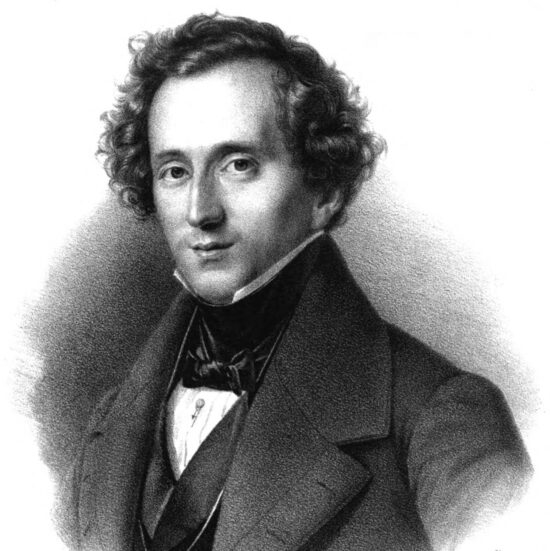
Mendelssohn and the Psalms
Mention Mendelssohn and liturgical music, and audiences instinctively think of only one work, his great oratorio Elijah of 1846. In fact, Mendelssohn was drawn to sacred music throughout his brief life, and especially the Psalms. He set eleven different Psalms, the first when he was 13, the last just three years before his death at 38.
Psalm 114, one of his finest settings, comes from the crest of his career. From 1835 until 1846, Mendelssohn’s role as conductor of the Leipzig Gewandhaus Orchestra meant he did most of his composition during the summer. In the summer of 1839, he wrote one of his finest chamber works, the Piano Trio in D minor, and also his setting of Psalm 114.
The Music
Mendelssohn greatly admired Handel’s oratorios and choral works, and his setting of Psalm 114 consciously recalls the earlier master’s grandeur and contrapuntal skill. The text itself is quite powerful, and Mendelssohn’s setting is concise, spanning only about a dozen minutes. Mendelssohn scores his setting for double chorus and a large orchestra, and he sets the text in Martin Luther’s German translation.
Mendelssohn sets each of Psalm 114’s four verses at a different tempo. The opening verse contrasts the male and female voices, and gives way to the second, in which the swirling orchestral bassline may suggest the movement of ocean waves. In the third verse, the chorus haltingly queries what has caused this vast disruption. This is virtually an a cappella movement, the voices accompanied only by a bare bassline. Shining horn fanfares introduce the final verse, which returns to the tempo of the opening section as it praises the power of God. This completes the setting of the text, but Mendelssohn now presses on to offer an effective conclusion in two parts. First, he briefly recalls the solemn opening chorus, then concludes with a grand fugal section—the part most reminiscent of Handel—on the word “Hallelujah.”
Adapted from a note by Eric Bromberger © 2017
| First performance | January 1, 1840, performed in Leipzig |
| First SLSO performance | These concerts |
| Instrumentation | chorus; 2 flutes, 2 oboes, 2 clarinets, 2 bassoons, 4 horns, trumpets, 3 trombones, timpani, strings |
Symphony of Psalms
Igor Stravinsky
Born 1882, Oranienbaum near St. Petersburg, Russia
Died 1971, New York City, New York
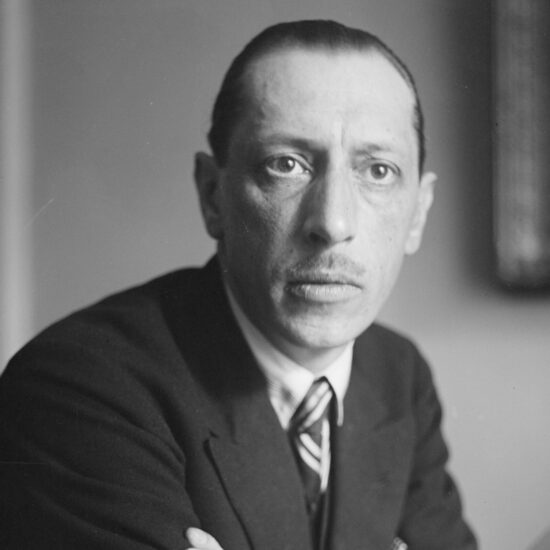
A Symphony That Sings
Igor Stravinsky was, among many other things, one of the 20th century’s outstanding composers of religiously inspired music. His stature as such rests in no small part on his Symphony of Psalms, written in 1930 to commemorate the 50th anniversary of the Boston Symphony Orchestra.
The composer wanted to write a symphony, but not the traditional kind, as he explained in his 1936 autobiography: “My idea was that my symphony should be a work with great contrapuntal development, and for that it was necessary to increase the media at my disposal. I finally decided on a choral and instrumental ensemble in which the two elements should be on an equal footing….” Having settled on a symphony with voices, Stravinsky came “quite naturally,” as he described it, to the psalms for its texts. He started setting verses from three of them in Slavonic translations but soon came to favor the sound of Latin.
What to Listen For
Stravinsky de-emphasizes the role of the stringed instruments in favor of winds and percussion, with no violins or violas, and the cello and bass parts largely limited to supporting roles. The music conveys an austerity and remote grandeur that doesn’t mesh with the traditionally warm and intimate tone of violins and violas.
The second movement reflects the influence of the great chorus-with-orchestra movements of J. S. Bach’s sacred works, such as the “Kyrie” of Bach’s Mass in B minor.
Stravinsky described the slow introduction to the third movement as “a prayer to the Russian image of the infant Christ with orb and scepter.” The tempo soon accelerates for a faster section which the composer explained “was inspired by a vision of Elijah’s chariot climbing the Heavens.” Stravinsky finally returns to the music of the introduction, concluding the movement much as it began.
Adapted from a note by Paul Schiavo © 2012
| First performance | December 13, 1930, in Brussels, Ernest Ansermet conducting the orchestra and chorus of the Brussels Philharmonic Society |
| First SLSO performance | January 20, 1956, Vladimir Golschmann conducting, with the Sumner High School a cappella choir |
| Most recent SLSO performance | January 20, 2013, Courtney Lewis conducting, with the St. Louis Symphony Chorus |
| Instrumentation | chorus; 5 flutes (one doubling piccolo), 4 oboes, English horn, bassoons, contrabassoon, 4 horns, 4 trumpets, piccolo trumpet, 3 trombones, tuba, timpani, percussion, harp, piano, strings |
Symphony No. 8
Dmitri Shostakovich
Born 1906, St. Petersburg, Russia
Died 1975, Moscow, Russia
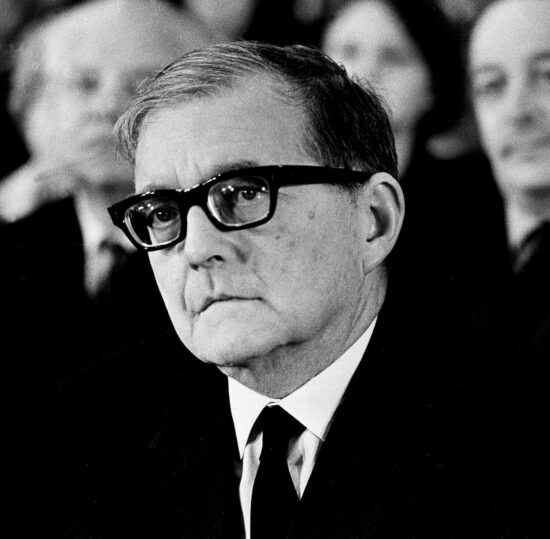
Two Wartime Symphonies
Shostakovich began work on his Eighth Symphony in the summer of 1943, and the piece was performed for the first time in November of that year, in Moscow. This was the second symphony the composer had produced since the German invasion of his homeland in June 1941. Like the Seventh, or “Leningrad” Symphony, the Eighth Symphony is constructed on a large scale and reflects Shostakovich’s response to the war in Russia. Yet the two are quite different. The “Leningrad” Symphony, written in the early days of the Nazi siege of that city, is extroverted and patently patriotic, evoking marching armies, the sound of battle, and the heroism of resistance. With the Eighth Symphony, Shostakovich adopts a more personal and more profound view of the war, perhaps reflecting the enormous suffering the Russian people had experienced since the completion of the “Leningrad” Symphony.
The Eighth Symphony is an emotionally complex work, one in which tragic elements continually vie with expressions of hope. The latter sentiments ultimately emerge victorious from this struggle, allowing the composer to say: “I can describe the philosophical concept of my new symphony very briefly: Life remains beautiful. All that is dark and oppressive will disappear; all that is beautiful will triumph.”
What to Listen For
The long opening movement establishes the conflict of light and darkness in clear musical terms: Strings shift between agitation and optimism, the percussion builds insistently, menacing and martial, before a poignant English horn solo emerges from the carnage.
The strident march of the second movement, which builds on a variation of the symphony’s opening motif.
In the fifth movement, a pastoral melody presented by a trio of bassoons gives way to a finale that grows in buoyancy before subsiding, ending with a note of hope and serenity rather than triumphalism.
Adapted from a note by Paul Schiavo © 2004
| First performance | November 4, 1943, Yevgeny Mravinsky conducting the USSR Symphony Orchestra in Moscow |
| First SLSO performance | May 15, 1975, Leonard Slatkin conducting |
| Most recent SLSO performance | April 11, 2015, Hannu Lintu conducting |
| Instrumentation | 4 flutes (two doubling piccolo), 2 oboes, English horn, 2 clarinets, bass clarinet, E flat clarinet, 3 bassoons (one doubling contrabassoon), 4 horns, 3 trumpets, 3 trombones, tuba, timpani, percussion, strings |
Artists
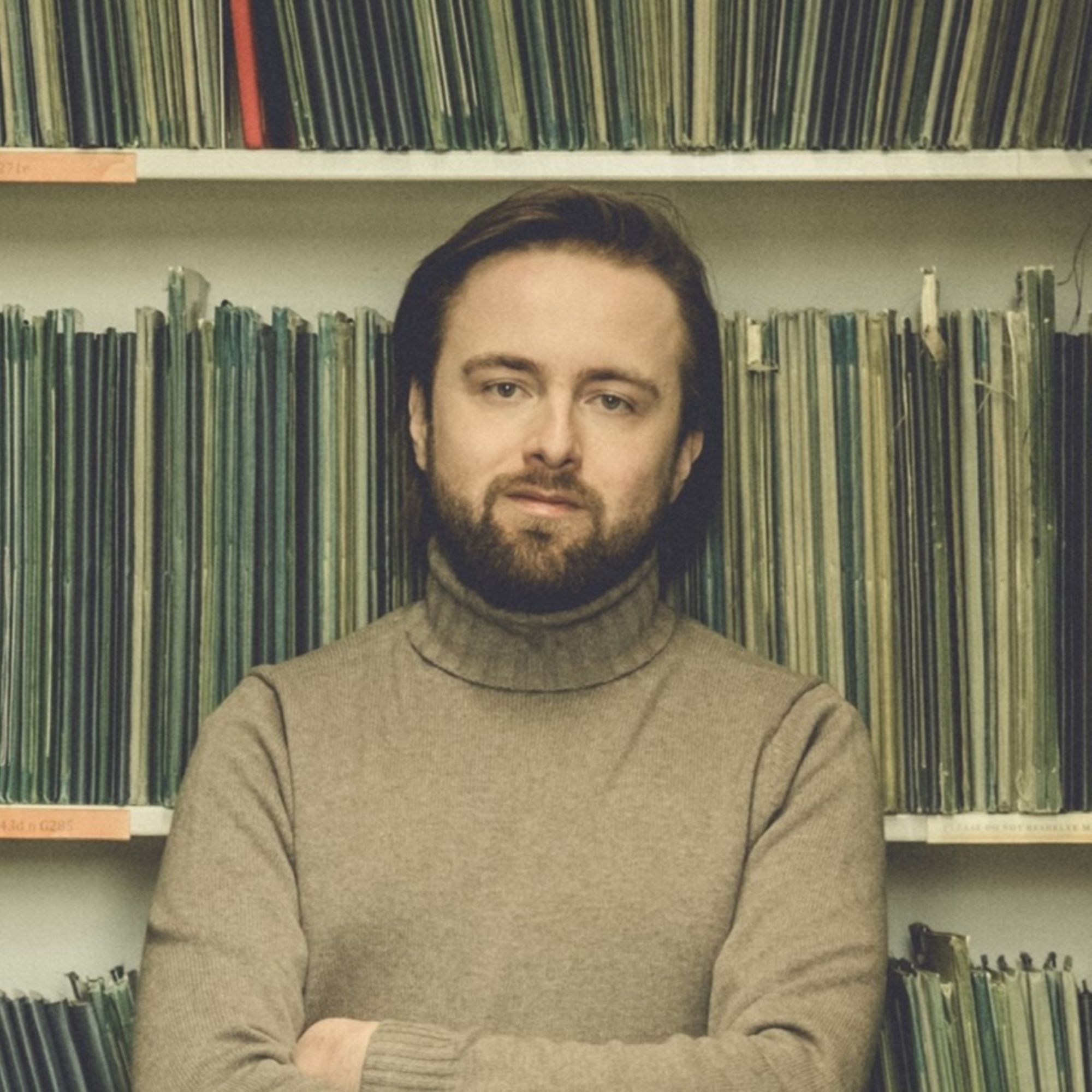
David Afkham
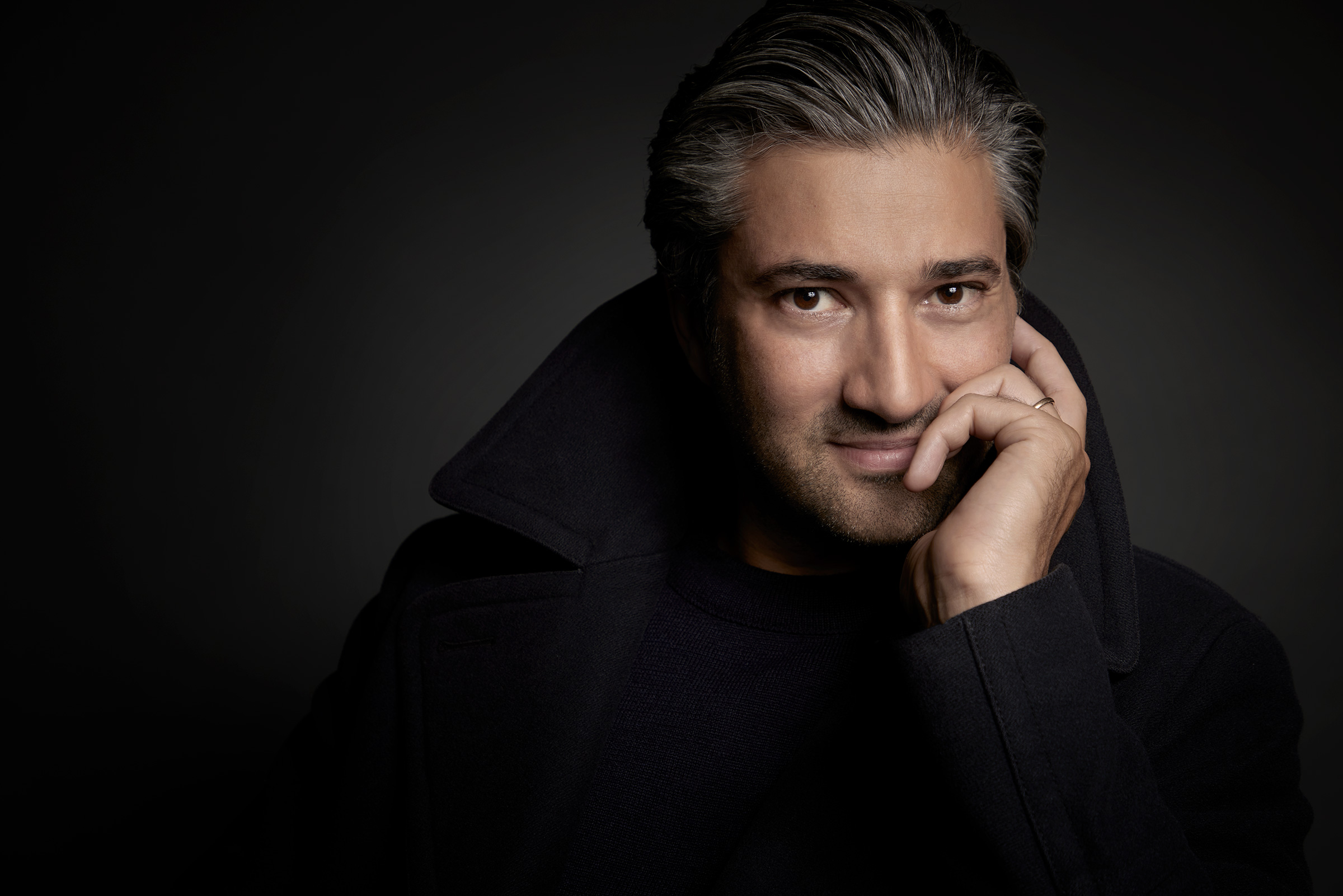
David Afkham has received international acclaim for his insightful musicianship and compelling performances. Afkham recently concluded a celebrated tenure as Chief Conductor and Artistic Director of the Orquesta y Coro Nacionales de España (2019–2026). Highlights of the 2026/27 season include Afkham’s much- anticipated debut at the BBC Proms with the Orquesta y Coro Nacionales de España in a program dedicated to Spanish repertoire. He also returns to the ensemble for two further projects, as well as to the San Francisco Symphony, Seattle Symphony, and the Deutsches Symphonie-Orchester Berlin. Afkham’s international career includes performances with many of the world’s leading orchestras, including the Concertgebouworkest, London Symphony Orchestra, Staatskapelle Berlin, and Wiener Symphoniker. His recent opera highlights include Strauss’ Elektra at the Deutsche Oper Berlin and productions of Beethoven’s Fidelio and Strauss’ Arabella at the Semperoper Dresden and Teatro Real Madrid. David Afkham’s most recent appearance with the SLSO was in February 2025, conducting works by Outi Tarkiainen, Mozart, and Brahms.
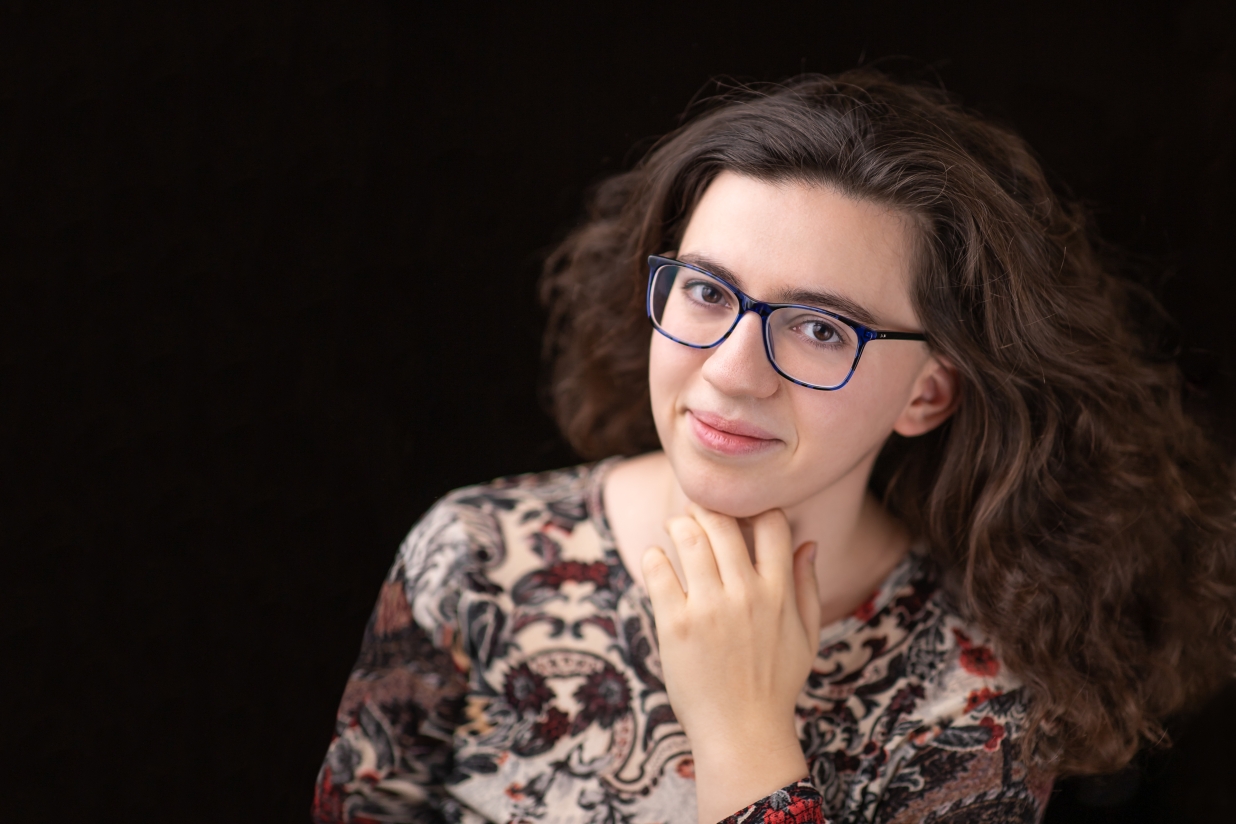
Erin Freeman
Director of the St. Louis Symphony Chorus
AT&T Foundation Chair

Erin Freeman was named the Director of the St. Louis Symphony Chorus in July 2024. A versatile and engaging conductor and artistic leader, she maintains a dynamic international presence through guest engagements and three additional major leadership posts: Artistic Director of The City Choir of Washington and Wintergreen Music, and Principal Conductor of the Richmond Ballet.
Equally at home on symphonic, choral, and ballet podiums, Freeman’s repertoire ranges from J.S. Bach and Vaughan Williams to ballet masterworks like Giselle and Firebird, alongside world premieres by composers such as Kevin Puts, Gilda Lyons, and Alex Berko. Guest credits include the New York City Ballet, Detroit Symphony, and Buffalo Philharmonic, with appearances at Carnegie Hall, Lincoln Center, Vienna’s Musikverein, and the Kennedy Center. Her 2026/27 season features landmark anniversaries for the SLSC (50th) and City Choir of Washington (20th), productions with the Richmond and Toledo Ballets, and Britten’s War Requiem with Berkshire Choral International.