Mozart and Schumann (October 16–17, 2026)
Program
October 16–17, 2026
- Kristiina Poska, conductor
- Marie-Ange Nguci, piano
Ülo Krigul (b. 1978)
- Proteus Pulse (9 minutes)
Wolfgang Amadeus Mozart (1756–1791)
- Piano Concerto No. 21 in C major, K.467 (29 minutes)
- Allegro
- Andante
- Allegro vivace assai
Marie-Ange Nguci, piano
Intermission
Robert Schumann (1810–1856)
- Symphony No. 3 in E flat major, Op. 97, “Rhenish” (32 minutes)
- Lebhaft
- Scherzo: Sehr mässig
- Nicht schnell
- Feierlich
- Lebhaft
Scenes from the Rhine
Conductor Kristiina Poska makes her SLSO debut with a program that takes us from Estonia to the German Rhineland in a celebration of the variety of European folk music. The concert opens with the US premiere of a shapeshifting new composition by Poska’s fellow Estonian, Ülo Krigul, before rising-star pianist Marie-Ange Nguci dazzles with Mozart’s sweet, playful Piano Concerto No. 21. Robert Schumann’s Third Symphony emphasizes the vibrant culture along Germany’s River Rhine, re-imagining folk dances, bucolic scenes, and the grandeur of Cologne’s historic cathedral.
Proteus Pulse
Ülo Krigul
Born 1978, Tallinn, Estonia
Water as Muse
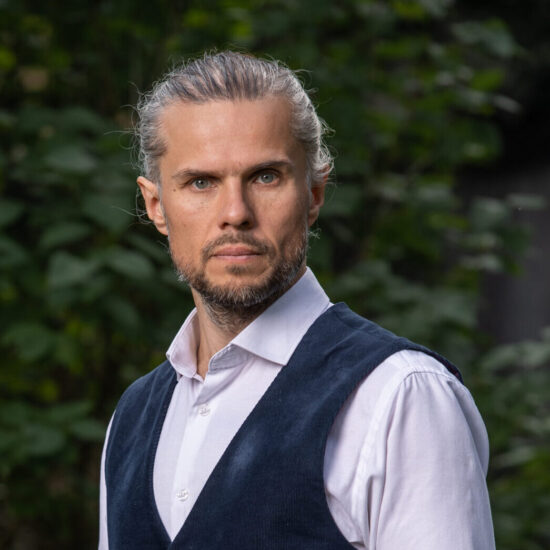
Ülo Krigul’s source material for this evocative, impressionistic work was not only his interest in the shapeshifting Greek god of the sea, but a fascination with water and our uneasy relationship with the oceans and the natural world more generally. “Water has been the subject of many of my compositions in recent years,” Krigul said in his composer’s note. “Its connective energy and ever-changing yet still familiar states of being, its qualities encompassing both ice and vapour, and its endless source of symbolism and physics continue to inspire me.”
Waves of Sound
Proteus Pulse is “quite clearly divided into four parts,” Krigul said, though each flows into the next without pause. From foreboding horns to swirling violins and rumbling, rhythmic bass, musical ideas that sneak in as “tiny drops in the background” evolve into waves of sound that momentarily dominate the soundscape. “We can hear a kind of foretelling of what might come next,” Krigul said.
Although the specific details may vary, stories about water “both as a master of genesis and as a master of flood” are a shared thread across history and among different cultures and belief systems. The failure to heed cautionary tales is equally familiar, and Proteus Pulse’s unsettling mood of portent appears to carry its own warning.
“I think we can also hear in this piece of music that the good old Proteus is in dire straits,” Krigul said. “We have captured him and are keeping him in far from elegant conditions. And as promised, he is now willing to foretell the future to us. Will we listen?”
Iain Shaw © 2026
| First performance | March 17, 2022, in Tallinn, Estonia, Kristiina Poska conducting the Flanders Symphony Orchestra |
| First SLSO performance | These concerts |
| Instrumentation | 2 flutes (one doubling piccolo), 2 oboes, 2 clarinets, 2 bassoons, 4 horns, 2 trumpets, 3 trombones, timpani, percussion, harp, strings |
Piano Concerto No. 21
Wolfgang Amadeus Mozart
Born 1756, Salzburg, Austria
Died 1791, Vienna, Austria
Contrasting Concertos
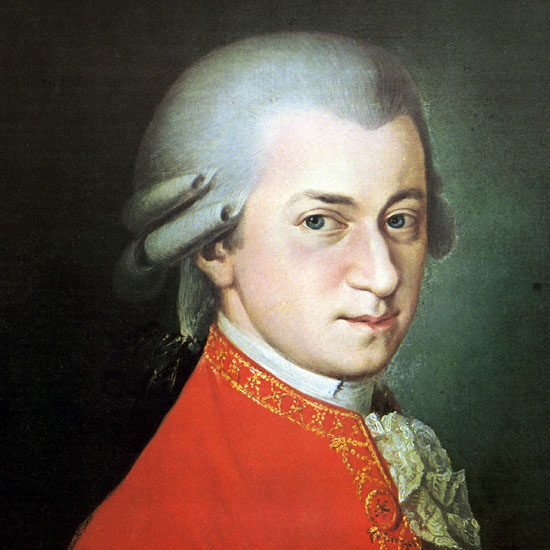
Mozart settled in Vienna in the spring of 1781. Four years later he was enjoying the period of his greatest success in the Austrian capital. In particular, his “academies,” or subscription concerts, had become fashionable events for the city’s music-loving aristocracy. Mozart always included at least one piano concerto on these programs, playing the solo part himself.
This C-major concerto followed quickly on the heels of the composer’s Piano Concerto in D minor, K. 466. The contrast could hardly be more extreme, but these concertos form a complimentary set: one dark and turbulent, the other bright and joyous.
Mozart created several such pairs of emotionally contrasted works. More than one commentator has suggested that the composer produced these Janus-headed pairs to maintain some sort of spiritual equilibrium. Although no one can prove this hypothesis, we cannot but wonder at such vivid expressions of darkness and light coming nearly at once from the same source.
What to Listen For
– The disarmingly simple initial theme, developed in chains of long, repeating melodic sequences.
– The ensuing slow movement brings an altogether different mood. As C.M. Girdlestone noted, “The world of the Andante is that of the ‘dream’ andantes, a family which comprises some of Mozart’s most beautiful slow movements.”
– The finale reveals still another side of Mozart’s character, its playful recurring principal theme complimented by a spirited display of keyboard virtuosity.
Adapted from a note by Paul Schiavo © 2009
| First performance | March 9, 1785, in Vienna; the composer performed the solo part and conducted from the keyboard |
| First SLSO performance | December 11, 1942, Vladimir Golschmann conducting with Robert Casadesus as soloist |
| Most recent SLSO performance | March 3, 2019, Peter Oundjian conducting with Lars Vogt as soloist |
| Instrumentation | solo piano; flute, 2 oboes, 2 bassoons, 2 horns, 2 trumpets, timpani, strings |
Symphony No. 3
Robert Schumann
Born 1810, Zwickau, Germany
Died 1856, Endenich, Germany
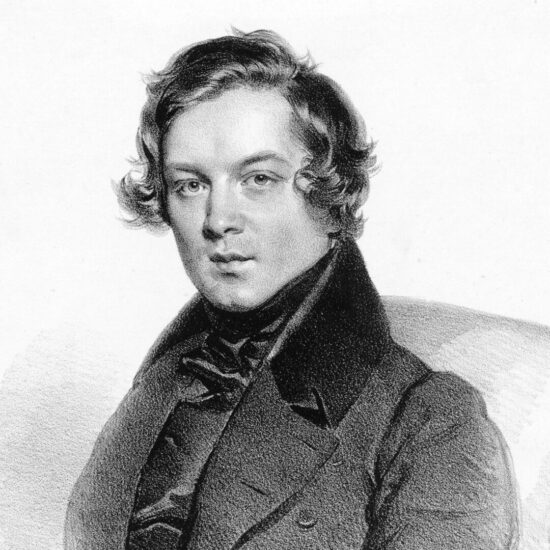
From Cathedral to Composition
Shortly after their arrival in the Rhineland, the Schumanns traveled to witness the much-publicized completion of the Cologne Cathedral, which was six centuries in the making. One can imagine the sense of wonder the Schumanns experienced in touring the building, which was the largest cathedral in Europe and the tallest structure in the world at the time of its completion.
Metaphorically, the compositional style of the “Rhenish” Symphony reflects the architectural development of the cathedral, with its blend of Gothic and modern design. A musical marriage of formal conservatism and romantic vitality, the symphony reflects Schumann’s characteristic commitment to honoring and building upon canonic tradition.
Exuberance and Grandeur
The symphony opens with a finale-like exuberance. Its primary theme, which Schumann develops with unrelenting persistence, derives its energy from use of contrasting rhythms.
The symphony’s remaining movements reflect Schumann’s impressions of the Rhineland. The second movement, a scherzo that Schumann originally titled “Morning on the Rhine,” but later renamed, captures the sun rising on the Rhineland’s hill country with a lightly undulating theme. The third movement, a slow intermezzo, offers a romantic, song-like rumination on the composer’s new environment. The fourth movement’s ethereal tone evokes the grandeur of the Cologne Cathedral, before a final movement that reaches its resplendent conclusion.
Adapted from a note by Skyler Dykes © 2023
| First performance | February 6, 1851, in Düsseldorf, Germany, the composer conducting |
| First SLSO performance | March 8, 1912, Max Zach conducting |
| Most recent SLSO performance | March 4, 2023, Stephanie Childress conducting |
| Instrumentation | 2 flutes, 2 oboes, 2 clarinets, 2 bassoons, 4 horns, 2 trumpets, 3 trombones, timpani, strings |
Artists
Kristiina Poska
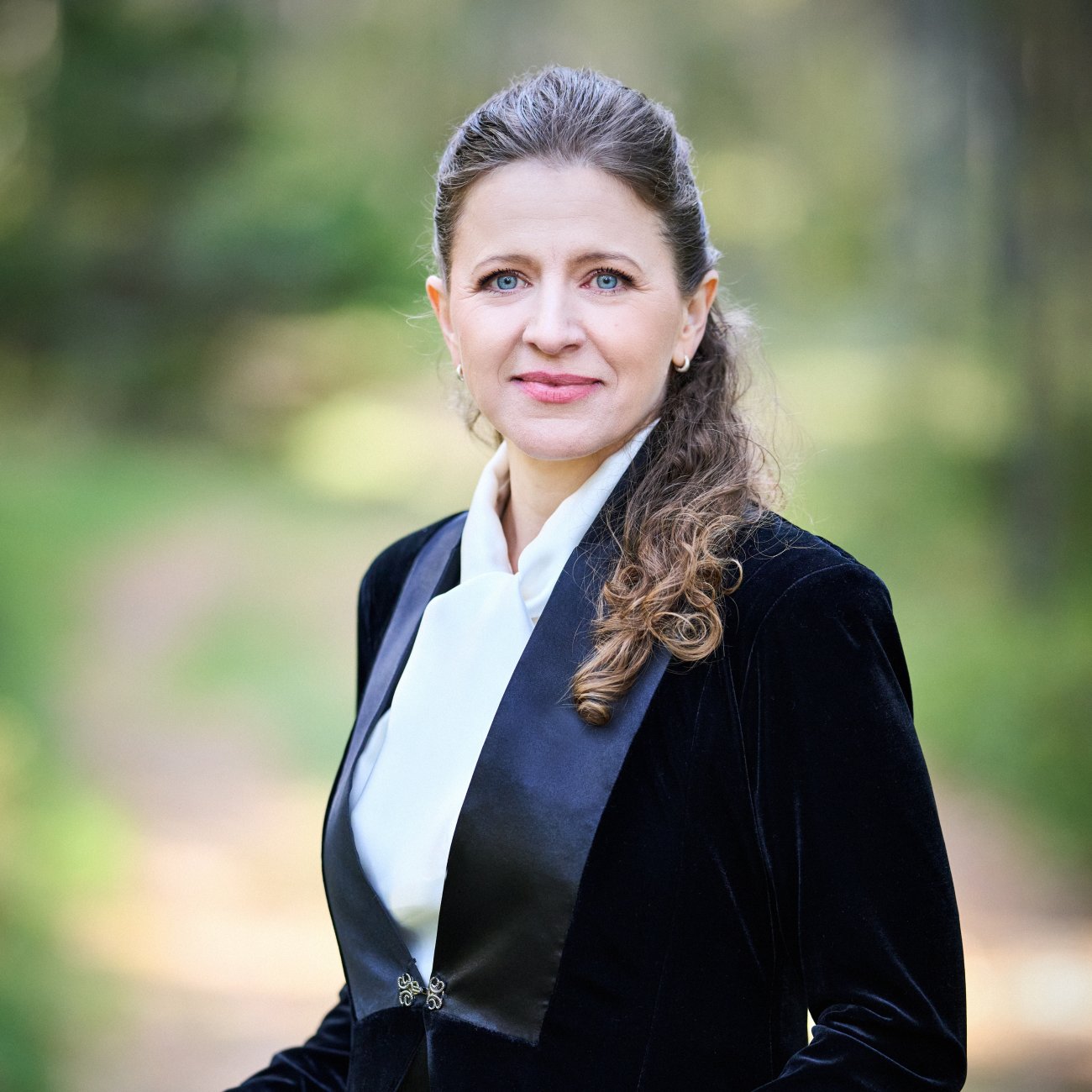
Kristiina Poska stands among the most sought-after conductors on today’s international music scene. She has served as Music Director of the Orchestre Français des Jeunes since 2025, and as Principal Guest Conductor of the Latvian National Symphony Orchestra since the 2021/22 season. Previously, she held the position of Chief Conductor of the Flanders Symphony Orchestra from 19/20 through 24/25.
Her recent highlights include debuts with the BBC Symphony Orchestra, Essen Philharmonic, Cincinnati Symphony Orchestra, and Baltimore Symphony Orchestra, and return performances with ensembles such as the Royal Scottish National Orchestra and Minnesota Orchestra. She is equally prolific with operatic repertoire, including works by Mozart, Béla Bartók, and Richard Strauss.
These concerts mark Kristiina Poska’s SLSO debut.
Marie-Ange Nguci
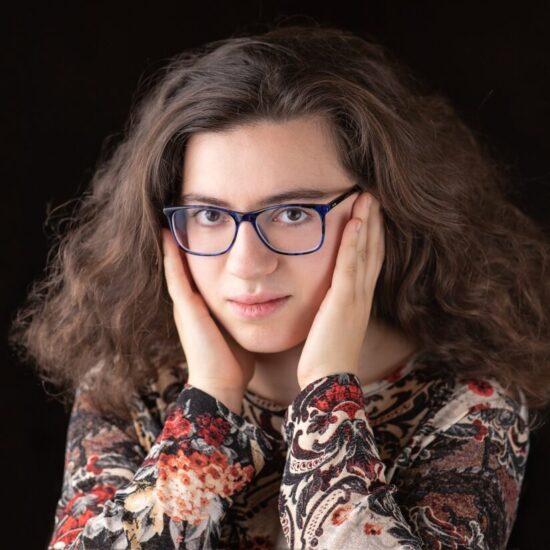
Marie-Ange Nguci has firmly positioned herself as one of today’s leading young soloists, captivating audiences with the visionary power of her interpretations, whether conducting or leading from the piano. She is a regular guest of some of the world’s most prestigious concert halls, including Vienna Musikverein, Amsterdam Concertgebouw, Tokyo Suntory Hall, Philharmonie de Paris, Zürich Tonhalle, and Sydney Opera House.
During the 2025/26 season, she was Artist in Residence with Radio France, appearing alongside Philharmonique de Radio France and Orchestre National de France with conductors such as Cristian Măcelaru and Simone Young. Other recent highlights include debuts with Oslo Philharmonic, Czech Philharmonic, Gothenburg Symphony Orchestra, the Estonian Symphony Orchestra and Netherlands Radio Philharmonic. Marie-Ange Nguci’s most recent appearance with the SLSO was at Touhill Performing Arts Center in April 2024, when she performed Beethoven’s Piano Concerto No. 2 with John Storgårds conducting.