SLSO Expands Sound with Rare Vintage Cymbal Collection
By Eric Dundon
The St. Louis Symphony Orchestra has long cultivated a reputation for its warmth and depth of sound. For the orchestra’s percussion section, a recent acquisition has transformed that sonic identity in a way audiences may not immediately see—but will certainly hear. With the recent addition of a collection of handmade vintage cymbals once owned by former orchestra musician Tom Stubbs, the section has greatly expanded its expressive palette.
“These instruments were all made entirely by hand,” Principal Percussionist Will James explained, describing the cymbals crafted in Constantinople—modern-day Istanbul—well before the industrial standardization of the mid-20th century.
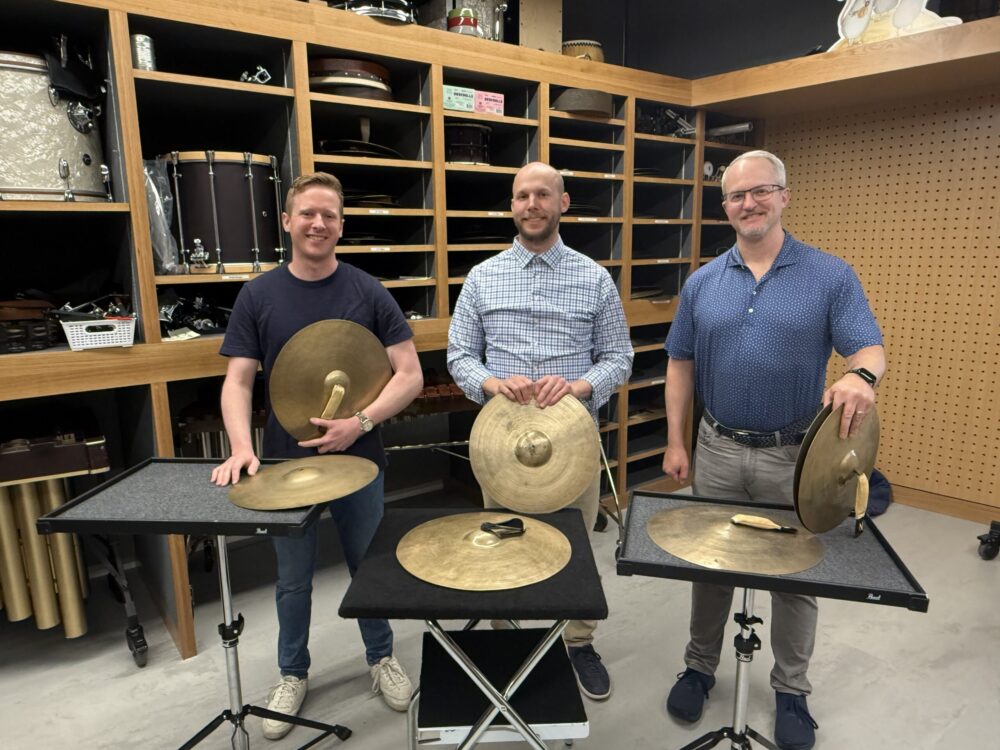
Unlike contemporary cymbals, which are largely machine-shaped for consistency, these older instruments reflect the variability of human craftsmanship. That variability, James noted, is precisely what makes them invaluable.
“With modern cymbals, you’re almost guaranteed a baseline level of quality,” he says. “But with these older cymbals, the range is much wider—you might find something extraordinary that doesn’t exist today. Tom curated the best of the best of these instruments over decades.”
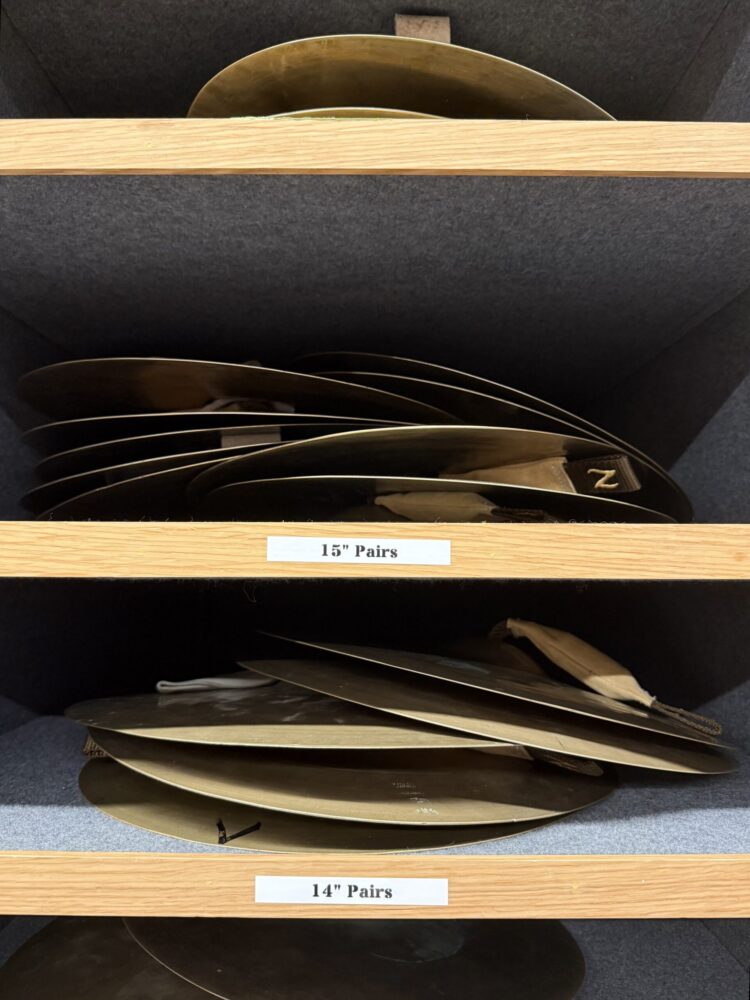
Over the course of his decades-long career, including 50 years with the SLSO as a cymbal specialist, Stubbs assembled his collection piece by piece, scouring drum shops, estate sales, pawn shops, and antique stores during orchestra tours and personal travel. The result is a set of approximately 40 vintage Zildjian cymbals, many dating to the early 20th century or earlier. The majority are suspended cymbals, played individually for color and texture, alongside a smaller number of crash pairs—cymbals struck together.
“Tom helped shape the unique sound of the St. Louis Symphony throughout his storied tenure,” said Marie-Hélène Bernard, SLSO President and CEO. “We are grateful that he has entrusted us to care for this important collection of vintage cymbals, which will contribute to the orchestra’s refined sound for years to come.”
For the SLSO percussionists, the impact is immediate but also evolving.
“I like to think of it as going from 30 colors in our palette to 70,” James said. “We already had great instruments, but now we have so many more options—slightly brighter, slightly darker, longer sustain, quicker response. It just opens up possibilities.”
Acquired by the SLSO in early 2026, the collection immediately went to good use. James said the vintage cymbals were used in January performances of Claude Debussy’s Jeux, lending a delicate sound to performances of the 1912 ballet music.
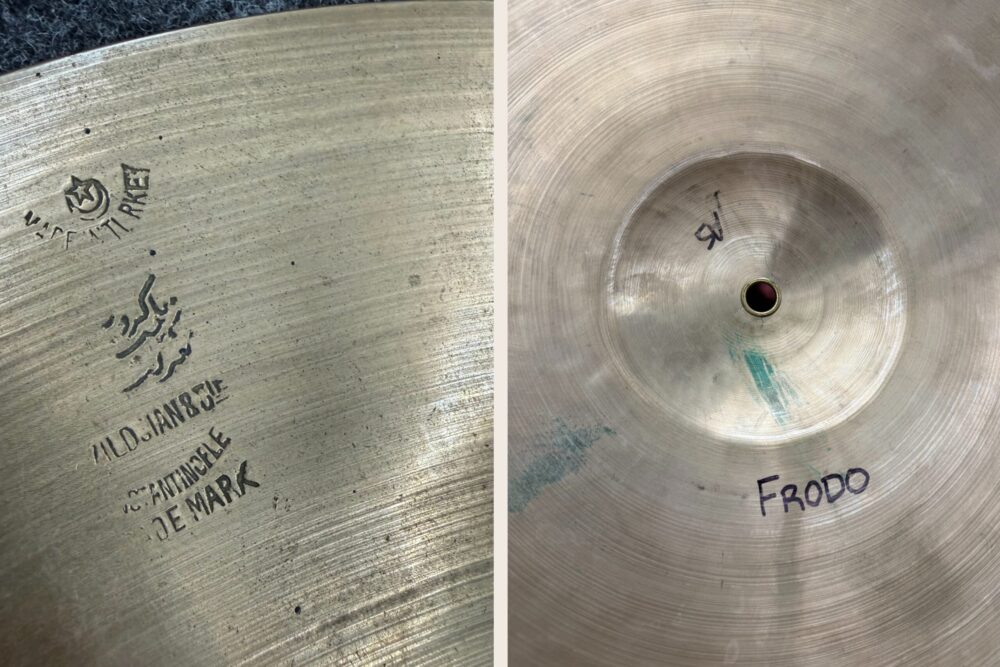
Well before the first rehearsal, James and his colleagues—Associate Principal Percussionist Alan Stewart, percussionist Kevin Ritenauer, and Principal Timpanist Shannon Wood—meticulously select the right sound for each musical moment. Composers rarely specify exact cymbals in scores; instead, they rely on musicians to select the right instruments to achieve desired musical characteristics.
“We’re constantly searching—almost like shopping—for the right color,” James said.
The new collection enhances that search in profound ways. In works like Debussy’s La Mer, where subtle shifts in texture are essential, having a broader range of cymbal timbres allows for greater nuance. Even slight differences—brightness, decay, weight—can shape how a passage is perceived in the concert hall.
Yet the acquisition is not simply about variety; it is also about uniqueness. Unlike modern instruments, which can be ordered or replicated, these vintage cymbals are effectively irreplaceable.
“If we need a new marimba, we can get a good one quickly. But something like this,” James said, motioning to one of the 17-inch Zildjian cymbals, “once it’s gone, it’s gone.”
That rarity places the SLSO in distinguished company. Top-level orchestras have historically maintained strong cymbal collections built over generations. With the addition of Stubbs’ instruments, James believes St. Louis now stands among them. The investment in the collection will outlive the orchestra’s current personnel, making the acquisition a long-term commitment to the ensemble’s sound. Importantly, these instruments are not destined for display cases. They are already in regular use and will continue to be integral to performances.
“They’re not museum pieces—they’re part of the orchestra’s voice,” James emphasized.
For Stubbs, the decision to pass on his collection reflects both personal legacy and artistic continuity. He spent years refining his ear and assembling instruments that could serve a wide range of musical demands. By entrusting them to the SLSO, he ensures that his work continues to resonate—literally and figuratively—within the orchestra.
Eric Dundon is the SLSO’s Public Relations Director.