From the Score to the Stage: The Essential Role of the SLSO’s Farr Music Library
By Iain Shaw
When audiences are enjoying a St. Louis Symphony Orchestra concert, they are naturally moved by the artistry of the conductor, SLSO musicians, and guest artists. Performances of this caliber are the product of a lifetime of practice, but they are also elevated by a vast behind-the-scenes effort that begins months—sometimes years—before the conductor takes the podium. Based out of a new facility in the renovated and expanded Jack C. Taylor Music Center, the Farr Music Library plays a pivotal, multi-faceted role in this process.
More Than a Treasure Trove
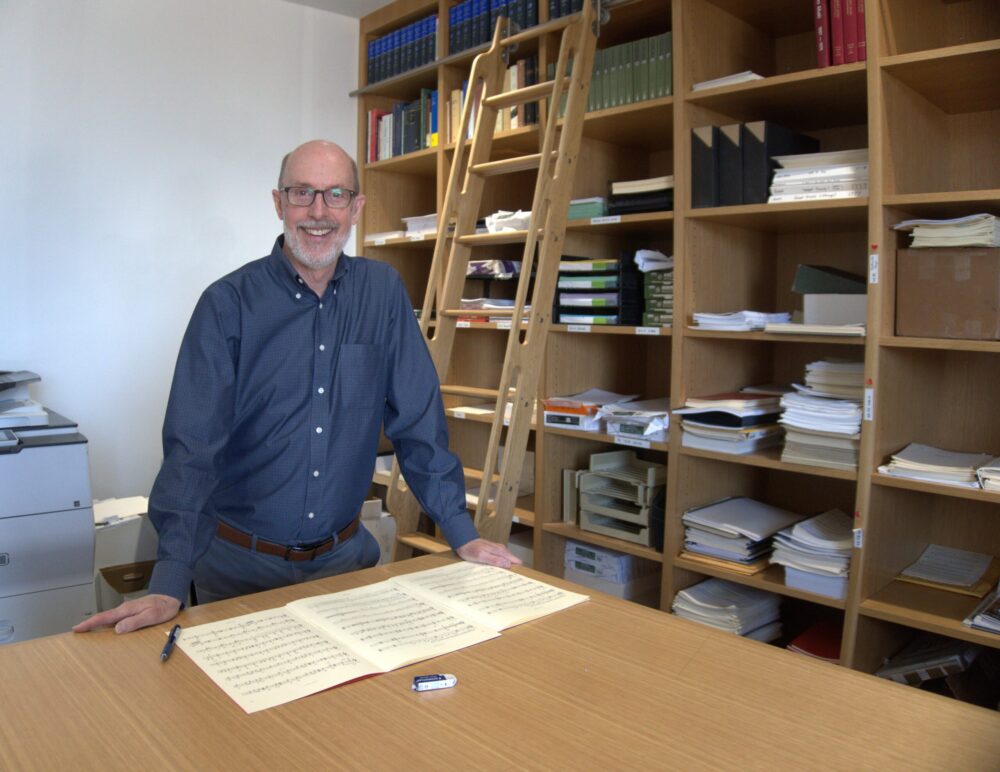
Archiving is one function of a music library, but as Associate Librarian Henry Skolnick and Assistant Librarian Amanda Tallant stress, their remit extends far beyond the organization and maintenance of prized historical artifacts. Skolnick keeps a running list detailing the library’s most noteworthy assets—but this is more than a treasure trove.
“We don’t necessarily keep everything that’s there today in perpetuity,” Skolnick said. Scores for frequently performed works—a Brahms symphony, for example—get worn out after “six or seven” uses.
“If it doesn’t have markings from anybody who’s historically significant, we’ll recycle it and move on to a new set,” Skolnick added.
Painstaking Preparations
Almost as soon as a concert is confirmed, the library begins its preparations. Early tasks include consulting the conductor on which edition of a work they plan to use, evaluating sheet music needs, and arranging to rent or purchase sheet music as necessary.
The SLSO’s artistic team relies on the library to maintain a database of instrumentation notes and other programming information. Accuracy is paramount, as these details inform decisions on hiring musicians and assignment of parts, especially where doubling is required.
“Not every member of the flute section wants to play piccolo,” Skolnick said.
Some of the library’s most important work involves preparing scores for the conductor and musicians. Months out from a performance, SLSO librarians comb through scores to flag errors—which are “almost always” present in some form, Skolnick said, in spite of the best efforts of music publishers. Earlier in the 2025/26 season, the library spent “several weeks” updating the score for Aram Khachaturian’s Piano Concerto (a reprint of a Soviet edition from the 1950s), meeting with Music Director Stéphane Denève to discuss proposed edits.
The library’s addition and adjustment of bowing markings on sheet music directly shapes the music you hear in the auditorium.
“Part of what makes live music and classical music interesting is there’s this big, interpretive aspect to it,” Skolnick said. “Part of that is the decisions string players make about how they’re going to bow something and what they’re going to emphasize.”
This starts as a collaboration between the library and concertmaster David Halen, with consideration also given to the conductor’s preferences. Next, the librarians work out markings with the string principals, and the process filters through the rest of the string section.
“We do it all in pencil, and it’s changing all the time,” Skolnick said.
Waiting in the Wings
The library also helps with any adjustments to bowing made during rehearsals, as the conductor fine-tunes the music to align with their vision. These tweaks can alter the emphasis on a certain note, adjust for pace, or even accommodate for a given auditorium’s acoustics.
During a concert, audiences might spot Skolnick or Tallant switching out scores on the conductor’s podium or helping the crew during a stage change. In a live environment, efficiency is as important as precision.
“Most audience members don’t notice the difference between 10 or 20 seconds, but for us it feels like a year,” Skolnick said.
Sparking Magic at Powell Hall
In April 2026, audiences heard the SLSO perform one of Skolnick’s favorite recent additions to the library’s collection, a new edition of Gustav Mahler’s Symphony No. 5 published by the world’s oldest music publisher, Leipzig-based Breitkopf & Härtel. The new edition incorporates over 1,000 edits made by Mahler as he conducted the symphony in Vienna, Prague, and other locations.
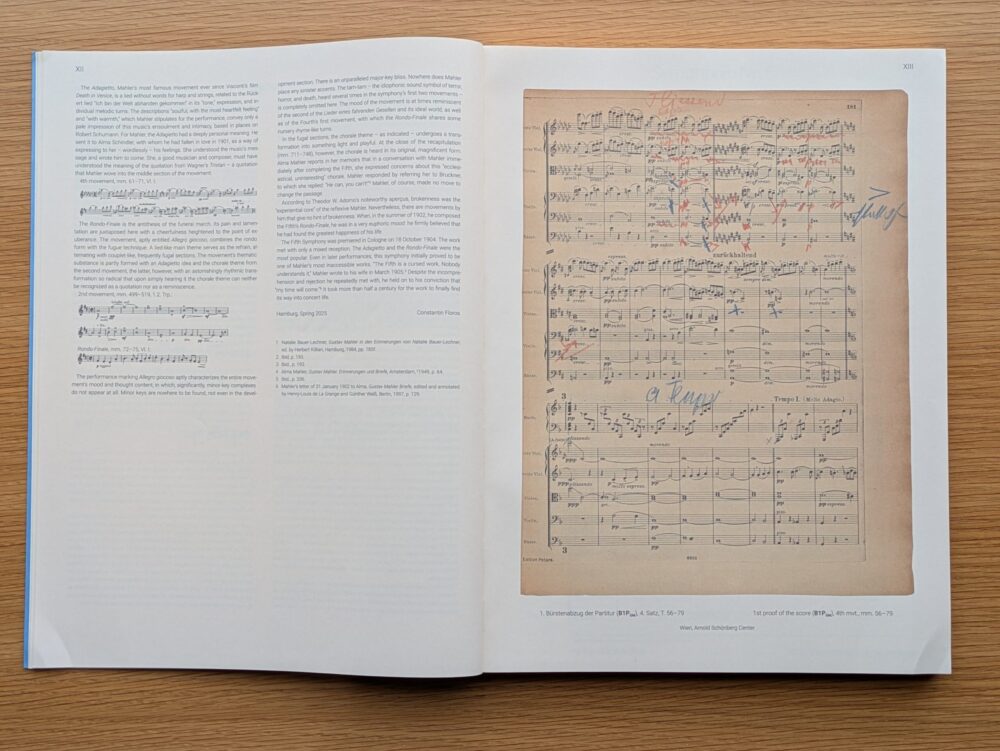
Skolnick said Mahler’s changes clarify and enhance the original score, and Breitkopf & Härtel’s “beautiful, state-of-the-art engraving” provides musicians with a user-friendly score that allows them to focus on performance. Embracing high-quality updates to standard repertoire not only gives audiences “the best shot at hearing with clarity the composer’s intention,” it also creates an electricity that crackles among the musicians and across the auditorium.
“You’ve got 80 to 90 or more pros, and this is their life.” Skolnick said. “Having these kinds of materials is fuel to that fire. They’re going to come out on stage quaking with excitement—their whole lifetime is coming into focus to deliver this on that night. That’s a feeling you can feel out in the audience. That’s probably the most compelling reason to buy a ticket to your live orchestra.”
Iain Shaw is the SLSO’s Content Manager.