Opening Weekend (September 26-27, 2026)
Program
September 26-27, 2026
- Stéphane Denève, conductor
- Yefim Bronfman, piano
Hector Berlioz (1803–1869)
- Roman Carnival Overture, Op. 9 (8 minutes)
Franz Liszt (1811–1886)
- Piano Concerto No. 2 in A major, S.125 (21 minutes)
- Adagio sostenuto assai – Allegro agitato assai
- Allegro moderato
- Allegro deciso – Marziale un poco meno allegro
- Allegro animato
Yefim Bronfman, piano
Intermission
Andrea Tarrodi (b. 1981)
- Liguria (10 minutes)
Ottorino Respighi (1811–1886)
- Pines of Rome (23 minutes)
- The Pines of the Villa Borghese –
- Pines Near a Catacomb –
- The Pines of the Janiculum –
- The Pines of the Appian Way
Italian Splendor
Experience the splendors of Italy with Music Director Stéphane Denève and the SLSO in this captivating season opener. Visit a kaleidoscopic carnival in Berlioz’s Roman Carnival Overture and venture through colorful fishing villages of the northern coast in Andrea Tarrodi’s Liguria. Respighi’s Pines of Rome guides us through parks and catacombs and then to the dark forests of the Italian hills. At the center of it all, the dazzling technique of pianist Yefim Bronfman transports us from the dream-like to the thunderous in Liszt’s Piano Concerto No. 2.
Roman Carnival Overture
Hector Berlioz
Born 1803, La Côte-St-André, near Grenoble, France
Died 1869, Paris, France
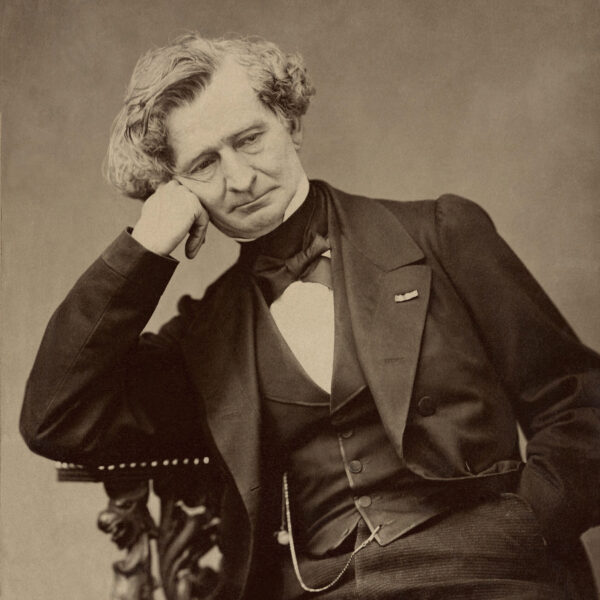
Berlioz, like the better French chefs, never threw anything away. If a tune or movement or aria he liked didn’t work in one place (or even if it did), it could serve elsewhere. This was the case with Le carnaval romain—The Roman Carnival.
The Roman Carnival Overture is eight minutes of dashing music, orchestrated in Berlioz’s brightest colors, intended as the prelude to the second act of his opera Benvenuto Cellini—as an extra added attraction in the revivals that the opera would surely have. The opera was, however, so decisively savaged at its premiere in Paris in 1838—“hissed with admirable energy and unanimity,” according to its composer—that only two revivals, neither being much more cordially received, took place during Berlioz’s lifetime, and there have been few revivals since.
The present Overture was introduced under the composer’s baton as an independent concert piece in Paris in 1844. It was a resounding success, as indicated by the fact that it had to be encored immediately.
The Overture seamlessly stitches together themes from the opera, including Cellini’s first-act aria in praise of his beloved—the luscious melody now sung by the English horn—and the wild saltarello, a folk dance in triple time, which is the recurring, cymbals-punctuated theme. The latter is taken from the second act of the opera, where it dominates the carnival scene being played out in Rome’s Piazza Colonna.
Adapted from a note by Herbert Glass © 2009
By kind permission of the Los Angeles Philharmonic.
| First performance | February 3, 1844, in Paris, the composer conducting |
| First SLSO performance | December 5, 1907, Max Zach conducting |
| Most recent SLSO performance | December 31, 2018, Ward Stare conducting |
| Instrumentation | 2 flutes (one doubling piccolo), 2 oboes (one doubling English horn), 2 clarinets, 2 bassoons, 4 horns, 2 trumpets, 2 cornets, 3 trombones, timpani, percussion, strings |
Piano Concerto No. 2
Franz Liszt
Born 1811, Raiding, Hungary (now Austria)
Died 1886, Bayreuth, Germany
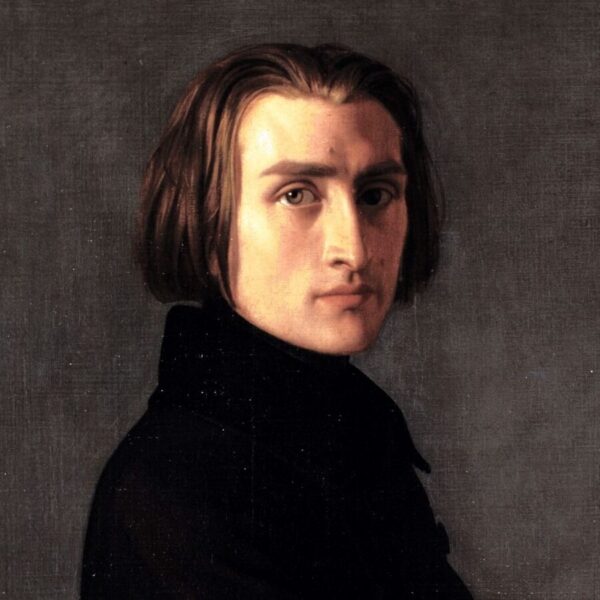
A Composer of Contradictions
Franz Liszt was a mess of contradictions. He generated Beatles-level adulation yet delighted in the esoteric. He took minor religious orders yet carried on dozens of high-profile love affairs. He traveled Europe widely yet remained loyal to his native Hungary.
Liszt’s music reflects these contradictions. He wrote splashy piano showpieces as well as giant experimental symphonies. He showed respect for the music of his forebears, but also pushed music into unknown, experimental realms.
A Long Time Coming
The Second Piano Concerto was sketched by the twenty-something Liszt during his first explosion of fame. But it ultimately took him two decades to complete. The score went on a long journey with the composer himself, shifting as he himself shifted. It journeyed with him as he attempted to balance the refined classical forms of the 18th century with the freedom of the 19th. Liszt called the Second Piano Concerto a “symphonic concerto.” It contained the whole world of a conventional symphony, but he trimmed the fat, fitting four movements into one unbroken statement. “New wine demands new bottles,” he declared.
The concerto also journeyed with Liszt as he attempted to move away from splashy virtuosity, towards musical experimentation. As a pianist, Liszt was criticized for a theatrical performing style, with facial contortions and physical gestures. The Second Piano Concerto offers passages of show- stopping brilliance for the soloist, but the orchestra is an equal partner.
Abridged from a note by Tim Munro © 2019
| First performance | January 7, 1857, Franz Liszt conducting the Weimar Court Orchestra, Hans von Bronsart as soloist |
| First SLSO performance | January 7, 1910, Max Zach conducting, Tina Lerner as soloist |
| Most recent SLSO performance | January 19, 2020, Stéphane Denève conducting, Jean-Yves Thibaudet as soloist |
| Instrumentation | solo piano; 2 flutes, piccolo, 2 oboes, 2 clarinets, 2 bassoons, 2 horns, 2 trumpets, 3 trombones, tuba, timpani, cymbals, strings |
Liguria
Andrea Tarrodi
Born 1981, Stockholm, Sweden

Visual Cues
Andrea Tarrodi’s musical approach is guided by her experience both as a painter and someone living with synesthesia, a neurological trait that causes her to associate colors with sounds. Before writing any musical notation, Tarrodi often paints the music she imagines. After completing a composition, she creates an accompanying visual work of art. This multi- faceted approach gives Tarrodi’s work a singular sense of vivid color, texture, and shape.
Vibrant Villages
Tarrodi describes her 2012 orchestral piece, Liguria, as a “walking tour” through a series of Italian coastal villages, each connected by cliffs and mountains. She describes the villages briefly in her notes:
Riomaggiore with its high waves; Manarola with its clock tower; Monterosso [al Mare], where sunbathers stressedly hurried to secure a place on the beach and open up their colorful beach umbrellas, as if in a scene in a Fellini film; Vernazza, with its watchtower and cliffs; and lastly, Corniglia, where the night sky was filled with stars.
The Music
Composed in six sections (“Waves,” “Horizon,” “Blue Path,” “Colours,” “Mountains,” and “Stars”), Liguria begins with a low percussion rumble from the back of the ensemble, followed by a quick crescendo that creates a full orchestral wash of sound. Tarrodi’s music is immediately impressionistic, depicting successive waves surging forward and releasing. When the waves calm, a solo English horn introduces the “Horizon” section, singing a gentle melody supported by other woodwinds and then low strings. “Blue Path” features gentle chimes and bells in the background, layered with murmuring woodwinds and mystical strings. The energy suddenly shifts and momentum builds. A scurrying, anticipatory mood sets in, with fluttering piccolo gestures and pizzicato violins. Tarrodi paints the grand “Mountains” that connect the villages, then directs our focus skyward. Tranquil statements from harp and percussion leave us to stargaze as the music concludes.
Emma Plehal © 2026
| First performance | April 20, 2012, Daniel Harding conducting the Swedish Radio Symphony Orchestra at Berwaldhallen, Stockholm, Sweden |
| First SLSO performance | These concerts |
| Instrumentation | 3 flutes (1 doubling piccolo), 2 oboes, English horn, 2 clarinets, E-flat clarinet, 2 bassoons, contrabassoon, 4 horns, 3 trumpets, 3 trombones, tuba, timpani, percussion, harp, strings |
Pines of Rome
Ottorino Respighi
Born 1879, Bologna, Italy
Died 1936, Rome, Italy
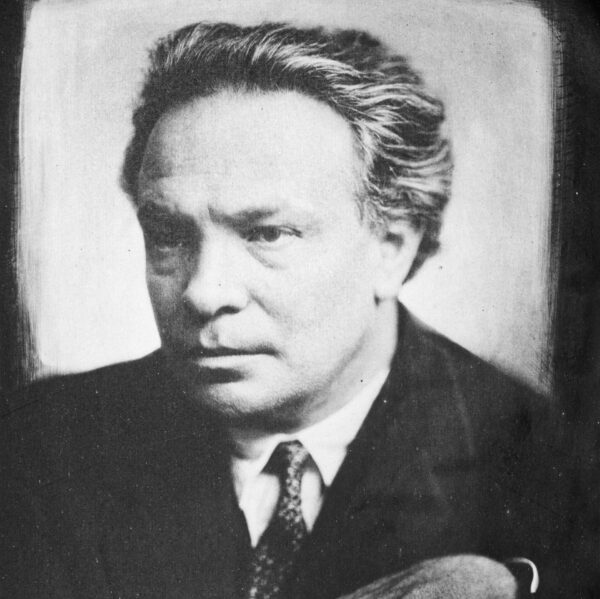
The Roman Trilogy
Today’s concert concludes with a “symphonic poem for orchestra” from Respighi’s Roman trilogy—a showpiece that demonstrates an orchestra’s power and brilliance, as well as the poetry and colors of the composer’s musical imagination.
The significance of Respighi’s “Roman” works extends well beyond their exhilarating surface appeal. They bring together the diversity of influences that shaped this Italian-born but Russian- and German- educated composer. These works were central to Respighi’s efforts to develop a truly Italian symphonic voice. Above all, these symphonic poems represent his “need to express Rome’s sublime beauty in music.”
The Music
Pines of Rome is organized in four, continuous movements, each representing a different view and a particular mood. “The Pines of the Villa Borghese” races by so fast you might almost miss the traditional children’s singing game that Respighi quotes. As in all good games, everyone gets a go with the tune, including a rare, quiet moment when it’s played by oboe and clarinet. The exuberance comes to a climax with a wild, whooping conclusion, so extraordinary the first audience booed.
“Pines Near a Catacomb” brings a serious tone, evoking a gloomy, underground tomb. Listen for the remote, muted sound of a trumpet playing a “Sanctus” chant from the Roman Catholic LiberUsualis.
“The Pines of the Janiculum” is all about atmosphere: a moonlit night on a distant hill overlooking the city. The mood is set with an impressionist rippling from the piano and a clarinet floating on a cloud of muted strings. But this movement is most famous for the appearance of a nightingale at the end. In 1924 the gramophone record was the latest in music technology, and Respighi took delight in using a recording of an actual nightingale.
For “The Pines of the Appian Way” Respighi provided a very detailed “caption,” all of which can be heard in the powerful and evocative music:
Misty dawn on the Appian Way: pine trees guarding the magic landscape; the muffled, ceaseless rhythm of unending footsteps. The poet has a fantastic vision of bygone glories: trumpets sound and, in the brilliance of the newly risen sun, a consular army bursts forth towards the Sacred Way, mounting in triumph to the Capitol.
Abridged from a note by Yvonne Frindle © 2022
| First performance | December 14, 1924, Bernardino Molinari conducting the Augusteo Orchestra in Rome |
| First SLSO performance | January 7, 1927, Rudolph Ganz conducting |
| Most recent SLSO performance | November 27, 2022, Xian Zhang conducting |
| Instrumentation | 3 flutes (one doubling piccolo), 2 oboes, English horn, 2 clarinets, bass clarinet, 2 bassoons, contrabassoon, 4 horns, 3 trumpets, 3 trombones, tuba, timpani, percussion, harp, piano, organ, celesta, 6 off-stage “buccine” (this performance uses 4 trumpets and 2 trombones), strings |
Artists
Yefim Bronfman
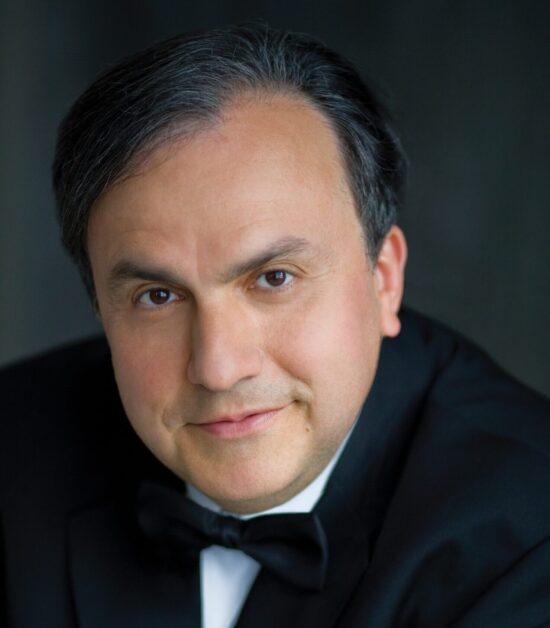
Yefim Bronfman is internationally recognized as one of today’s most acclaimed and admired pianists, standing among a handful of artists regularly sought by festivals, orchestras, conductors and recital series. Born in Tashkent in the Soviet Union, his commanding technique, power and exceptional lyrical gifts are consistently acknowledged by the press and audiences alike.
Following return visits to summer festivals in Vail and Tanglewood, Bronfman’s season begins with the St. Louis Symphony Orchestra and concludes with the closing week of the San Francisco Symphony. He is a recipient of the prestigious Avery Fisher Prize, in addition to receiving the Jean Gimbel Lane prize in piano performance from Northwestern University. Yefim Bronfman’s most recent appearance with the SLSO was in October 2021, when he performed Sergei Rachmaninoff’s Piano Concerto No. 3 with Stéphane Denève conducting.
Yefim Bronfman returns to the SLSO for a recital performance on June 16, 2027.