Beethoven’s Pastoral (October 30–31, 2026)
Program
October 30–31, 2026
- Stéphane Denève, conductor
- Julia Bullock, soprano
George Walker (1922–2018)
- Folksongs for Orchestra (12 minutes)
- I. Going to lay down my sword and shield
- II. And they crucified my Lord
- III. My Lord, what a morning
- IV. O Peter, go ring dem bells
Samuel Barber (1910–1981)
- Knoxville: Summer of 1915 (16 minutes)
Julia Bullock, soprano
Intermission
Ludwig van Beethoven (1770–1827)
- Symphony No. 6 in F major, Op. 68, “Pastoral” (39 minutes)
- Awakening of cheerful feelings on arriving in the country (Allegro ma non troppo)
- Scene by the brook (Andante molto mosso)
- Merry gathering of country folk (Allegro) –
- Thunder, Storm (Allegro) –
- Shepherd’s Song: Happy and grateful feelings after the storm (Allegretto)
Reflections of Home
As a music lover, you’ve probably stored away countless memories that can be unlocked by hearing a particular orchestral work, song, or even a few notes of a melody. The composers featured in today’s program worked from an impulse to create music evoking an aesthetic, a feeling, or a sense of place. George Walker—the first Black composer to win a Pulitzer Prize—placed African American spirituals in an orchestral frame for his Folksongs for Orchestra, which conjures emotions ranging from joy and hope to anxiety, sorrow, and comfort. St. Louis native Julia Bullock makes her SLSO debut, giving voice to Samuel Barber’s brooding Knoxville: Summer of 1915, before Beethoven invites us to a countryside reverie—weather permitting—with his stunning Pastoral Symphony.
Folksongs for Orchestra
George Walker
Born 1922, Washington, DC
Died 2018, Montclair, New Jersey
Four Spirituals
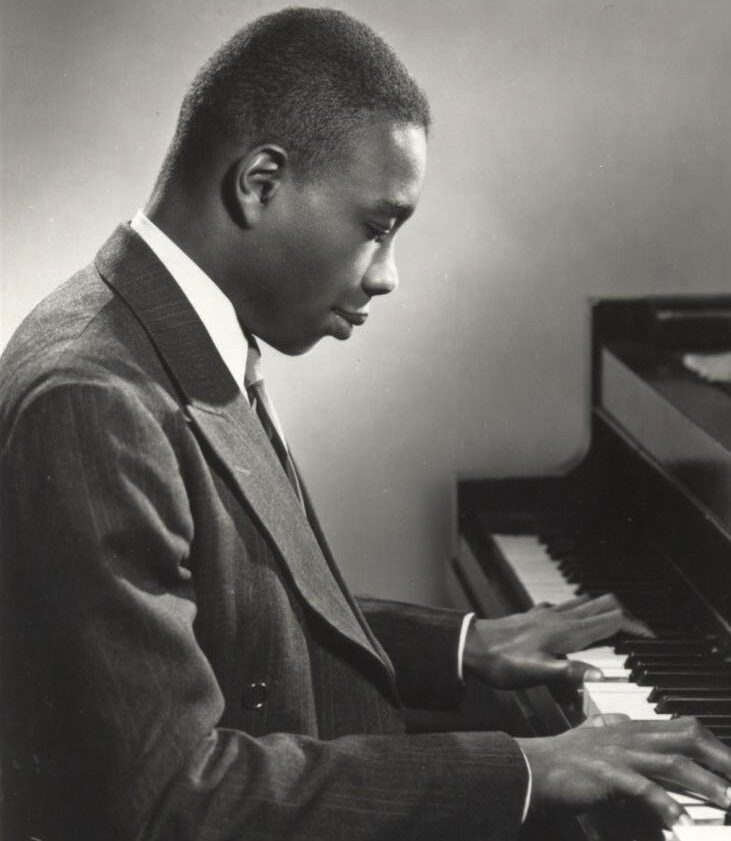
George Walker completed Folksongs for Orchestra (originally titled Spirituals for Orchestra) in fall 1990. The Baltimore Symphony Orchestra, conducted by David Zinman, gave the premiere in May 1992. The piece offers a set of four orchestral miniatures honoring traditional and beloved African American spirituals. Walker directly quotes a recognizable segment of each spiritual’s melody rather than fragmenting or altering it, framing the songs respectfully and signaling to listeners which part of the text he is using.
Going to lay down my sword and shield
The first movement, drawn from the spiritual often known as “Down by the Riverside,” opens with a brief pastoral introduction before settling into a joyful, hopeful ambiance built around the idea of leaving burdens and conflict behind. Accented woodwind gestures lead the way, balanced by a sweet, chant-like melody in the strings, until the music gradually fades away.
And they crucified my Lord
Dramatic chords open the second folksong, signaling impending danger. These notes are punctuated by brass warnings and percussive clanking that evokes a hammer pounding nails. Sharply accented interjections from the winds and a pulsing timpani heighten the tension, before the music dissolves into a somber, lingering tone from a solo flute.
My Lord, what a morning
Evoking judgment day alongside a determined dream of freedom, the third folksong unfolds in a plaintive, ceremonial atmosphere. Brass lines sing out over sustained wind chords, suggesting a reflective optimism.
O Peter, go ring dem bells
The final movement celebrates the arrival of loved ones in Heaven, drawing on the spiritual’s message, “I heard from Heaven today.” The upbeat music conveys the comfort gained from receiving word that those who have passed on have found peace. Walker’s orchestral set concludes with cheerful exclamations of joy from the brass and woodwinds.
Emma Plehal © 2026
| First performance | May 1992, David Zinman conducting the Baltimore Symphony Orchestra |
| First and most recent SLSO performances | September 25–27, 1992, Joseph Silverstein conducting |
| Instrumentation | 2 flutes, piccolo, 2 oboes, English horn, 2 clarinets, 2 bassoons, 2 horns, 2 trumpets, 2 trombones, tuba, timpani, percussion, harp, piano, harpsichord, strings |
Knoxville: Summer of 1915
Samuel Barber
Born 1910, West Chester, Pennsylvania
Died 1791, Vienna, Austria
Inspiration and Resonance
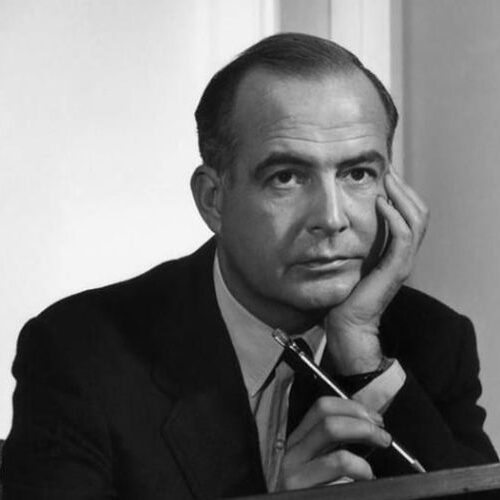
In 1947, Samuel Barber returned home after serving in World War II to strife in his family, with both his father’s and aunt’s health failing. During this time, he came across James Agee’s essay “Knoxville: Summer of 1915,” later the preamble to Agee’s Pulitzer Prize-winning novel, A Death in the Family. The essay resonated with Barber on a profoundly personal level.
The composer quickly wrote to his uncle saying, “It reminded me so much of summer evenings in West Chester and all of you are in it.” When soprano Eleanor Steber commissioned a new work from him, Barber knew instantly that he would set Agee’s story to music. Steber felt a similarly deep connection to Agee’s text, recognizing her own childhood in Wheeling, West Virginia.
Agee’s Essay
Agee’s essay is a dreamlike set of memories, shifting between adult reflection and the perspective of a young boy, recalling childhood summer evenings in Tennessee. He affectionately describes the young child, lying in the grass, listening to conversations among his relatives, and weaving in sensory details like the sounds of nearby cars and locusts buzzing in the hot evening air. However, the essay’s fond forays into nostalgia are complicated by a creeping sense of lost innocence, sorrow, and introspection.
Barber’s Music
At the heart of Barber’s expression of Knoxville: Summer of 1915 is a gentle, rocking triplet figure used to conjure the comfort of home. This theme opens the work, reflecting the picturesque porch scene of people “rocking gently and talking gently.” A passing streetcar intrudes on the peaceful evening, its noisy arrival vividly depicted by the orchestra. Then, the music swells with intensity, as each relative is remembered, the warmth of Barber’s harmonies sharing a tender plea for their safekeeping. The music ultimately settles into a brooding calm, ending with a shift in perspective as the young child is tucked into bed. Suddenly alert to what Barber called “a child’s feeling of loneliness, wonder, and lack of identity in that marginal world between twilight and sleep,” the boy realizes that home and the people who make it so, “will not, not now, not ever; but will not ever tell me who I am.”
Emma Plehal © 2026
| First performance | April 9, 1948, Serge Koussevitzky conducting the Boston Symphony Orchestra with Eleanor Steber as soloist |
| First SLSO performance | October 28, 1950, Vladimir Golschmann conducting, Judith Doniger as soloist |
| Most recent SLSO performance | December 7, 2014, Steven Jarvi conducting with Kiera Duffy as soloist |
| Instrumentation | piccolo, English horn, clarinet, bassoon, 2 horns, trumpet, percussion, harp, strings |
Knoxville: Summer of 1915
It has become the time of evening
when people sit on their porches,
rocking gently and talking gently
and watching the street
and the standing up
into their sphere of possession of the trees,
of birds’ hung havens, hangers.
People go by; things go by.
A horse, drawing a buggy, breaking his hollow iron music on the asphalt;
a loud auto; a quiet auto;
people in pairs, not in a hurry,
scuffling, switching their weight of aestival body, talking casually,
the taste hovering over them of vanilla, strawberry, pasteboard and starched milk,
the image upon them of lovers and horsemen, squared with clowns in hueless amber.
A streetcar raising its iron moan:
stopping, belling and starting; stertorous; rousing and raising again its iron increasing moan
and swimming its gold windows and straw seats on past and past and past,
the bleak spark crackling and cursing above it like a small malignant spirit set to dog its tracks;
the iron whine rises on rising speed;
still risen, faints; halts; the faint stinging bell;
rises again, still fainter, fainter, lifting, lifts, faints forgone: forgotten.
Now is the night one blue dew.
Now is the night one blue dew,
my father has drained,
now he has coiled the hose.
Low on the length of lawns,
a frailing of fire who breathes …
Parents on porches: rock and rock.
From damp strings morning glories hang their ancient faces.
The dry and exalted noise of the locusts from all the air at once enchants my eardrums.
On the rough wet grass of the backyard my father and mother have spread quilts.
We all lie there, my mother, my father, my uncle, my aunt, and I too am lying there …
They are not talking much, and the talk is quiet,
of nothing in particular, of nothing at all in particular, of nothing at all.
The stars are wide and alive, they seem each like a smile of great sweetness, and they seem very near.
All my people are larger bodies than mine, …
with voices gentle and meaningless like the voice of sleeping birds.
One is an artist, he is living at home.
One is a musician, she is living at home.
One is my mother who is good to me.
One is my father who is good to me.
By some chance, here they are, all on this earth;
and who shall ever tell the sorrow of being on this earth,
lying, on quilts, on the grass, in a summer evening, among the sounds of the night.
May God bless my people, my uncle, my aunt, my mother, my good father,
oh, remember them kindly in their time of trouble;
and in the hour of their taking away.
After a little I am taken in and put to bed.
Sleep, soft smiling, draws me unto her:
and those receive me, who quietly treat me,
as one familiar and well-beloved in that home:
but will not, no ,will not, not now, not ever;
but will not ever tell me who I am.
Adapted by the composer from the essay Knoxville: Summer of 1915 by James Agee.
Symphony No. 6
Ludwig van Beethoven
Born 1770, Bonn, Germany
Died 1827, Vienna, Austria
A Natural Composer
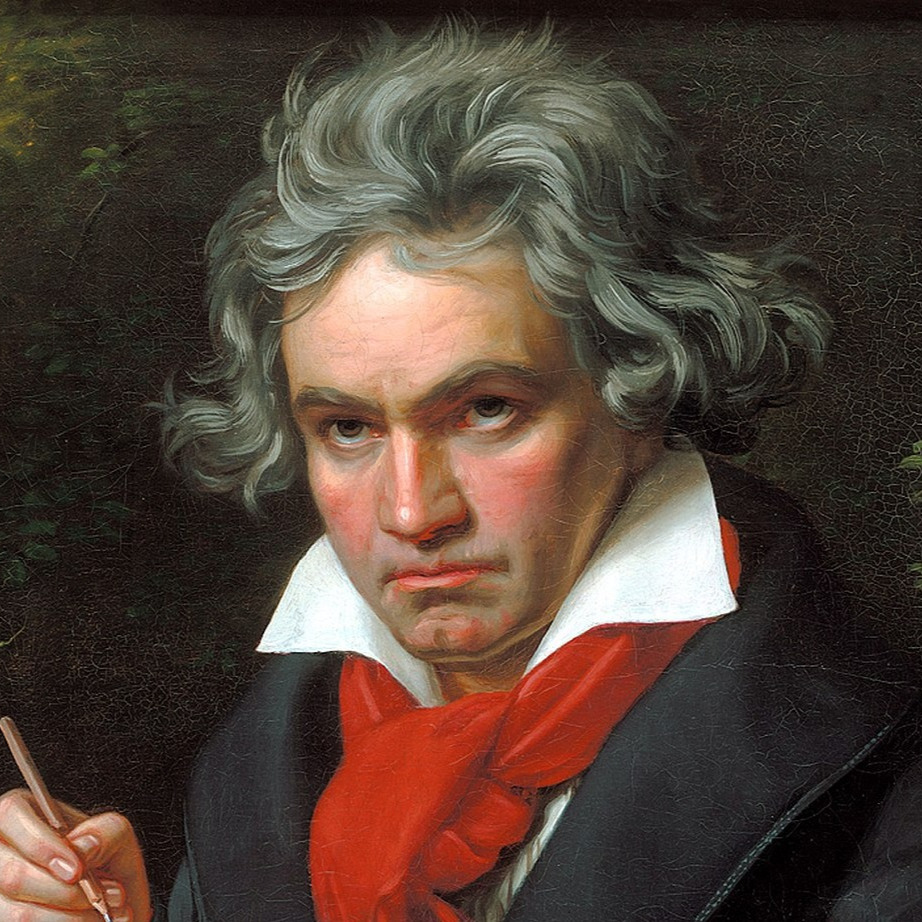
Beethoven’s love of nature has been amply documented. “He loved to be alone with nature, to make her his only confidante,” reported one of the composer’s closer companions. Another acquaintance confirmed that he “had never met anyone who so … thoroughly enjoyed flowers or clouds or other natural objects.”
Beethoven completed his Sixth Symphony in the summer or early autumn of 1808. The composer himself devised both the title “Pastoral Symphony, or a recollection of country life” and the similarly evocative movement titles.
Beethoven evidently worried that listeners would give too much attention to pictorial elements such as using the music to convey bird calls, or a storm. He added a caveat to the title: “More an expression of feelings than tone painting.” Nature clearly meant more to Beethoven than just a pleasing landscape or woodland sounds that could be imitated through clever musical imagery. It was, rather, a wellspring of purity and beauty, something to be held in reverence.
What to Listen For
– The expansive, unhurried first movement, whose repeating melodic figures impart a feeling of leisurely contemplation
– In the “Scene by the brook” movement, the suggestion of bird calls from the woodwinds and violins becomes explicit in the final measures. Beethoven even identified his collaborators: a nightingale (flute), quail (oboe), and cuckoo (clarinet).
– An ominous rumbling in the low strings interrupts the “merry gathering” of the third movement, and the tempest of the fourth breaks out in full symphonic fury.
– The end of the storm is signaled by a call from clarinet and horn, which leads to a theme of gratitude and transcendent joy.
Adapted from a note by Paul Schiavo © 2015
| First performance | December 22, 1808, the composer conducting at the Theater An Der Wien in Vienna |
| First SLSO performance | December 16, 1910, Max Zach conducting |
| Most recent SLSO performance | October 6, 2018, Bramwell Tovey conducting |
| Instrumentation | 2 flutes, piccolo, 2 oboes, 2 clarinets, 2 bassoons, 2 horns, 2 trumpets, 2 trombones, timpani, strings |
Artists
Julia Bullock
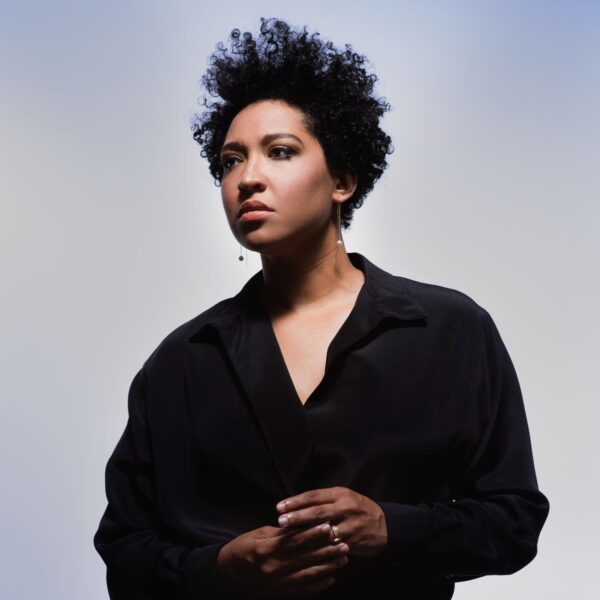
Julia Bullock is a Grammy Award–winning American classical singer who combines versatile artistry with a probing intellect and commanding stage presence. As well as headlining productions and concerts at preeminent arts institutions around the world, she has held positions as Artist-in-Residence of New York’s Metropolitan Museum of Art, London’s Guildhall School of Music and Drama, Berkeley’s Cal Performances, and the San Francisco Symphony. Bullock’s operatic career spans repertoire from the Baroque canon to contemporary works written expressly for her voice.
During the 2025/26 season, she premiered new works by Matthew Aucoin and Tania León. She has also performed in concert with leading orchestras in the US and around the world, including the Los Angeles and New York Philharmonics, Boston Symphony Orchestra, the Deutsches Symphonie-Orchester Berlin, and London’s Philharmonia Orchestra. A prominent voice of social consciousness and activism, Bullock also won a Grammy Award for her debut solo album Walking in the Dark. These concerts mark Julia Bullock’s SLSO debut.